
 Play Brightcove video
The announcement that Nidal Malik’s execution by firing squad will be livestreamed has received cross-party condemnation, drawing comparisons to oppressive regimes such as Iran, ITV News Correspondent Robert Moore reports
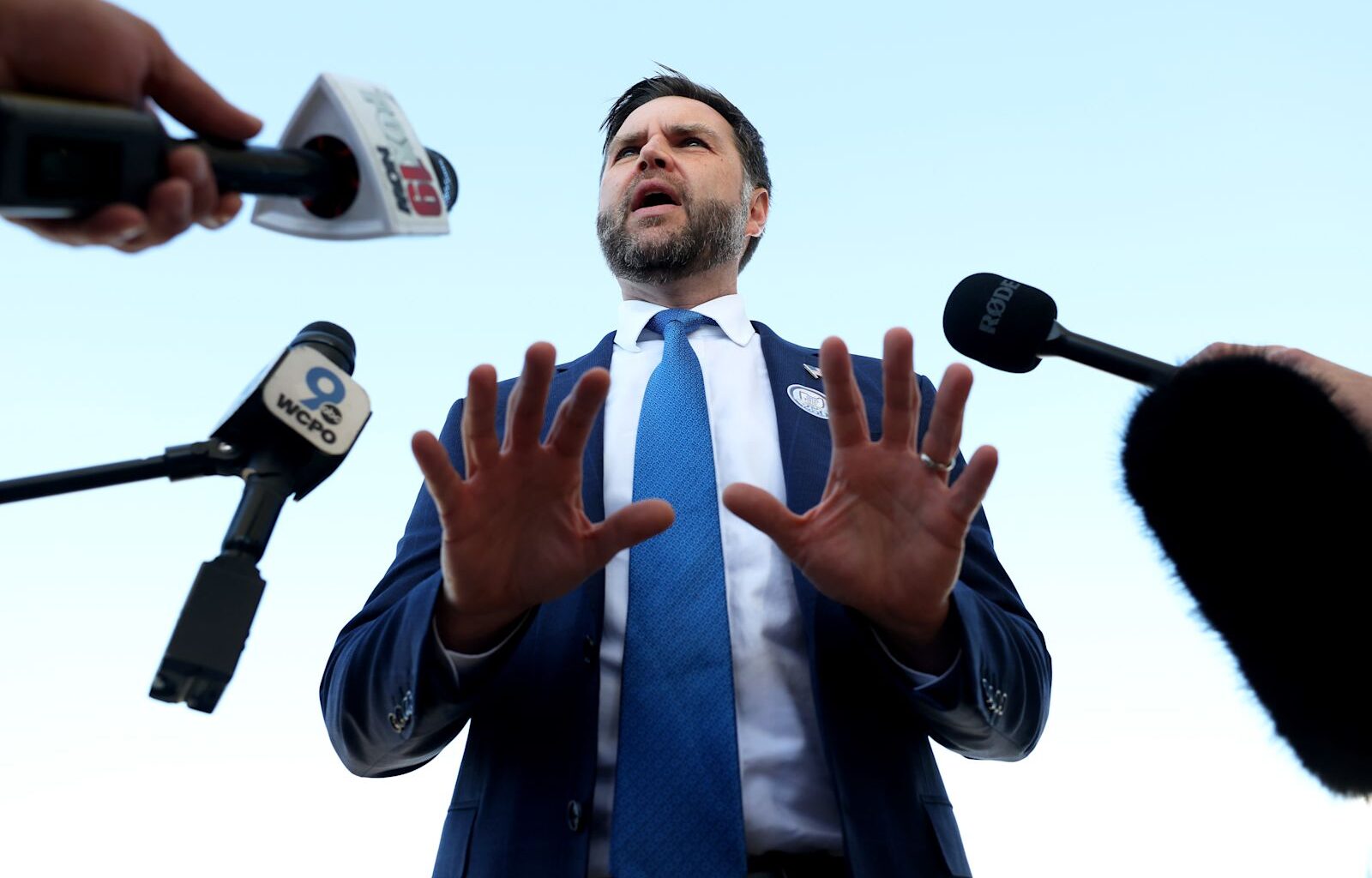
Vice President JD Vance has cast doubt on whether the Pentagon will follow through with its plan to livestream the execution of Fort Hood shooter Nidal Malik Hasan so the public can watch it.
If the firing squad execution is streamed, however, he told reporters: “I’m not going to be watching it.”
“I don’t know that that’s actually going to happen,” he said when asked about the plans that the Pentagon confirmed on Thursday.
But Vance then tried to set aside the controversy over the shocking plans for a public execution and said Hasan’s crimes should not be forgotten.
The Army announced this week that the execution would take place at Fort Hood on December 3 after Hasan was convicted of killing 13 people and injuring 32 others in a shooting at the military base in 2009.
It will be the first military execution in more than 65 years.
Former Army psychiatrist Maj. Nidal Hasan. Credit: Bell County Sheriff’s Department/AP
Defence Secretary Pete Hegseth told conservative TV outlet Real America’s Voice on Wednesday the government would “make sure that people are able to watch it, that it’s public”.
Officials in the Pentagon clarified Thursday that the execution would be livestreamed and that more details would follow.
“Whatever the controversy is about the method of the execution, I hope that people don’t forget that this is a guy who brutally murdered a lot of innocent people,” Vance told reporters.
“Now, that said, I mean, look, if it’s ultimately livestreamed, I’m not going to be watching it,” he added.
Vance is a convert to the Catholic Church, which has long opposed capital punishment.
The UK’s Equalities minister Bridget Phillipson described the plans as “disturbing”, but said it was a matter for US President Donald Trump’s government, as she set out the UK’s long-standing opposition to the death penalty
Asked about the issue on BBC Radio 4’s Today programme, Phillipson said she was “proud that our country did away with the death penalty a very, very long time ago”.
Hasan shot dead 13 unarmed US soldiers at Fort Hood in 2009 Credit: AP
The Labour Party chairwoman added: “The view of the Government is always that we’re repulsed to the death penalty, my personal view is that I’m opposed to the death penalty.
“And I find that rather disturbing, is my honest reaction.”
On Friday the head of the US Conference of Catholic Bishops condemned the US government’s decision to livestream Hasan’s execution.
“It is with shock and great sorrow that I have learned of the Department of War’s decision to publicly livestream the execution of Nidal Hassan,” said conference president Archbishop Paul S. Coakley.
“Our God is the God of life. In no way can Hassan’s actions be condoned but this decision is a barbaric promotion of a culture of death and must be reconsidered.”
Earlier, President Donald Trump told a White House event that Hasan will be getting “the death penalty through firing squad. And he deserves it.”
Trump, who approved Hasan’s execution, called him “a maniac”.
The president approved the method of execution by firing squad days after a failed attempt to execute Christa Pike by lethal injection late last month pushed Tennessee’s governor to halt further executions in that state this year.
The revelation raised further questions about how the death penalty is carried out, especially after the botched lethal injection of Christa Pike in Tennessee.
Hasan could choose to resist execution and file a habeas petition – a legal request to review the legality of a detention – in civilian court, which could significantly delay the execution, causing it to even outlast the current administration, experts said.
Deborah Denno, a death penalty expert and law professor at Fordham University, said livestreaming an execution could make the process “much more transparent” and inform the public about all that capital punishment entails.
Those are benefits that she said would be useful at a time when Pike’s botched execution has raised fresh questions about the manner by which criminal defendants are put to death for their crimes.
“I think it could possibly be a good idea because it would be transparent and the public would be fully aware that it’s happening,” she said.
Hasan shot dead 13 unarmed US soldiers at Fort Hood in 2009 Credit: AP
Brenner Fissell, a professor at Villanova Law and vice president of the National Institute of Military Justice, said firing squads can be seen by some states as a less inhumane alternative than lethal injection, as it is a “quicker, cleaner, more precise way to execute a prisoner”.
“I don’t think that’s what’s motivating this. There’s a perceived masculinity and military-ness to firing squads that is part of the aura Hegseth is trying to emphasise – the ‘lethality culture’,” he added.
Elisabeth Semel, co-director of the Death Penalty Clinic at UC Berkeley Law, said Hegseth’s announcement raises a host of legal and public policy questions, including concerns for the dignity of the defendant, who will be eligible to view the execution and what the Trump administration has in mind in opting for an unusual spectacle.
Though there has been long-running discussion about the idea of televising an execution, “I don’t recall a situation in which it was instigated by the government,” she said.
“I think that also raises serious questions about what is the motivation of the government.”
“This is a president who is about spectacle and that’s, I think, precisely the message that he intends to deliver,” Semel said, adding that she was sceptical that the administration had given a second thought to the legal and social questions being presented by the decision.
US Defence Secretary Pete Hegseth said the execution would be public Credit: AP
Trump, who approved Hasan’s execution, has previously been critical of public executions in Iran, at times using the possibility of protesters being killed by the Iranian government as a possible rationale for military action that preceded his ultimate choice to attack the nation.
“We’ve been told that the killing in Iran is stopping,” Trump told reporters in January. “It’s stopping, and there’s no plan for executions.”
In his State of the Union address just days before launching the Iran war, Trump reiterated, “We stopped them from hanging a lot of them with the threat of serious violence.”
The White House on Thursday referred questions about the plans for the livestreamed execution to the Pentagon.
Hegseth was asked Wednesday if Hasan had made any final requests or reached out to the Trump administration. The Pentagon chief replied: “Don’t care. We’ll see him on December 3.”
Hasan, an Army psychiatrist who held the rank of major, walked into a medical building on Nov. 5, 2009, where soldiers were waiting in long lines to receive immunisations and medical clearance for deployment.
Subscribe free to our weekly newsletter for exclusive and original coverage from ITV News. Direct to your inbox every Friday morning.
He shouted “Allahu Akbar” – Arabic for “God is great!” – and opened fire with a laser-sighted handgun. He also shot at the backs of soldiers fleeing toward the parking lot.
Hasan said it was an effort to stop them from going to Afghanistan and killing his fellow Muslims. A military judge barred him from presenting that as a defense during his 2013 trial.
He was left paralysed from the waist down after being shot in the back by law enforcement, and he now uses a wheelchair. He could seek a lengthy delay of his execution, though given his behaviour at trial, he may not want to.
After firing his lawyers and representing himself, Hasan began his portion of the trial by telling jurors he was the gunman.
He said little else over the next three weeks, which convinced his court-appointed standby lawyers that Hasan’s only goal was to get a death sentence.
Hegseth said the military hasn’t executed a service member by firing squad since World War II. The last military execution took place on April 13, 1961, when Army Pvt. John Bennett was executed by hanging.
Amnesty International said in its report on executions in 2025 that it knew of at least 17 public executions – 11 in Iran and six in Afghanistan.
Want a quick and expert briefing on the biggest news stories? Listen to our latest podcasts to find out What You Need To Know…