
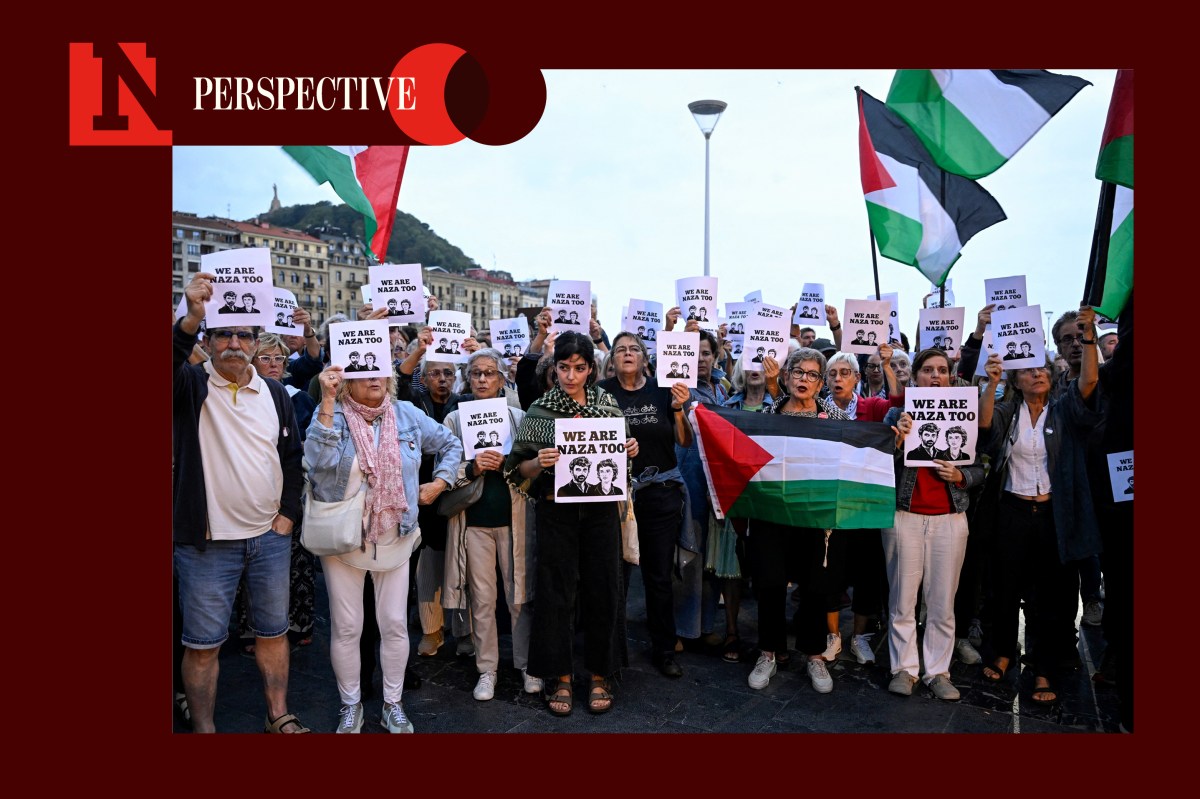
As if the war in Gaza, the political convulsions it unleashed around the world and the still-raw trauma of October 7 were not enough, we now have another reason to fight about all of it: NAZA.
The 80-minute documentary, directed by Israeli filmmakers Yuval Abraham and Rachel Szor, features testimony from 24 anonymous Israeli military and intelligence personnel about Israel‘s targeting practices in Gaza. Its title refers to nezek agavi, Hebrew for collateral damage, and it examines allegations about how civilian casualties were calculated and accepted during Israeli strikes. After winning the Special Jury Prize at the Venice International Film Festival, NAZA is now opening across the United States and producing protests, denunciations and a detailed rebuttal from the IDF.
It’s pretty easy to see why: although the filmmakers say their reporting drew on more than 100 sources and was corroborated with documents and previous reporting, the IDF argues that the film contains “substantial factual errors,” strips military decisions of essential context and elevates speculation by anonymous interviewees into conclusions about Israeli policy. It disputes the film’s account of AI targeting and categorically denies one especially shocking allegation: that a strike was approved knowing it could kill 500 civilians.
Read More on Analysis
These disagreements are clearly not around the margins but go right into the meaning of the war itself and that is exactly why NAZA is so frustrating.
There is material here that deserves examination and even a democracy at war should be able to investigate accusations about civilian deaths and military technology without treating the questions themselves as treason. Especially given the current cultural climate, threatening filmmakers or trying to silence the film may prove to be self-defeating.
But serious allegations demand serious scrutiny—and NAZA too often packages its case in a way that seems to tell viewers what moral conclusion to reach before the evidence has finished speaking.
Consider its central visual device. Anonymous witnesses sit in darkness on Tel Aviv rooftops, their identities and voices disguised. Behind them are the lights of the city; the camera wanders toward apartment buildings and glimpses of comfortable domestic life. Even a sympathetic Guardian review described the effect as one of Tel Aviv’s “heedlessness and heartlessness.”
But what, exactly, does an Israeli family eating dinner 40 miles from Gaza prove about a targeting decision?
Nothing. It is atmosphere doing argumentative work.
The problem becomes more consequential when it comes to context. The IDF argues that the documentary gives insufficient weight to October 7, Hamas’ use of civilian areas for military purposes and Israeli measures intended to reduce civilian casualties. The filmmakers are entitled to dispute the IDF’s account but those questions cannot simply be aesthetic background in a documentary purporting to explain how and why civilians died.
That doesn’t mean NAZA is propaganda or that its witnesses should be dismissed. In fact, that is what makes the problem so maddening: if some of its allegations withstand scrutiny, they are too important to be weakened by presentation that makes skepticism easier.
The response has mirrored the film itself. Israeli politicians have called its directors traitors; activists have made appalling threats; American screenings have drawn protests from people who believe it erases the reality Israel confronted after October 7. Elsewhere, its reception has been rapturous.
So NAZA has become another front in the Gaza war before many people have even seen it. It is the post-October 7 world in miniature: something tangentially connected to the attack—or sometimes barely connected at all—becomes another vehicle through which we relitigate October 7.
That is the tragedy of our argument over Gaza: we increasingly approach evidence by first asking which side produced it. Every image becomes advocacy. We have come to believe that every image is advocacy (perhaps it has) and that every objection is denial (perhaps it is).
NAZA may contain things Israel and its supporters need to confront but its critics may also be right that its framing distorts what it asks us to confront. At the risk of going against what either side of the argument seems to contend, those ideas can coexist.
Indeed, if we can no longer hold both at once, NAZA has exposed something larger than the machinery of this war: it has exposed why, three years after the October 7 attacks, almost nobody is listening—and probably never was.