
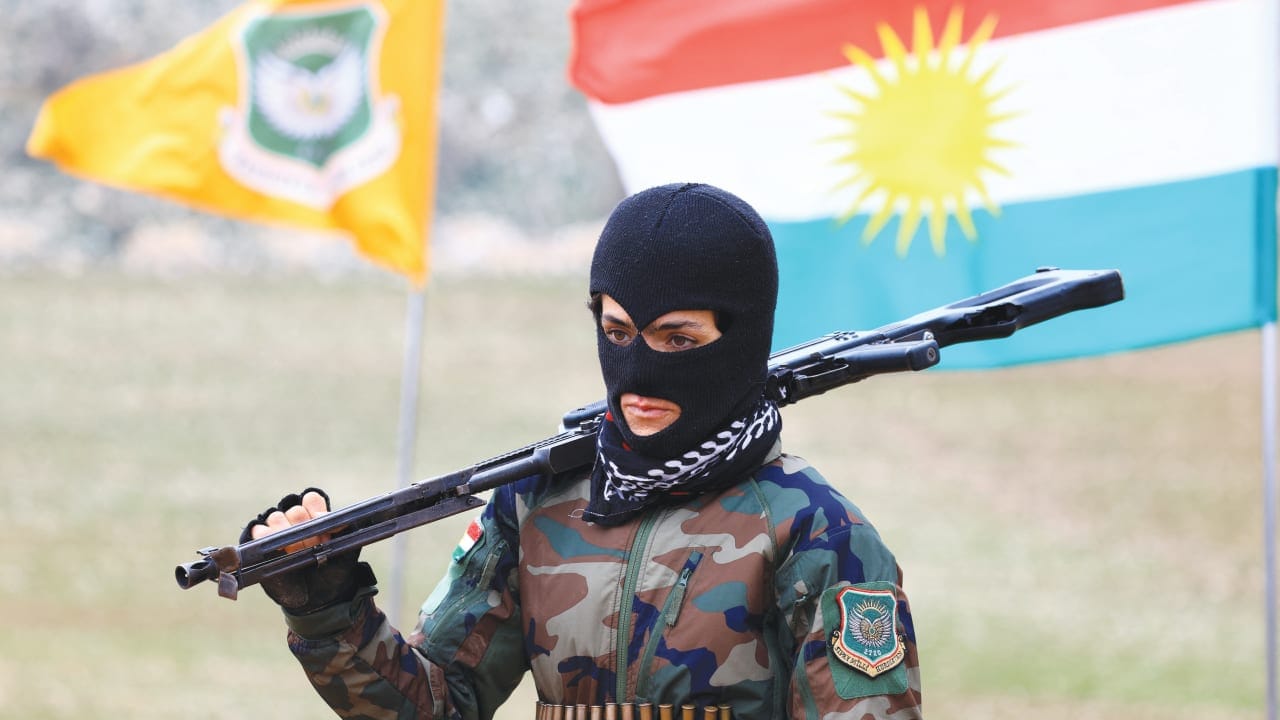
Iran is increasing its rhetoric against Kurdish Iranian dissident groups based in the Kurdistan Region of northern Iraq, while also carrying out drone attacks against these groups — one of more than 1,000 drone and missile attacks Iran has carried out since February.
US forces recently left Iraq, something that could leave the Kurdistan Region vulnerable to more Iranian attacks. This has many implications, with two articles at Rudaw, a Kurdish media network based in Erbil, indicating the growing concerns.
The Kurdistan Democratic Party of Iran (KDPI) has rejected accusations by Iran’s consul general in Erbil that Iranian Kurdish opposition groups are cooperating with foreign powers. The dispute comes amid continued Iranian drone and missile attacks on the Kurdistan Region of northern Iraq, where residents living near Iranian Kurdish opposition bases say they fear further strikes.
According to one of Rudaw’s reports, the KDPI issued a statement on Friday responding to comments from Iranian Consul General Faramarz Asadi, who accused Kurdish opposition parties of forming an alliance under pressure from foreign powers. The KDPI defended the Alliance of Political Forces of Iranian Kurdistan, announced in February, which brings together several Iranian Kurdish opposition groups.
The alliance was a “political decision aimed at cooperation and coordination to achieve the legitimate aspirations of the Kurdish nation in its own homeland. It is not evidence supporting the accusations Tehran has leveled against them,” the KDPI said, according to Rudaw. The party accused Tehran of refusing to recognize Kurdish political and national demands and treating the Kurdish issue primarily as a security threat.
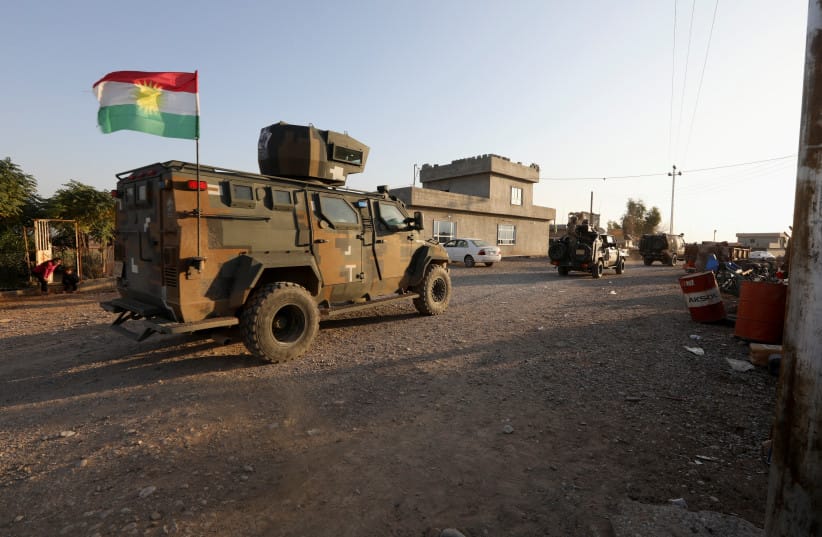 Iraqi forces and Kurdish Peshmerga fighters take part in an intensive security deployment after Islamic State militants took it over the previous day in Luhaiban village in Kirkuk, Iraq December 6,2021. (credit: REUTERS/AKO RASHEED)
Asadi told Rudaw in an interview aired Thursday that five Iranian Kurdish opposition parties formed their alliance shortly before the outbreak of the war in February under pressure from foreign powers.
“They formed an alliance from within [the Kurdistan Region’s] territory and issued a statement declaring that they would stand alongside and cooperate with anyone who attacks the Islamic Republic,” Asadi said.
Iran is clearly threatening the Kurdish groups now. The message is that the regime wants to put pressure on the Kurdistan Regional Government authorities in Erbil to crack down on these groups. Otherwise, Iran will likely increase its attacks.
Iran sees opposition groups as terrorists
The Iranian diplomat described the opposition groups as “terrorists” and called for their members to be handed over to Iran through Interpol. “It is clear who the terrorists are and who the victims of terrorism are,” the KDPI responded, in essence saying the Iranian regime is the real terrorist. The Kurdish party also argued that using international mechanisms to return Kurdish opposition figures to Iran would violate protections for refugees and the principle prohibiting forced returns.
The KDPI noted that Iran had carried out more than 1,200 attacks against the Kurdistan Region since the outbreak of the war. Asadi did not rule out additional strikes, telling Rudaw that Tehran continued to consider US interests and Iranian Kurdish opposition groups potential targets.
Hours after the interview aired, two explosive-laden drones targeted a base belonging to the Khabat Organization of Iranian Kurdistan near Erbil. This illustrates that Iran is using both diplomatic and military pressure.
Iranian drones struck Kurdish forces’ base
According to a second Rudaw report, the Iranian drones struck the group’s base in Rizgari, also known as Topzawa. A party official from Khabat said the attack caused material damage but no casualties. The strikes have also affected nearby civilian communities, where residents say they are increasingly concerned about their safety.
“This is our situation, living in fear day and night. We have no life. It has been a month that I have been looking for a house to rent. There are around 20 families living in rental houses. We can not even find a house for rent,” Nazmi Saadi, a school principal, told Rudaw’s Vazheen Murad. The report said some families have already evacuated their homes. There are no air defenses to stop the attacks. Iraq’s central government has said it could take years to supply air defenses to the Kurdistan Region. The region has been demanding air defenses over the last.
Farida Mohammed, a resident of Topzawa, told Rudaw that her relatives had urged her to leave. “I was told to leave the house tonight and go somewhere. It is not for a night or two. It is not pleasant to go live in the house of a relative,” she said.
She went on to say, “I do not know [what to do]. Sometimes I tell them [family members] to leave the house and leave me alone, but they do not accept it,” Mohammed added.
According to figures from Rudaw from Kurdistan Region authorities, the region has faced more than 1,000 drone and missile attacks by Iran and Iranian-backed Iraqi militia groups since late February. The militias are supposed to disarm by June 2027.
The Kurdistan Region’s authorities have repeatedly called on Tehran to halt the attacks. The latest incidents highlight the growing security concerns facing both Iranian Kurdish opposition groups and civilians living near their facilities in the Kurdistan Region of northern Iraq.