

For an Israeli voter somewhere on the Center-Right of the political map, the next election presents an extraordinarily difficult choice.
October 7 was not merely another intelligence failure or operational setback. Those who held the highest positions of authority when the catastrophe occurred, especially Benjamin Netanyahu, must bear responsibility for what happened on their watch.
A democracy cannot demand accountability from its institutions and then exempt its political leadership from the same principle.
And yet, when one looks at the alternatives, the decision becomes considerably more complicated.
The candidates who are presented as potential replacements for Netanyahu are not outsiders who were sitting on the sidelines. They held senior positions in the political and security establishment in the years leading up to October 7.
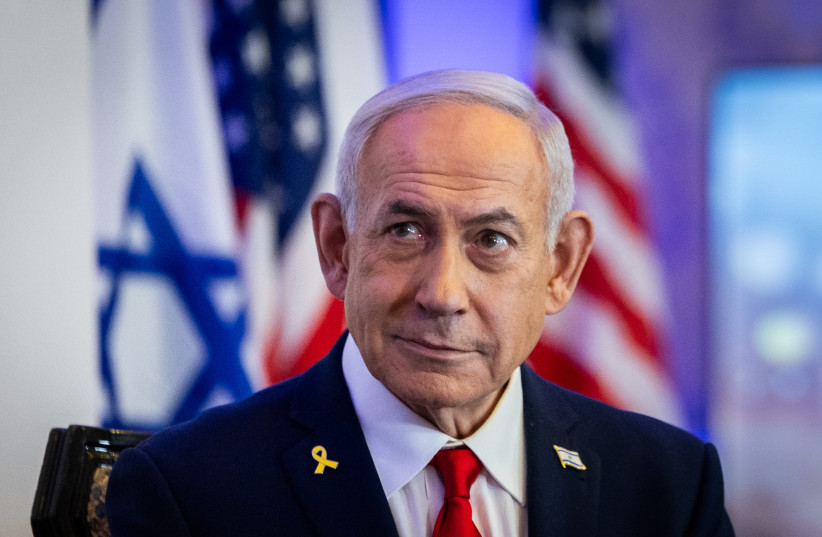 Prime Minister Benjamin Netanyahu attends a Christian Conference in Jerusalem, on April 27, 2025 (credit: Chaim Goldberg/Flash90)
Gadi Eisenkot was IDF chief of staff from 2015 to 2019. He helped shape the IDF’s command structure and appointed senior officers who remained influential in the military establishment in the years that followed.
Naftali Bennett served as defense minister and prime minister.
Avigdor Liberman served for years in senior ministerial positions, including as defense minister.
These three want-to-be prime ministers are not outsiders, people who are disconnected from the system that ultimately failed. Are they really offering us a fundamentally different government or merely a different collection of insiders?
The political debate often makes it appear that there is an enormous ideological gulf between Netanyahu and the leading figures of the opposition. But when one looks beyond the personalities and political branding, the differences are not always so dramatic.
On many of the fundamental questions facing Israel, the Center-Right and much of the opposition are closer than the political rhetoric would suggest. Increasingly, the principal argument again being offered voters is “We are not Bibi.”
Israel needs more than a change of personnel. It needs a change in the way the political system operates.
The country is confronting an extraordinary collection of problems simultaneously.
The war against Hamas has not disappeared. The Iranian threat has not disappeared. Israel faces an increasingly difficult international diplomatic environment.
At home, the country must resolve the increasingly urgent question of haredi military service. It must address the housing crisis and the crushing cost of living. It must strengthen the economy while maintaining the massive defense expenditures required by the new security reality. It must develop and implement a unified policy regarding the future of Judea and Samaria. It must reinvent its educational system to meet the technology and other demands of the 21st century.
We must create a proactive, effective, and unified public relations team to combat the widespread hatred of Israel.
Israel’s judicial reform
And, of course, Israel needs judicial reform. But it needs reform that is broadly accepted across the political spectrum and designed around the needs of most Israelis, not legislation crafted to satisfy the most ideological voices on either side.
The objective of any judicial reform should not be to weaken the judiciary or to empower it at the expense of elected government. It should be to establish a broad cross-party process that creates a sustainable balance between the branches of government, protects individual rights, preserves democratic accountability, and ensures that elected governments can actually govern.
All of these issues really point to the fact that what Israel desperately needs today is not simply a government of the blocs; it needs a unity government of the consensus. A government that will think country first. A government that will be accountable to its citizens, including the thousands upon thousands of reservists who dropped everything on October 7, put aside petty ideological differences, and fought side by side against our enemies, with the singular goal of winning so we could all continue living in our beautiful, holy land.
A unity government does not mean that every issue must be decided down the middle. It means building a Zionist governing coalition around the broad majority of Israelis who want a secure, prosperous, democratic, and Jewish state. No Itamar Ben-Gvir. No Yair Golan. No anti-Zionists, whether Jewish or Arab. Israel is exhausted by politics dominated by the extremes.
That does not mean that all Israelis who hold strongly ideological positions should be silenced or excluded from public debate. They have every right to participate in Israeli democracy. But policies should be built around the broad center of Israeli society, not around the factions most effective at creating division.
Some will argue that calling for a unity government means allowing those responsible for October 7 to escape accountability. It does not.
Israel should investigate October 7 thoroughly. October 7 revealed that Israel’s political and security establishment suffered from profound systemic failures. Changing the name on the Prime Minister’s Office door is not sufficient. We need to examine the assumptions that dominated the defense establishment. We need to examine how intelligence was interpreted. We need to examine the relationship between political leaders and the military. We need to examine how dissenting assessments were treated. And we need to ask why so many people across the political and security spectrum failed to anticipate the scale of the threat.
Perhaps the most important lesson Israel can draw from the catastrophe of October 7 is that no individual, party, or political camp possesses a monopoly on wisdom or blame.
The next government should therefore be judged not simply by whether it is Netanyahu’s government or an anti-Netanyahu government. It should be judged by whether Israel’s political leaders can put aside their egos and work together for the good of the country. We need the best and brightest of our country running our ministries; no more political hacks without experience and expertise.
Israel does not need another government whose principal achievement is defeating the other side. It needs a government of leaders humble enough to understand that the country is more important than any one of them.
Bibi, Gadi, Naftali, Avigdor, you have all done so much for our country. Now is the time to do the right thing and come together for the benefit of the State of Israel.
Put aside your political differences and work together to form a unity government.
The writer, a resident of Beit Shemesh, is the managing partner of Dekel Capital Management.