
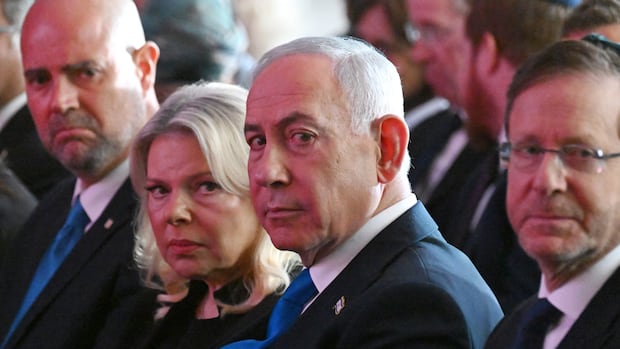
With just weeks before Benjamin Netanyahu is set to face a potentially pivotal election, the Israeli prime minister is defending against new allegations that he ignored high-level warnings from Arab allies that might have prevented the Hamas-led attacks on Oct. 7, 2023.
In a new book excerpted in Israel’s Haaretz newspaper, journalists Shlomi Eldar and Ruth Yuval contend that the United Arab Emirates President Mohamed bin Zayed telephoned Netanyahu 10 days prior to the attack to warn of a potential significant move by the militant group against Israel.
“The [worst thing] was that Netanyahu heard his warning and didn’t deliver it to the security echelon,” Eldar told CBC News at his home near Tel Aviv.
“Not the chief of staff, not the head of the Shin Bet, not the head of the Mossad,” he said, referring to the country’s internal security and spy agencies, respectively. “And also not the defence minister.”
The Oct. 7 attacks would prove to be the deadliest in Israel’s history. Some 1,200 people were killed, including more than 800 civilians, with 251 people taken back into Gaza as hostages.
Israel’s subsequent war in Gaza has killed more than 74,000 people, according to Gaza’s Health Ministry.
Eldar says, according to his sources, the U.A.E.’s warning was not specific about a date, only that Hamas’s leader in Gaza at the time, Yahiya Sinwar, was planning something “very big.”
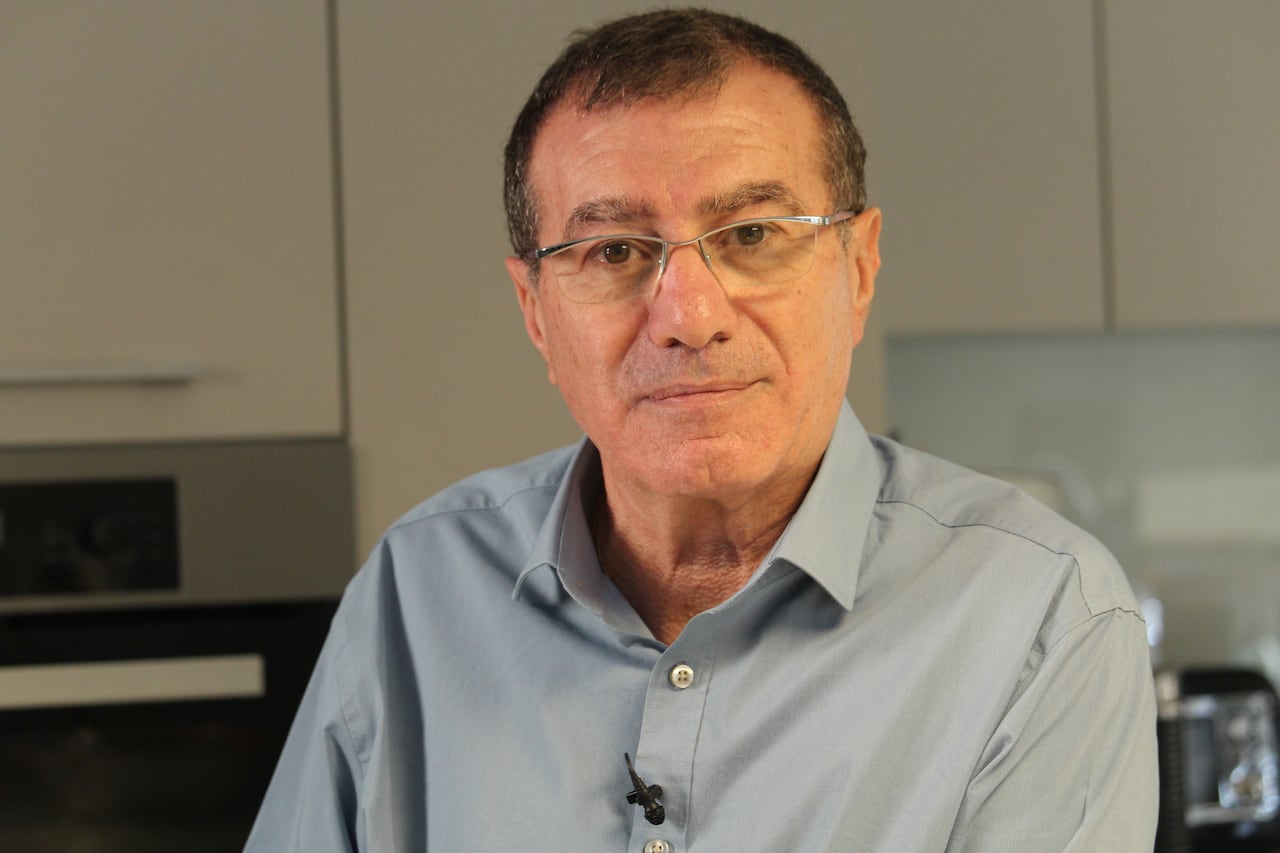
A new book co-authored by Israeli journalist Shlomi Eldar contends that United Arab Emirates President Mohamed bin Zayed called Netanyahu more than a week before attacks to warn of a potential significant move by Hamas. (CBC)
Shortly after Haaretz published the allegations, other media outlets including the Wall Street Journal and The Atlantic reported that Egypt’s intelligence head, Abbas Kamel, had delivered similar warnings in the days just prior to Oct. 7.
Netanyahu has dismissed the allegations as fabrication by political opponents and regional actors he accuses of trying to scupper his chances of winning another term in office when Israelis go to the polls on Oct. 27.
“I didn’t ignore any warnings because I didn’t receive any warnings, I mean that’s a complete hoax,” Netanyahu told CBS News. “It’s politically propagated by certain countries or certain elements abroad, but they’re completely false.”
The U.A.E. has not confirmed or denied the allegations contained in Eldar’s and Yuval’s book Hostages: 843 Days of Abandonment.
But they’ve added fuel to the fire for Israelis who have been demanding a state commission of inquiry into Israeli security failings for three years now.
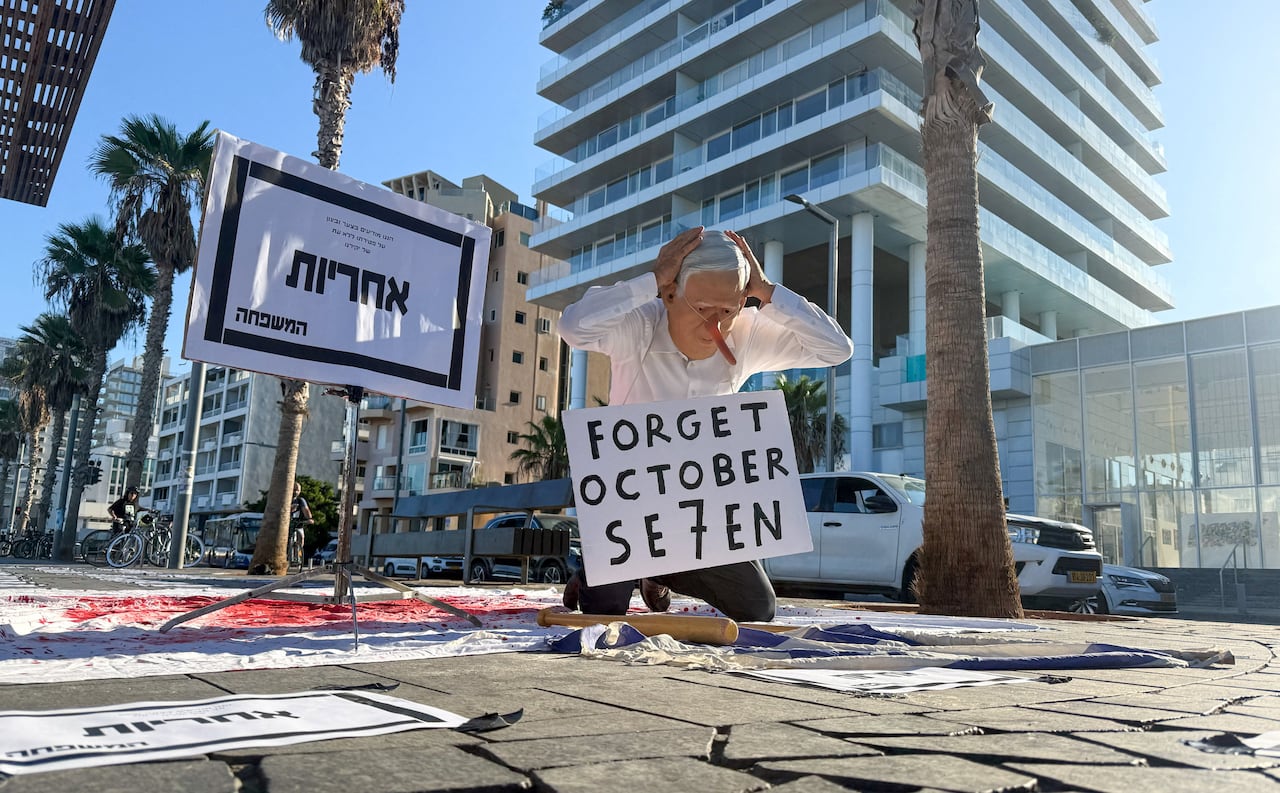
A protester dressed as Netanyahu kneels on a sheet covered with red paint with a sign in Hebrew announcing the ‘untimely death of responsibility’ on the third anniversary of the attacks, in Tel Aviv, on Monday. (Avi Ohayon/Reuters)
This year’s memorial ceremonies for the victims of Oct. 7 were accompanied by protests in Jerusalem and Tel Aviv demanding accountability from Netanyahu.
Some demonstrators held signs reading: “No forgiveness for failure, no forgiveness for abandonment.”
Others read: “The people will remember Oct. 7 on Oct. 27,” referring to the election.
The face of Eyal Eshel’s 19-year-old daughter Roni now graces a memorial stone along the Israeli/Gaza boundary, close to the Nahal Oz base where she and 14 other young women performing their Israeli military service were killed on Oct. 7.
“I don’t know what to say. I don’t know how to think. I don’t know what to recognize,” Eshel said.
“I just know that it’s three years and it’s become harder. We have a big hole, a black hole, at home.”
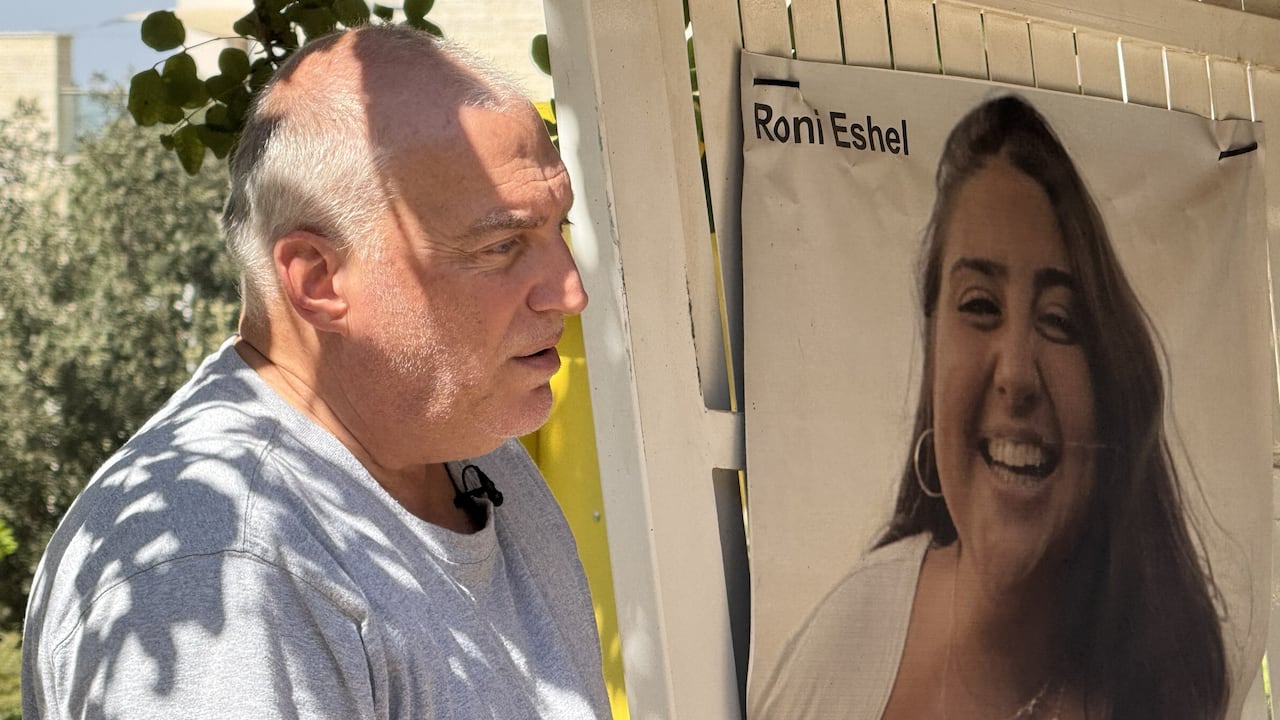
Eyal Eshel stands beside a poster of his 19-year-old daughter Roni, who was killed in the attacks. She was part of a military unit that also warned of unusual activity by Hamas. (CBC)
The women were part of a surveillance unit at the base, each monitoring a section of Israel’s fortified fence with Gaza in shifts.
That their repeated warnings of unusual activity by Hamas were dismissed by senior officers is already well documented.
Eshel remembers his daughter coming home from the base one morning, 72 hours before the attacks.
“She stood at home and she told me: ‘It’s hot there — not the weather, the situation.’
“I put my hand on her shoulder, and I told her, ‘Ronnie … we have a good army. Everything will be OK.'”
Eshel has since become a leading member of the October Council, made up of bereaved family members and victims, campaigning for a state inquiry.
WATCH | What did he know? And when?: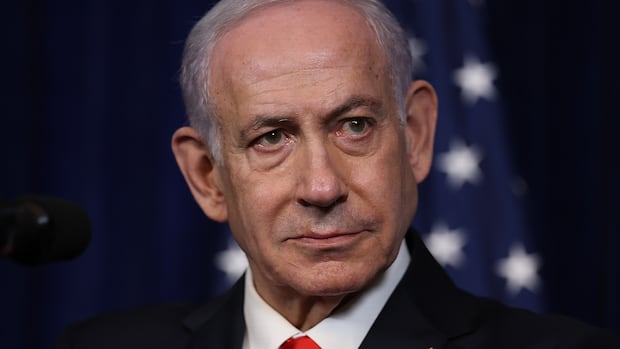
What Netanyahu knew before the Oct. 7 attacks
New allegations are emerging that Israeli Prime Minister Benjamin Netanyahu ignored warnings about the Oct. 7, 2023 Hamas-led attacks, and as CBC senior international correspondent Margaret Evans explains, they come just weeks before a pivotal election.
He spoke to CBC News sitting in a small garden next to his home in Tzur Yitzhak, north of Tel Aviv where he has re-created a memorial that includes replicas of the women’s monitoring stations in the Nahal Oz command centre.
Neighbours still light candles and leave messages of condolence there, where he has also planted the fruit trees and foliage, which he says Roni loved.
He can barely bring himself to say Netanyahu’s name out loud.
“Today, because of him and the IDF chiefs, I’m a grieving father. Because of these people. They need to be in jail. I lost Roni with her big smile just because of them,” he said.
Eshel is not surprised by the latest allegations against Netanyahu.
“He knew everything. He knew everything.”
‘A big mistake’
If Netanyahu did ignore or dismiss credible warnings, delivered by regional allies, reportedly repeatedly in Egypt’s case, the obvious question is why.
Some analysts suggest Netanyahu was worried that any action in Gaza had the potential to derail what he hoped at the time would be an agreement to establish formal relations with Saudi Arabia.
Others connect it to Netanyahu’s policy of propping up Hamas in Gaza over the years as a tactic designed to undermine the Palestinian Authority in the West Bank, and thus undermine the prospect of a Palestinian state.
Eldar says the initial warning from the U.A.E. came via a Palestinian mediator negotiating between Israel and Hamas on a potential easing of Israel’s blockade of the Strip.
Netanyahu continued to allow funding from Qatar to reach Hamas even though he knew it went directly to the Hamas military wing, according to Eldar.
Making it easier for Sinwar, the Hamas leader, to mislead Israel, says Danny Yatom, who served as the Mossad chief in the late ’90s, during Netanyahu’s first term.
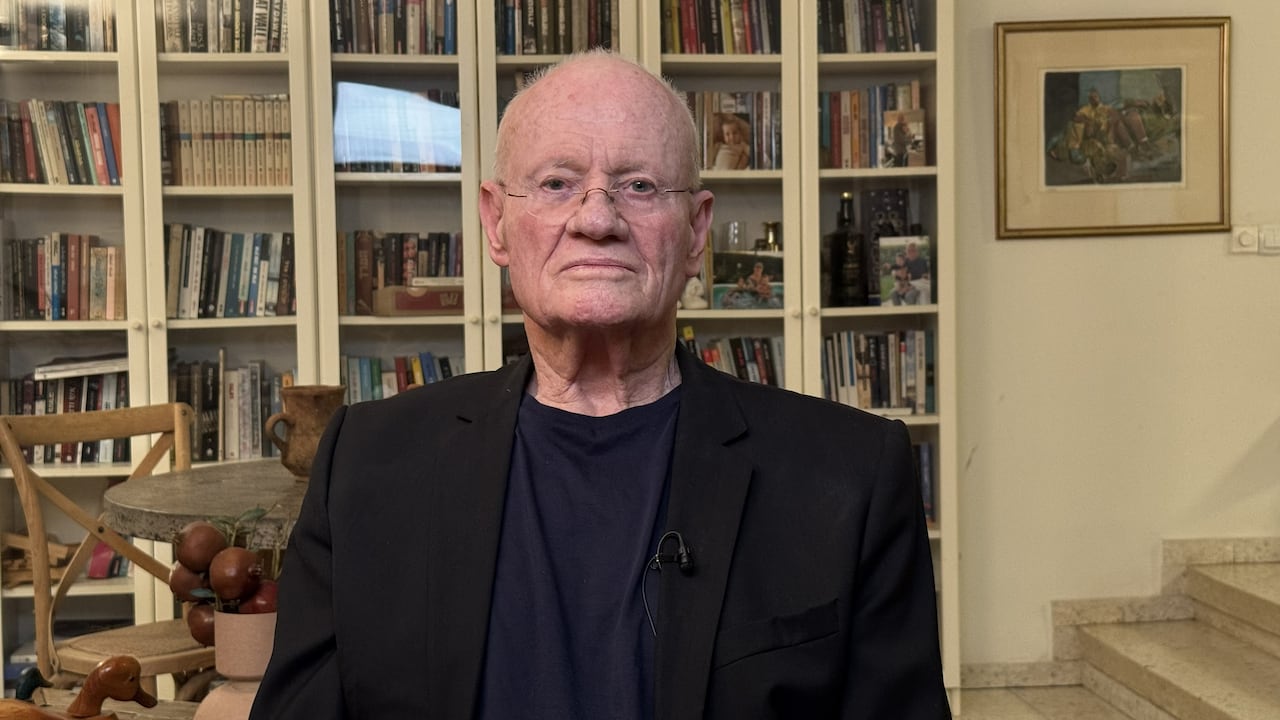
Former Israeli spy chief Danny Yatom says the misperception, among Netanyahu and others, that Hamas leader Yahiya Sinwar didn’t want war was a ‘big mistake.’ (CBC)
“The misconception that was shared by the heads of the intelligence and Netanyahu and almost everybody … was that Sinwar did not want war, and he is going to do his utmost in order to avoid a war. Of course, it was a big mistake.”
Yatom, who also served as military secretary to Israeli Prime Minister Yitzhak Rabin and later as chief of staff to Prime Minister Ehud Barak, says Netanyahu’s refusal to convene an independently appointed state inquiry is telling.
“The fact that Netanyahu … did not take responsibility on himself I think says a lot about his behaviour,” Yatom told CBC News.
In a recent poll by the Israel Democracy Institute, 68 per cent of Jewish Israelis said the Oct. 7 attacks would be central to the way they vote in upcoming elections.
But political analysts are not writing off Israel’s longest serving leader — often dubbed the “Teflon Prime Minister” for his staying power despite numerous political scandals over the years.
“The government has shown that it is completely and utterly inept at everything other than staying in power, which means that the opposition should have had this election handed to it on a silver platter,” said Hebrew University political scientist Reuven Hazan.
“The fact that it’s even a race is mind-boggling.”
Eldar says that in the absence of a state inquiry, the vote has taken on the feel of a referendum on Netanyahu’s conduct before, during and after Oct. 7.
“[Many times we] had chance to release the hostages and stop the war and bloodshed in Gaza Strip,” he said. “We could stop the war before, but Netanyahu refused [for] his political survival.”
Netanyahu has threatened to sue Eldar and other Israeli journalists who have published the allegations against him.
“He tried to say that we’re just recruited by the opposition,” said Eldar, denying it and insisting that the timing of the book’s publication coincides with the time it took to verify the allegations contained within it.