
House Republican leaders have been stubbornly confident heading into the midterm elections that they can defend, or even grow, their slim majority. But they’ve begun to acknowledge election night may not work out that way.
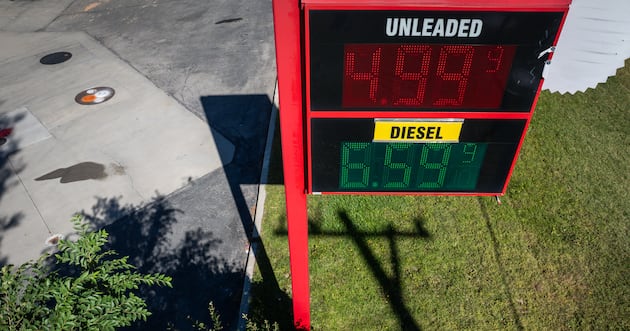
Utah Rep. Blake Moore, who holds the fifth-highest leadership position in the House, says he still has faith in Republicans’ chances. However, he conceded that high gas prices and the prolonged war in Iran have complicated efforts to tout other policy wins over the last two years.
“People are so frustrated at gas prices, they’ve forgotten what the border situation was like under Democrat leadership,” Moore said in an interview with the Deseret News. “It’s fair to be frustrated and say, ‘OK, well that was a 2023 issue. The border was a 2023 issue, and Republicans have delivered on a strong secure border.’ Now there’s other issues.”
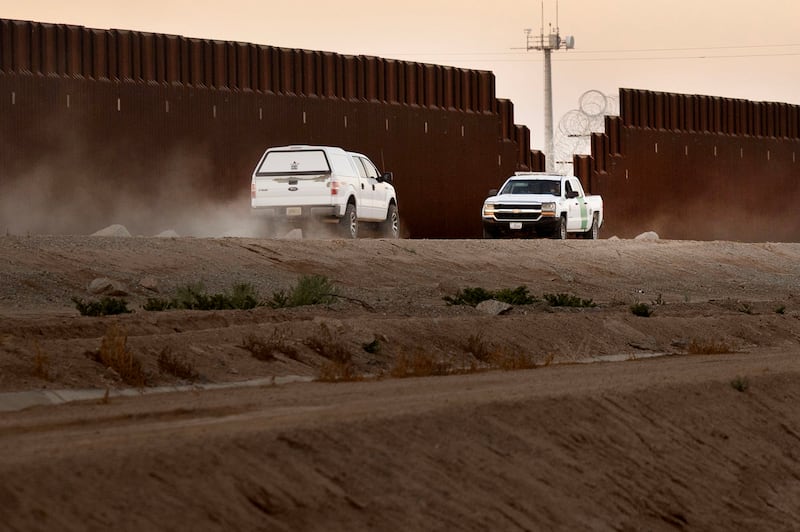 The U.S.-Mexico border wall is pictured in Yuma, Ariz., on Wednesday, March 25, 2026. | Laura Seitz, Deseret News
The midterm elections typically act as a referendum on the party of the sitting president, historically resulting in the loss of seats in Congress. There have been few exceptions in modern history, such as when Republicans under President George W. Bush won seats in both the House and Senate in 2002.
During President Donald Trump’s first term, he managed to win two seats in the Senate — but lost more than 40 seats in the House. While House Democrats are not expecting such a big wave this time around, the political landscape has begun to swing in the minority party’s favor.
The midterm pendulum is often controlled by the political circumstances at the time a voter casts a ballot. So although Republicans believe they have a strong economic and political record, it may not resonate with everyday voters facing high grocery and gas prices.
“It’s easy to blame whoever’s in the majority. No question, I understand that,” Moore said. “All I heard from my first three years in office was how frustrated folks were with Democrats who were in control of the White House, House and Senate, and the absolutely historic high inflation that we were going through.”
“So we’re talking about the same things,” he continued. “If you look at inflation numbers, they were far worse when Biden was in office. That doesn’t mean that it’s not something that is important, or that we need to be figuring out how to address it — but those two issues, gas prices and inflation, have been persistent and frustrating to folks.”
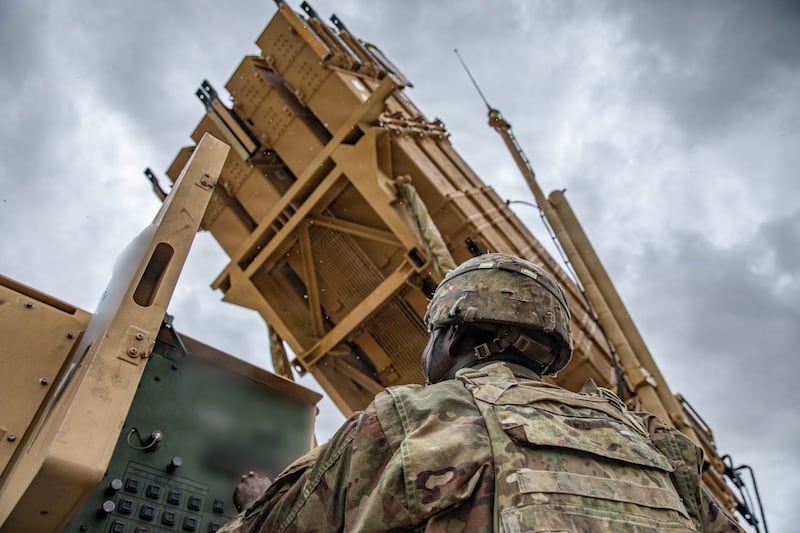 U.S. Army Soldiers conduct operations in the U.S. Central Command area of responsibility during Operation Epic Fury, March 27, 2026. | U.S. Army via CentCom
Moore attributed the high gas prices to the war in Iran, which he acknowledged was originally considered to be a temporary problem. Although Trump said the conflict would “end pretty quickly,” the war has become a major sticking point on the campaign trail.
“I’ve never had anybody, no matter where they are on the political spectrum, say they would not be concerned or have real worry about Iran becoming a nuclear state with access to a nuclear weapon. But this is no longer a six-week issue,” Moore said. “Two things are true: I don’t want Iran to have a nuclear weapon. … But also, this is really affecting our domestic outlook. When gas prices are more expensive, everything else costs more. So that’s the dilemma in that conversation.”
Moore praises Speaker Johnson, Majority Leader Thune
Still, Moore is bullish that voters will respond to Republicans’ pitch of sound governance. In fact, the Utah Republican said he wished the midterm elections were more of a referendum on congressional performance rather than external politics.
Moore pointed to the leadership of House Speaker Mike Johnson, R-La., and Senate Majority Leader John Thune, R-S.D., lauding their handling of key issues this term: border security, tax cuts, pro-growth tax policy, and more.
Still, Moore noted the pair do not have control over “everything going on politically over the nation” despite those issues — namely the war in Iran and subsequent high gas prices — holding the most weight heading into November.
“I am still looking at the basics of what our country needs and believe that Republican leadership is what that is,” Moore said. “Mike Johnson’s a great leader, and I’m hopeful that what could play out is based off of his job performance (that) we would win or lose … not necessarily based off of President Trump’s polling numbers. But that’s not the way politics works out.”
Moore also acknowledged the midterm terrain has shifted drastically over the last few months.
While the outlook of the House was in toss-up territory at the beginning of this year, political experts have since shifted several of those races in Democrats’ favor.
Moore attributed the “unpredictable” midterm map to a number of factors, such as incumbents having races that unexpectedly became more competitive or new candidates in redrawn districts having an uphill battle to introduce themselves to unfamiliar voters.
“What I was expecting, say a year ago, was those new entrants we could win and then maintain all of the incumbents, and it’s a little bit unclear right now,” Moore said.
Regardless of who takes control of Congress next year, lawmakers are likely going to navigate similarly slim margins. A shift in the power dynamic could upend some bipartisan priorities, but Moore maintained confidence that Congress could still be productive in the shifting terrain.
To do that, Moore again opted to keep the congressional world separate from the executive branch.
“If the power dynamic were to shift to some degree, House or Senate or both, I’m hopeful we could see some things like we did last time this happened,” Moore said. “There’s plenty of opportunities. I think what would frustrate me is if we were immediately then just jockeying for who was going to be the next president in 2028 — that we had to manipulate our congressional world, and I don’t think that’s the case.”