
(Oct. 10, 2026 / JNS)
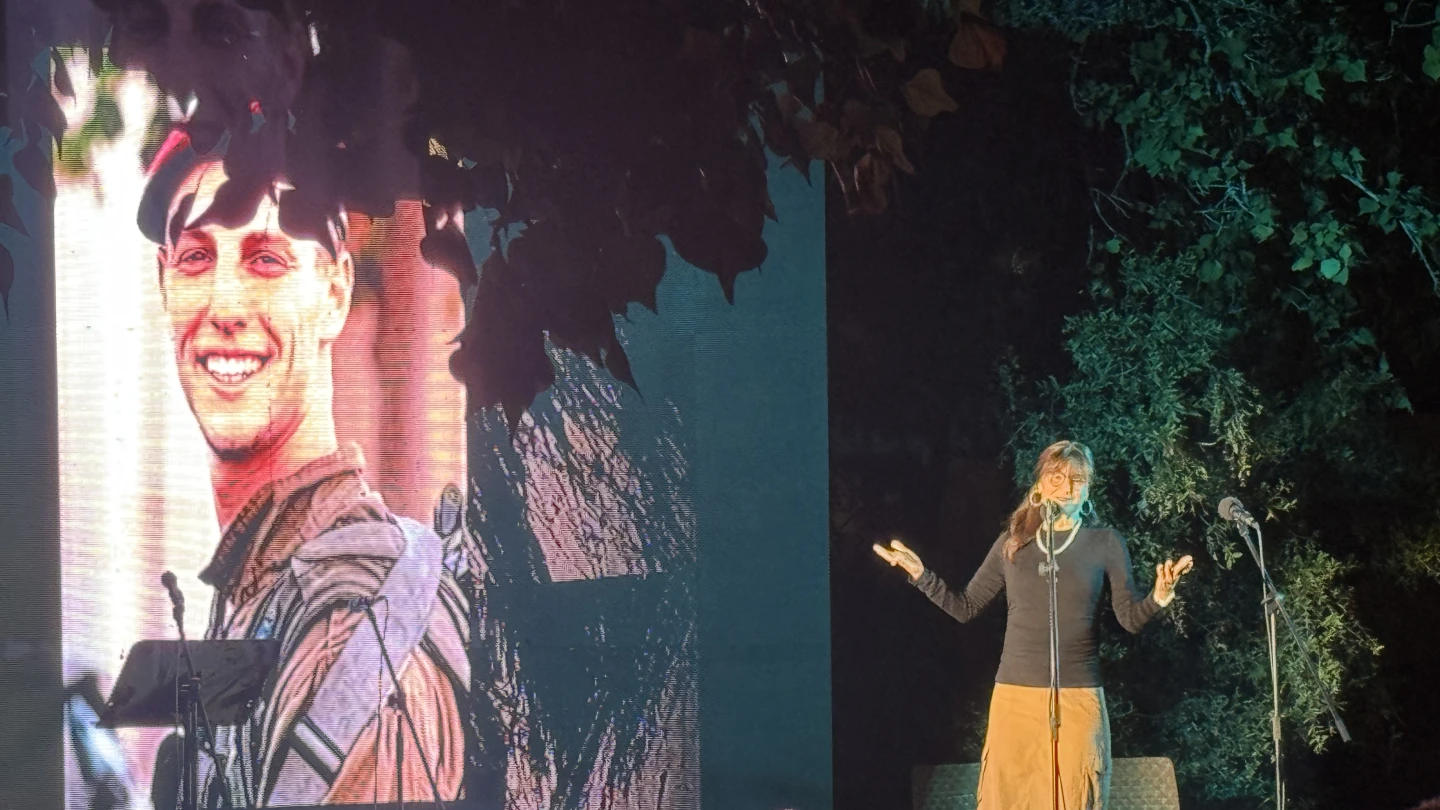
Jen Airley ascended the outdoor stage at Kibbutz Nir Am’s Oct. 7 commemoration as a photograph of her late son, Sgt. Binyamin Meir Airley, was projected on a screen behind her.
Binyamin and fellow paratroopers landed by helicopter at Kibbutz Nir Am on Oct. 7, 2023, to help clear the community of Hamas terrorists who had infiltrated from Gaza. He was killed the following month while fighting in northern Gaza.
The Airley family, along with the commander of Binyamin’s unit, the 35th Paratroopers Brigade’s 101st Battalion, and a fellow soldier toured Nir Am and visited the kindergarten where the paratroopers had slept on children’s mats and used child-sized bathrooms and sinks.
It was also there that Binyamin used the phone of a kibbutz member to call his parents. Jen Airley recalled that it would be one of the last times they heard from their 21-year-old son before he was killed in action on Nov. 18, 2023.
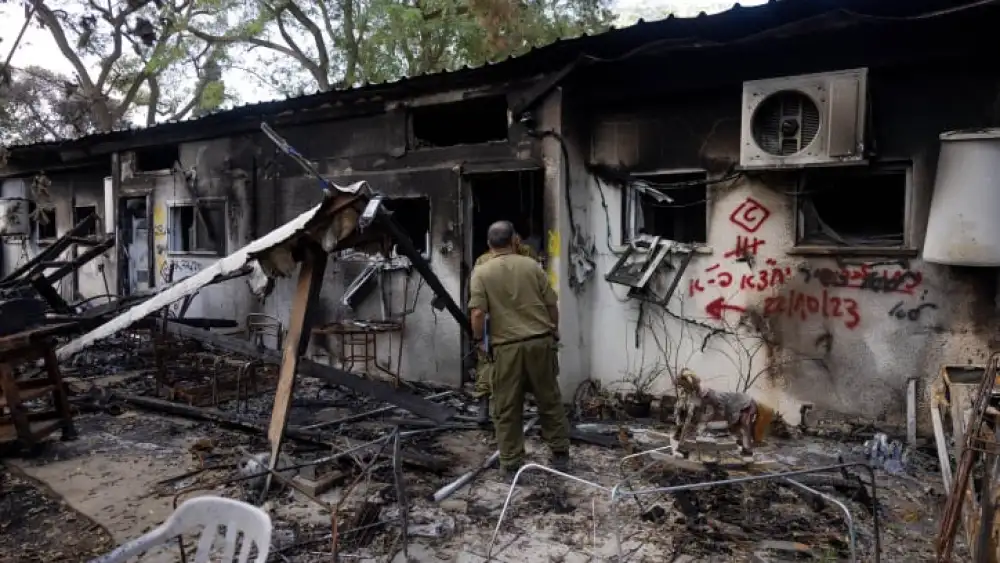
Destruction caused on Oct. 7, 2023, by Palestinian terrorists in Kibbutz Nir Oz, near the Gaza Strip, Jan. 23, 2025. Photo by Yaniv Nadav/Flash90.
Airley shared stories about her son, first in Hebrew with the large gathering of kibbutz members and, following the ceremony, in English in the kibbutz library with a more intimate gathering of about 20 North American, South African and British members of the JLIC-TLV (Jewish Learning Initiative on Campus) Tel Aviv community.
JLIC has supported Nir Am and developed close relationships with its members since the community was evacuated to a Tel Aviv hotel for 10 months following the Hamas massacre.
Airley, accompanied by two friends with whom she studies Jewish texts daily, including the mother of her late son’s army commander, described Binyamin to the largely secular kibbutz community as a “fun, social, half-marathon-running, beer-drinking, inattentive learner” who frequently spoke of his willingness to die for his country.
“He was an ‘If I need to die for the land, that is what I need to do’ guy,” she said.
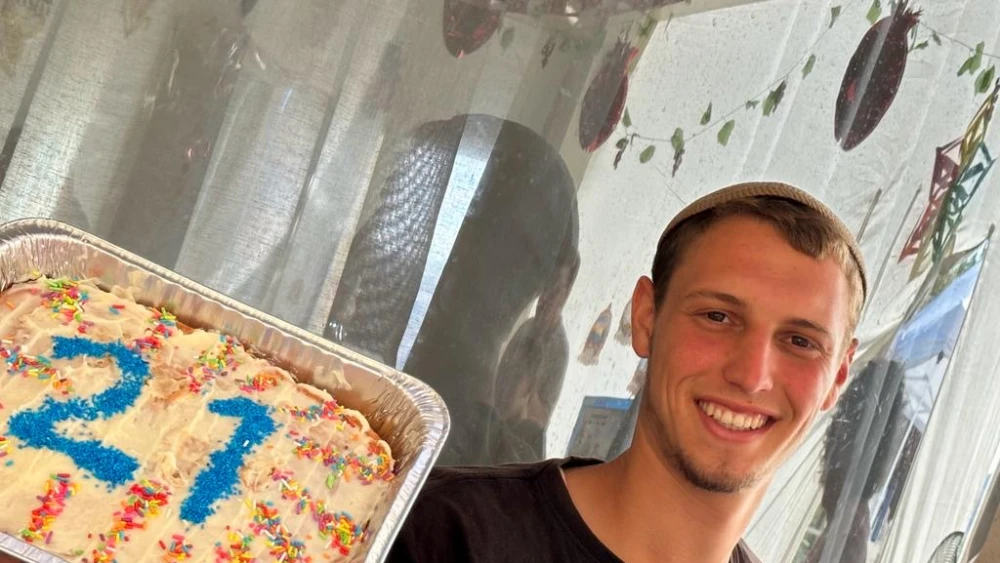
IDF paratrooper Binyamin Meir Airley, who was killed in action in the northern Gaza Strip on Nov. 18, 2023, celebrating his 21st birthday. Credit: Courtesy of the Airley family.
‘Miracle after miracle’
Before the ceremony, Airley met with Chen Parchi Cohen, Nir Am’s head of resources and partnerships.
Parchi Cohen described what happened at the kibbutz on Oct. 7 as “miracle after miracle after miracle.”
Located just over a mile from the Gaza Strip and adjacent to Sderot, Nir Am had a population of about 800 when Hamas terrorists attacked. The kibbutz was founded in 1943, largely by immigrants from Bessarabia, part of which is present-day Moldova.
Nir Am’s security squad, aided by a small number of Border Police officers and IDF soldiers, prevented the terrorists from carrying out a massacre inside the kibbutz. Two soldiers were killed in the Battle of Nir Am.
Parchi Cohen and her four children survived after spending hours in the kibbutz bomb shelter.
Airley expressed her gratitude to the community for caring for her son.
“Thanks to those who fed him, let him call us from your homes,” she said. “Thanks for looking after him.”
Rob and Jen Airley, Beit Shemesh residents and parents of six, moved to Israel from the United States when Binyamin was 4. Jen and her son Yehuda shared more stories about Binyamin with the smaller English-speaking group and answered questions.
“It was not easy to raise a boy like him—he had energy and pushed limits,” Jen said. “He was a fighter before the war—at age 5, 10 and 15. That was his nature.”
In contrast to Yehuda, whom she described as a rule-follower, “for Binyamin, rules were there to break.”
She recalled how her nature-loving son once asked his commander for permission to make a bonfire for his fellow soldiers “so they could sing and dance and have positive energy.” When the commander refused, Binyamin received permission to take his request to a superior, who approved it.
“This was his style,” she said. “Don’t tell me no. The important thing was to raise the spirits of the others.”
Jen said Binyamin wanted to be a combat soldier in part to help “clear the area so Jews could live in the south” and to defend Israeli women following the sexual violence perpetrated by Hamas during the Oct. 7 massacre and against hostages in Gaza.
“You do this to our women, we will kill you,” she quoted him as saying.
But Binyamin also had a softer side. He loved hiking, nature and the outdoors.
“He couldn’t understand malls and movies and why people would be indoors,” she said.
Reflecting on that love of nature, she said poignantly: “We didn’t bury him, we planted him.”
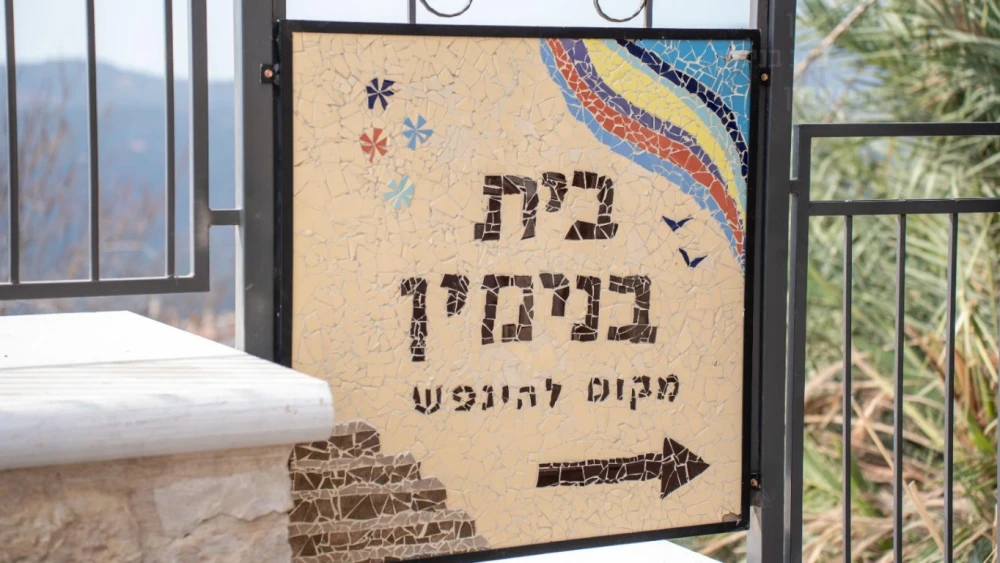
Beit Binyamin in Safed. Credit: beitbinyamin.org.
Turning pain into purpose
Binyamin’s memory and values are also being carried forward through the family’s establishment of the Beit Binyamin Retreat Center in Safed.
Jen said she and her husband had been considering buying a home in Safed while Binyamin was alive, with plans to renovate it as a vacation rental.
“Binyamin had been in yeshivah in Safed and was doing some of the construction and dealing with the lawyers,” she said.
The family purchased the property and began renovations, but the war broke out and Binyamin was killed just over a month later.
“We decided to change gears—to use it for Am Yisrael as a retreat center,” she said.
The center hosts bereaved families, Nova music festival survivors, wives of IDF reservists, soldiers and mothers of wounded troops.
Mordechai Kaplan, 50, a family friend from Beit Shemesh who knew Binyamin and runs Kaplan Custom Tours, serves as executive director of Beit Binyamin.
Kaplan said that during the war, as tourism collapsed and he began leading what he called “war tours,” he frequently invited Rob and Jen Airley to tell Binyamin’s story to visiting groups.
When Rob mentioned the property in Safed that the family was dedicating to the people of Israel, Kaplan offered to help. Two weeks later, he received a call and began working for the retreat center, which opened in May 2024.
Beit Binyamin can comfortably accommodate 18 people. Groups generally stay from Monday to Wednesday or Thursday through Saturday. Some bring their own counselors and therapists and participate in hands-on activities.
Nearly every Shabbat, Kaplan said, the center hosts families, many affected by extended IDF reserve duty.
Jen recalled one rabbinic family whose father had completed his seventh stint of reserve duty, taking a tremendous toll on him and his loved ones. She said both the soldier and his wife benefited from their stay, and that his fellow soldiers noticed a positive change in him afterward.
“We give them food vouchers, spas, ceramics workshops and other things,” Kaplan said.
Kaplan believes the center has become increasingly important as Israelis begin processing the accumulated trauma of the war.
“We came at the right place and the right time,” he said. “People are dealing with nafshi [emotional] pain. It is starting to settle in. PTSD is setting in, and people are now able to reflect and bring things up. Our motto is turning pain into purpose.”
The Airley family has sought to do just that—transforming the pain of Binyamin’s loss into a place of respite and healing for others affected by the war.
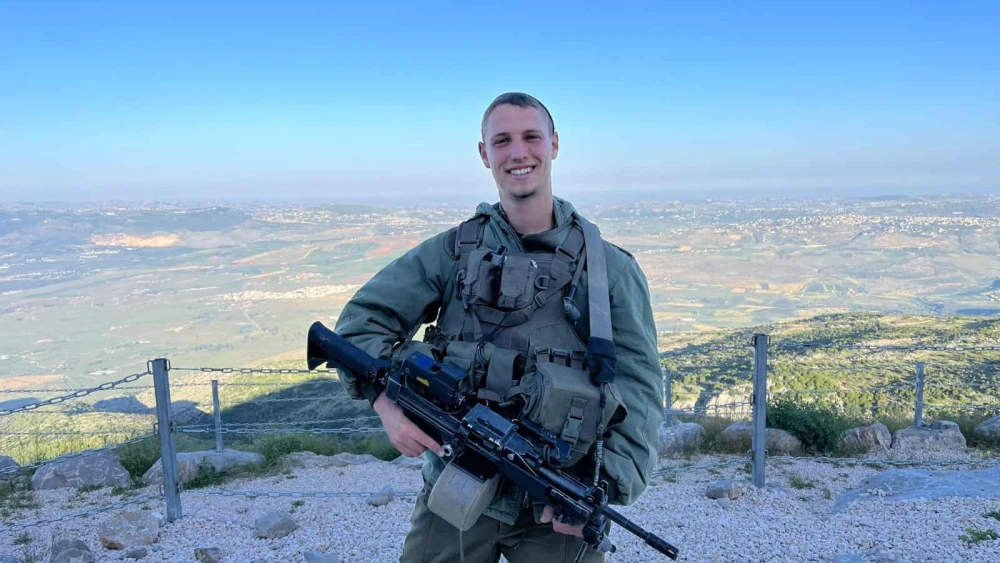
Sgt. Binyamin Meir Airley. Credit: Courtesy of Jennifer Averbuch Airley.