

Listen to this article
Estimated 4 minutes
The audio version of this article is generated by AI-based technology. Mispronunciations can occur. We are working with our partners to continually review and improve the results.
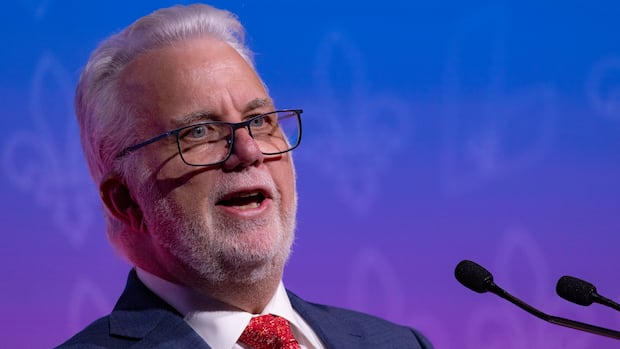
The former Quebec premier who oversaw passage of Canada’s first-ever medically assisted dying law says he now feels conflicted after seeing how far the practice has progressed since then.
Quebec’s National Assembly passed the law in 2014 outlining conditions under which terminally ill patients could formally request medical assistance in dying (MAID).
While the bill was initially introduced by the Parti Québécois, it gained multiparty support while Philippe Couillard’s Liberals were in government.
The former premier told CBC’s The House that he sometimes questions his 2014 decision after seeing how MAID has expanded in Quebec and Canada since that first law was passed.
“It was clearly reserved for terminal or pre-terminal conditions with a defined, unfortunate road to the end of life. And this is not the case anymore,” he told host Catherine Cullen.
“I’m not sure that I would have again voted for that law with the extension that we have seen in the recent years.”
WATCH | Why is Canada halting MAID expansion?
Why is Canada halting MAID expansion for mental illness?
Canada is stopping the expansion of medical assistance in dying for people solely suffering from mental illness. Power & Politics hears from two members of the Special Joint Committee on MAID — Liberal MP James Maloney, who supports his government’s move, and Alberta Sen. Kristopher Wells, who says it goes against the wishes of Canadians.
Two years after Quebec passed its law, the federal government passed its own MAID legislation — prompted by a 2015 Supreme Court ruling that said a prohibition of medically assisted dying ran contrary to the Charter of Rights and Freedoms.
Former prime minister Justin Trudeau consulted with Couillard before the 2016 federal MAID law was adopted.
That federal legislation was struck down by the Superior Court of Quebec in 2019 because it was limited to those whose deaths were “reasonably foreseeable.” The federal government passed a subsequent law in 2021 to fall in line with the court’s ruling.
Quebec took things a step further in 2024, allowing for people to submit advance requests for MAID before a person’s condition, such as Alzheimer’s, renders them incapable of giving consent.
Couillard, a former neurosurgeon, emphasized that the intention of Quebec’s original law was to limit MAID to those solely suffering from a terminal illness.
“I was warned about this by people opposing the law that told me, ‘We see your motivation is good, but you will see, once you open the door you will not close it and it will open wider.’ And this is what happened,” he said.
The federal government announced this week that, after deliberation in the wake of the 2019 court ruling, it wouldn’t proceed with expanding MAID to people who are solely suffering from mental illness. (There are multiple cases before the courts arguing for further expansion to include people suffering from mental illness).
WATCH | More about MAID: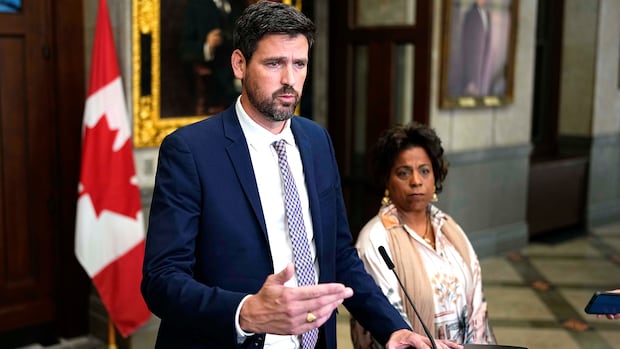
Canada shuts door on medical assistance in dying for mental illness
Justice Minister Sean Fraser announced the government will not move forward with allowing medical assistance in dying (MAID) for those suffering solely from mental illness, angering some MAID advocates, but pleasing many in the medical community.
In addition, Justice Minister Sean Fraser said new coming legislation will “open the door” for people to give advance consent if provinces allow.
“We need to create space for people to be able to provide consent when they know they’re going to lose capacity in order to live out their remaining years rather than being put in a position where they fear they have to take that decision prematurely,” Fraser said earlier this week.
“We don’t have the jurisdiction to create these services in the different provinces. We only have the jurisdiction to determine when a particular set of behaviours will be treated as criminal under Canada’s criminal laws.”
Despite his current reservations, Couillard praised the passing of the original bill as “one of the best moments of democracy” during his premiership, noting that he allowed for a free vote within his Liberal caucus.
But when asked, he said he does sometimes have regrets about passing the law.
“In general, when this hits me, I think about specific patients that I’ve known in my medical career that were in such deep distress and pain that I think we did the right thing,” he said.
“But I hope we didn’t go too fast. I hope we didn’t take this as a trivial matter, which is certainly not the case.”