
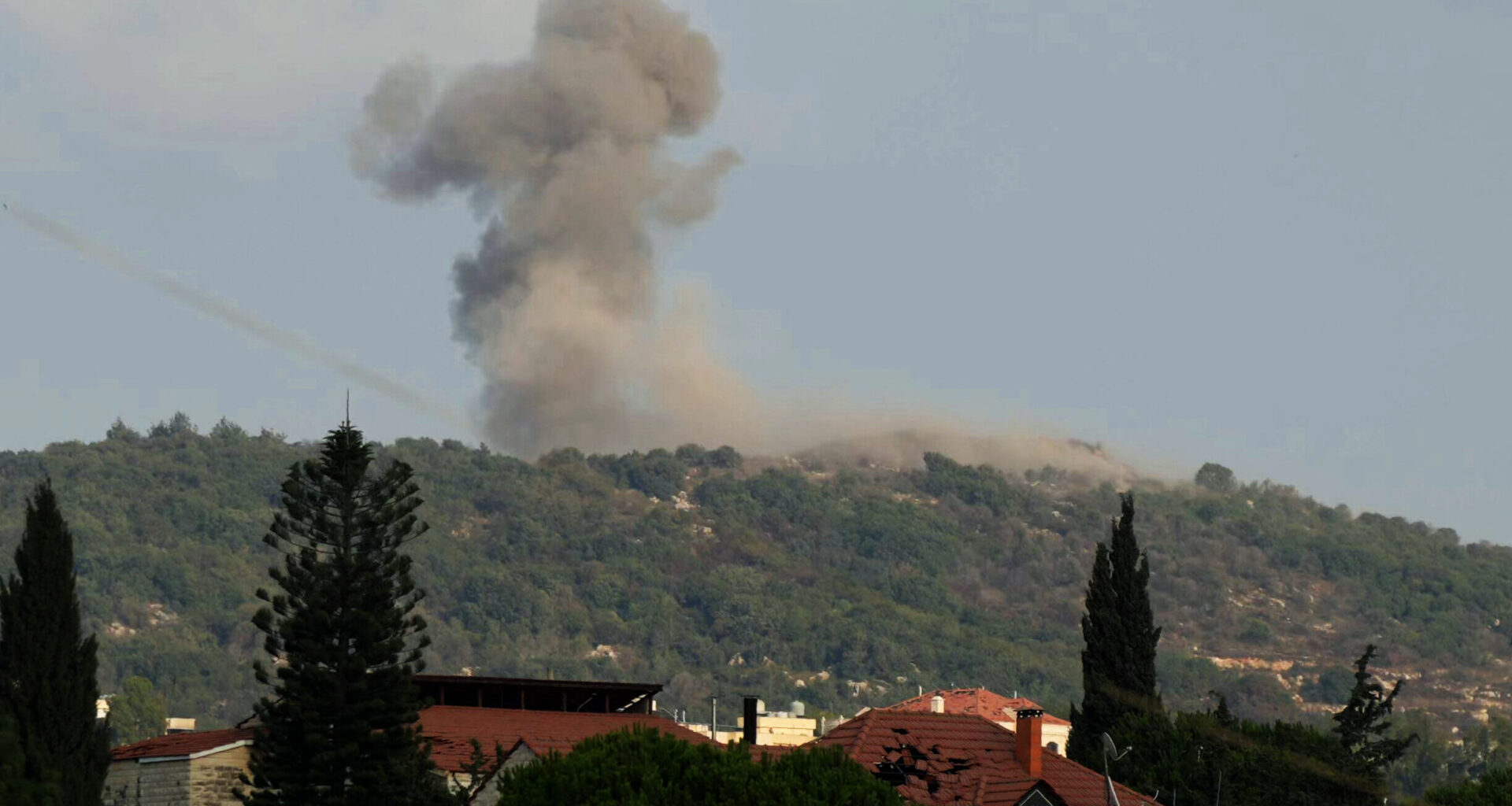
Nida Al Watan, Lebanon, September 15
The story of Ali al-Taher Ridge is not merely about the loss of a military position. It raises a question that Lebanese must confront: why did Hezbollah refuse to hand the position over to the Lebanese Army when it knew the alternative could be the Israeli army reaching it?
This is no longer simply a political argument. Had Hezbollah transferred the hill to the state, it could have strengthened Lebanon’s position in negotiations with Israel.
Instead, developments on the ground culminated in Hezbollah evacuating the position and Israel announcing that it had taken control of it. Worse still, Hezbollah left Ali al-Taher with an Iranian green light.
Here lies the contradiction that demands scrutiny: If Hezbollah regards Israel as the foremost threat to Lebanon, why is handing a Lebanese position to the Lebanese Army more difficult than leaving it exposed to the possibility of falling into Israeli hands?
Hezbollah can invoke military considerations, arguing that surrendering a strategic position to the army before a comprehensive understanding of its weapons could force it into further concessions.
But that argument itself exposes the heart of the problem. Hezbollah does not treat the Lebanese Army as the sole natural authority responsible for defending Lebanese territory; rather, it views the army’s assumption of a military position as something that could alter the equation surrounding its weapons.
That is the most painful lesson of Ali al-Taher. The Lebanese state should have been the natural beneficiary of any withdrawal from a Lebanese military position. For Hezbollah to leave and Israel then to find itself able to establish a presence there means the dispute is no longer only with Israel, but also over who possesses the authority to decide matters of territory and arms.
Ali al-Taher has demonstrated how the slogan of “resistance” can become a political predicament when the state itself is excluded from the defense equation.
If Hezbollah refused to hand over the position because it feared setting a precedent for other positions, then the problem is not the hill alone. It is the rejection of the principle that military decision-making belongs exclusively to the state.
Hezbollah understood that Ali al-Taher would not be the final target and feared a new pattern in which Israeli military pressure would eventually force it to surrender everything.
Yet losing the position to Israel does not strengthen Hezbollah’s case. It raises the opposite question: What did Lebanon gain from Hezbollah retaining the position if its fighters ultimately withdrew without transferring it to the Lebanese Army?
The state, not Hezbollah, should now be given the opportunity to control the land and the decisions governing it. Lebanon does not need an armed force that independently decides where to fight and where to withdraw, leaving the state to deal with the consequences.
Ali al-Taher is not merely a hill. It is a genuine test of the very idea of the state.
And the harshest consequence for Hezbollah is that its refusal to hand the position to the state may leave its opponents asking whether protecting the “resistance” mattered more to it than preventing Israel from reaching the site.
Jean Feghali (translated by Asaf Zilberfarb)