

Miss something this week? Don’t panic. The CBC’s Marketplace rounds up the consumer and health news you need.
Want this in your inbox? Get the Marketplace newsletter every Friday.
These 5 grocery staples have skyrocketed in price this year. Here’s why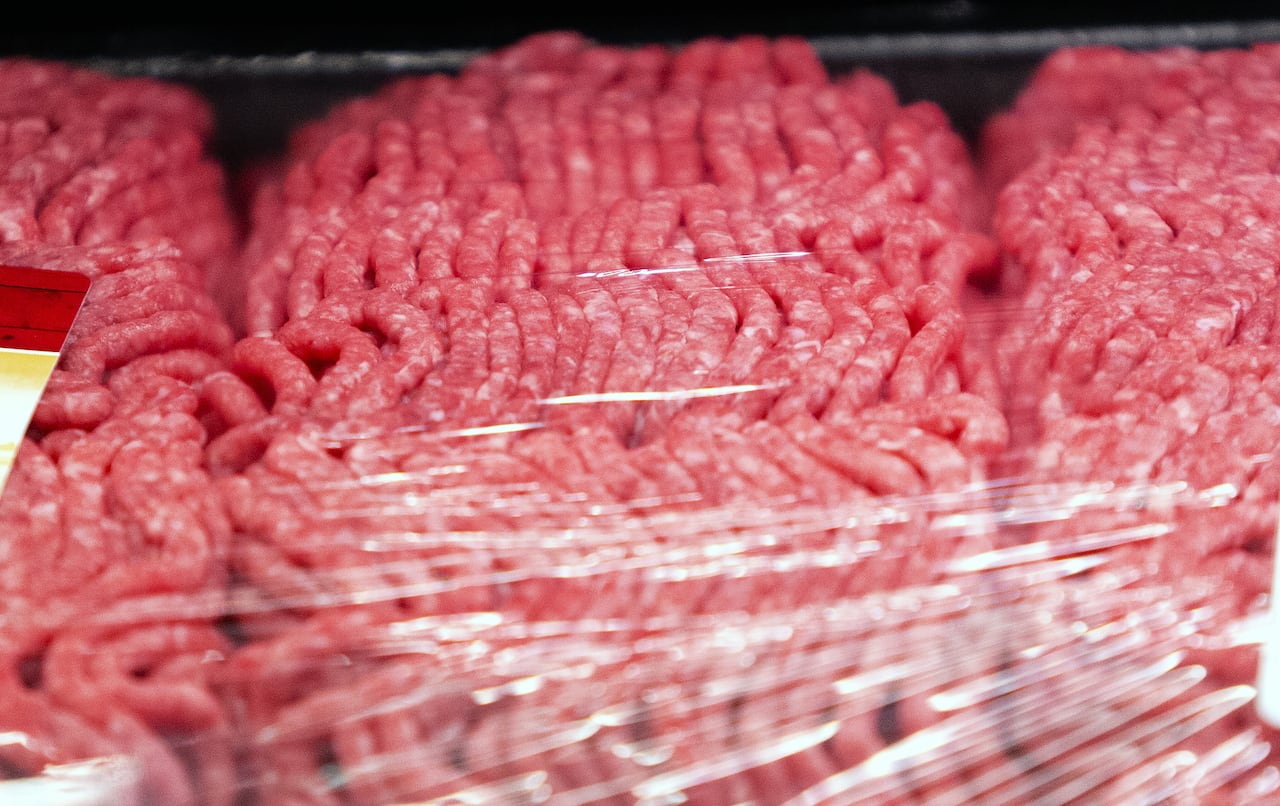
In January, the price of ground beef increased by more than 10 times the rate of general inflation. (Bryan Eneas/CBC)
Grocery prices have been going up faster than overall inflation for more than a year, with the exception of August.
Economist Jim Stanford and agriculture professor Mike von Massow say a combination of factors is driving food prices higher, including climate, immigration policies, tariffs and retailer pricing.
Using consumer price index (CPI) data from Statistics Canada, Marketplace looked at some of the biggest year-over-year food price increases in 2026 and what was driving them.
To find out why beef, chicken, tomatoes, lettuce and cucumbers have become more expensive — and the government’s plan to make food more affordable, read our full story from Rosa Marchitelli, Jeremy McDonald and Tomi Joseph-Raji.
How much sugar is in these ‘sugar-free’ Starbucks protein drinks? As much as a candy bar, claims lawsuit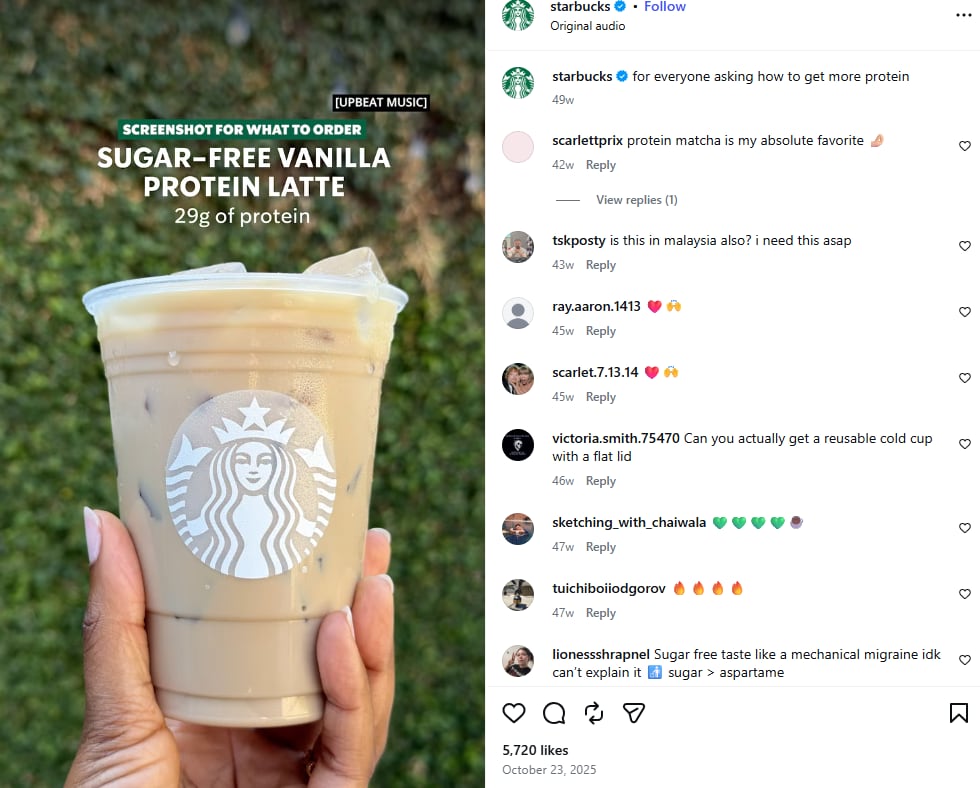
A screengrab of an Instagram post by Starbucks from Oct. 23, 2025, that advertises some protein beverages as sugar-free. (@Starbucks/Instagram)
It’s fair to say you probably have some idea what you’re in for, sugar-wise, when you order a pumpkin spice latte or caramel macchiato from Starbucks. But what should you expect if you’re ordering a drink that’s labelled “sugar-free”?
That’s the question behind a proposed U.S. class-action lawsuit that claims the coffee chain falsely advertised eight protein beverages as “sugar-free,” when they actually contain between 13 and 21 grams of sugar per venti-sized serving due to the naturally occurring sugar in milk.
The lawsuit, filed Oct. 2 in a Seattle federal court and viewed by CBC News, accuses Starbucks of trying to capitalize on “the protein craze” and nutritional preferences of customers.
“By naming its beverages ‘sugar-free,’ Starbucks makes a specific, quantitative and verifiable claim about the nature of these beverages. Consumers rely upon such claims when deciding to purchase such products,” the lawsuit says.
“The 21 grams of sugar contained in a venti Sugar-Free Caramel Protein Matcha is roughly equal to five teaspoons of sugar. This is almost as much total sugar as is contained in a standard KitKat bar.”
A spokesperson for Starbucks told CBC News on Wednesday they believe the lawsuit’s claims have “no merit.”
“Starbucks has consistently and clearly provided information about its protein beverages, sugar-free options, customization choices and nutritional content … and we intend to vigorously defend ourselves,” the spokesperson said.
Read more from the CBC’s Natalie Stechyson.
Build Canada Homes was launched a year ago. Can it scale up fast enough to meet demand?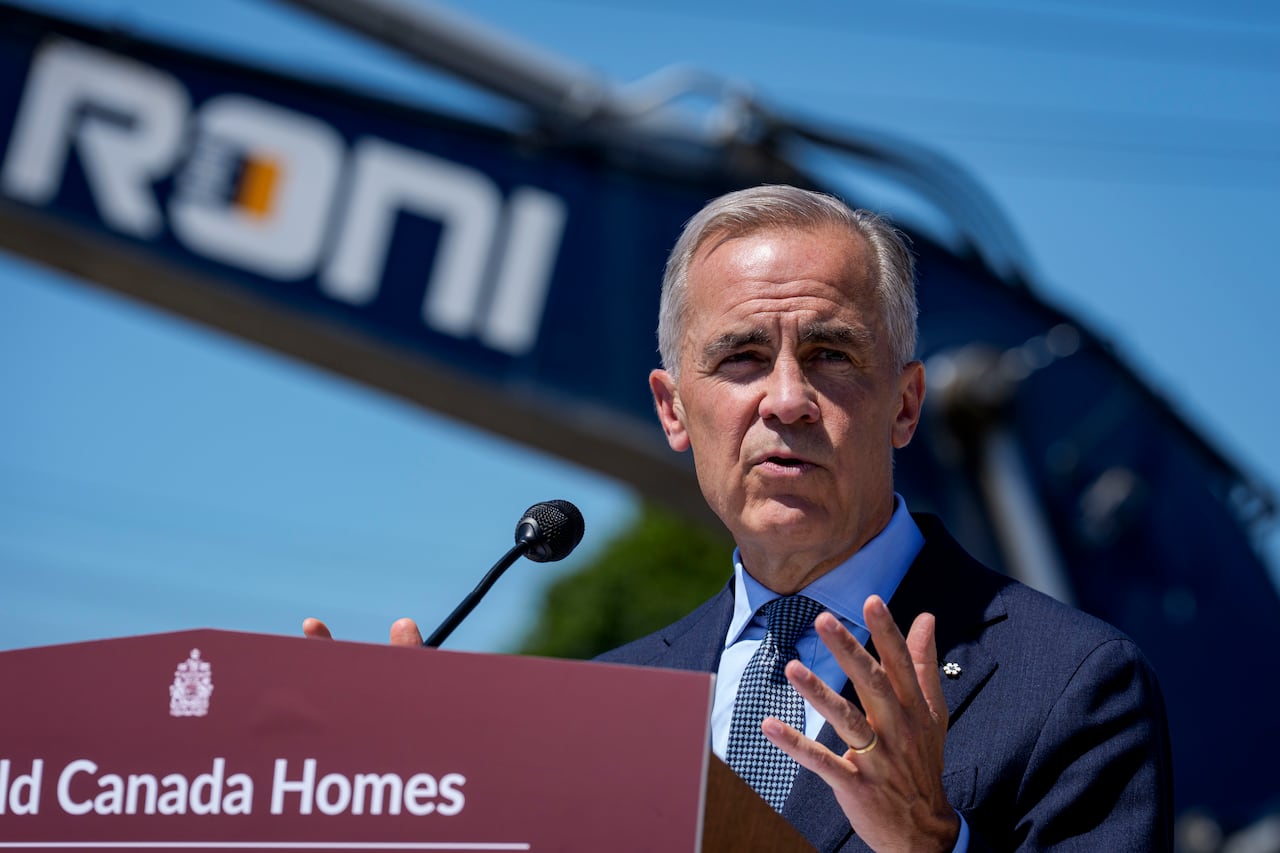
Prime Minister Mark Carney launched Build Canada Homes last year to help scale up the construction of affordable housing, something the federal government had effectively stopped funding for decades. (Evan Mitsui/CBC)
A little more than a year ago, Prime Minister Mark Carney stood in Ottawa in front of a backdrop of partly constructed, prefabricated houses to announce the launch of Build Canada Homes, the federal government’s initiative to tackle the housing crisis and speed up residential construction.
The agency promises to scale up the delivery of affordable housing at a time when industry leaders are raising the alarm about the lagging pace of housing development across the country.
So far, Build Canada Homes has committed to supporting the construction of roughly 19,000 affordable units across the country — but only about 2,000 of these are currently being built.
“I think we can always go faster,” Dave Wilkes, president and CEO of the Building Industry and Land Development Association, based in Toronto, said in an interview. “I like to say I work for an industry that measures patience in terms of seconds.”
To be fair, the federal housing agency did only become a Crown corporation in July, shortly after the Build Canada Homes Act received royal assent. A large portion of the past year has been spent clearing bureaucratic hurdles, securing land transfers and signing intergovernmental deals.
“This is just the beginning,” Build Canada Homes spokesperson Joshua Coke told CBC News in an emailed response to questions. “Canada’s housing sector is under unprecedented pressure, with demand for affordable homes far exceeding current supply.”
The housing agency primarily focuses on building non-market housing, where rents are typically linked to income rather than market rates, but it is also partnering with developers to build affordable homes for Canada’s middle class.
“Combatting this housing affordability challenge requires more homes to be built, more quickly, and at greater scale,” Coke added.
Read more from the CBC’s Philippe de Montigny.
What else is going on?
Try our calculator based on two decades of historical data
RCMP warn of new scam involving the purchase of gold
Victims are told to meet with a fake police officer to hand over gold for ‘safekeeping’
Whey up: Protein powder prices soar as global demand grows
Consumers, companies feel squeeze of supply shortage
Should kids living with obesity be on GLP-1s? New global guidance says yes — in some cases
World Health Organization has released its first-ever guidelines on managing childhood obesity
Marketplace needs your help
(David Abrahams/CBC)
Have you ever wondered what personal data you might be giving away when you use apps on your phone? If you’re curious and willing to be on camera, drop us a line at marketplace@cbc.ca.