
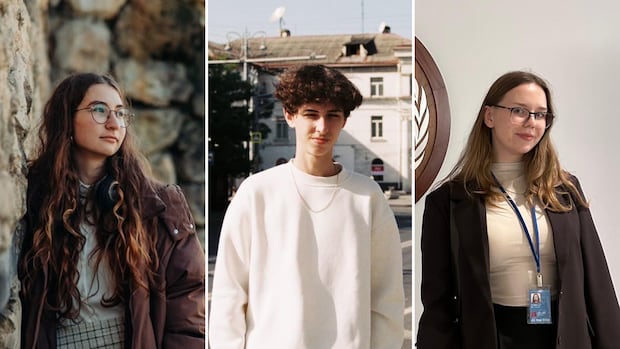
Growing up in Crimea under Russian occupation, Matvii Chos feared he would be drafted into the Russian army as soon as he became an adult.
“If you’re a man and you turn 18 years old, they almost immediately draft you,” said Chos, 19, who enrolled at a Moscow university to avoid conscription and later escaped Russia with the help of a Ukrainian non-profit.
But he says the brainwashing and militarization started much earlier. Chos says they began having special cadet classes in 2020, when he was a sixth-grade student. They were trained in a range of military techniques — loading and reloading weapons, marching, tactical medicine — a co-ordinated effort, Chos says, to create future soldiers to fight his fellow Ukrainians.
“What Russia is doing is occupying territories, kidnapping children and turning them [into] Russian soldiers,” he said.
WATCH | Training future Russian soldiers: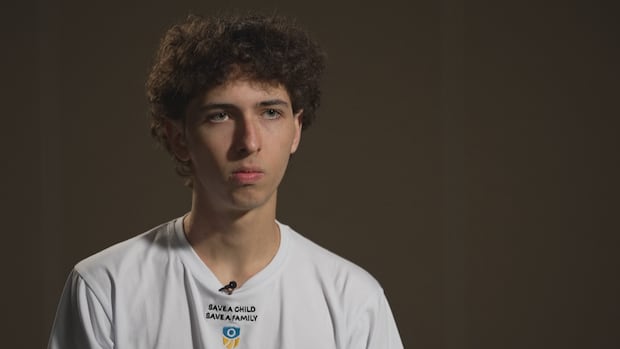
Russia kidnapping, brainwashing children to be future soldiers, says Ukrainian teen
Matvii Chos, 19, told CBC about the indoctrination and forced military training he endured in Russian-occupied Crimea. He says Russia is ‘brainwashing’ residents of its occupied territories to turn them into future Russian soldiers.
Fifty countries signed a pledge at the Pathways to Peace international conference held in Toronto on Sept. 29, expressing concern about the militarization of children in occupied territories and calling for the “immediate, safe and unconditional return” of Ukrainian children forcibly transferred into Russia.
The indoctrination and forced military training Chos was subjected to is an experience shared by many Ukrainian youth in territories controlled by Russia — an issue especially urgent, human rights experts say, because of how vulnerable children are.
“Childhood has an expiration date,” said Oleksandra Matviichuk, a Ukrainian human rights lawyer who heads the Center for Civil Liberties, which won the Nobel Peace Prize in 2022.
“The children from occupied territories, they’re losing their childhood. We lose these children.”
Speaking Ukrainian forbidden
Other young Ukrainians who spoke to CBC News outlined the various ways Russian culture and values were imposed on them as children.
Daria Fursova, 23, remembers how quickly her elementary school curriculum changed after Russia annexed Crimea in 2014 when she was 11.
“The administration said that there will no longer be Ukrainian books in school, in classes,” she said, recalling the start of fifth grade.
WATCH | Classmates now in army: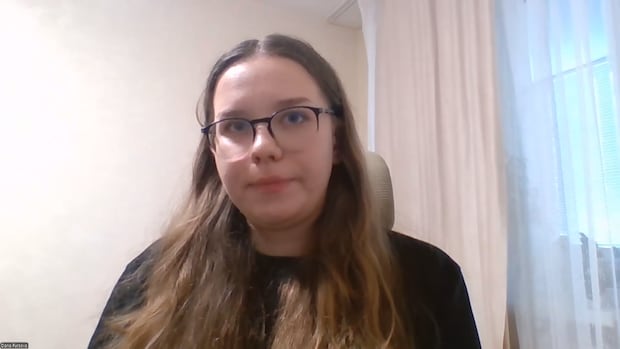
How Russia justifies its invasion of Ukraine to children in occupied Crimea
Daria Fursova, who left Crimea in 2021 to study in Kyiv, says many of her former classmates are now in the Russian army, while her old school posts videos of Russian flag demonstrations and lessons on state security.
Not long after, Fursova’s school stopped teaching Ukrainian and instead began instructing them in Russian history and the Russian language.
Speaking Ukrainian and Crimean Tatar — a language considered “highly endangered” by UNESCO — was forbidden, even during breaks, according to 18-year-old Daria Tomashova, who says the indoctrination was “everywhere,” from textbooks in school to what was broadcast on TV.
Chos has similar memories of the sudden shift after the occupation.
“We started to learn [the] Russian anthem at school, learn Russian songs, learn Russian poems,” he said. “They said to us, ‘You’re Russian now. You lived all of your life in Russia.’ “
Fursova left Crimea to study in Kyiv in 2021 before the full-scale invasion of Ukraine, but says the situation in Crimea has since become “way worse.” Her old school posted lessons on social media defending the war, and she says many of her former classmates have since joined the Russian army.
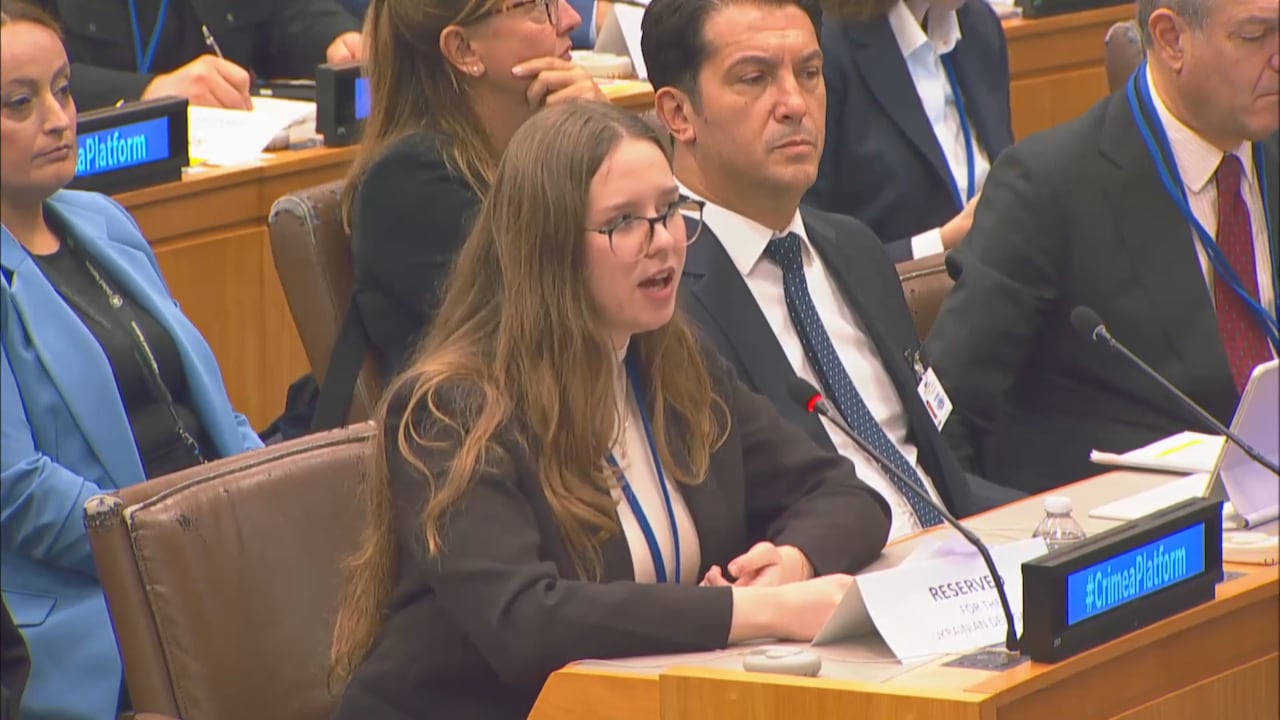
Daria Fursova, 23, shares her experience growing up in occupied Crimea at the United Nations General Assembly on Sept. 23, during the sixth summit of the Crimea Platform. (UN Web TV)
20,000 children abducted
Beyond the Russification of occupied Crimea, the international community has raised particular concern with how Russia has forcibly separated tens of thousands of Ukrainian children from their families and taken them into Russian territory — an act Ukrainian President Volodymyr Zelenskyy described as “mass kidnapping” amounting to genocide.
Many of those children have shared stories of abuse while in Russian custody, including being placed in isolation cells for not being co-operative in Russian re-education camps. Other children are given new identities, naturalized as Russian citizens and forcibly adopted into foster families in Russia.
WATCH | Kidnapped into Russia: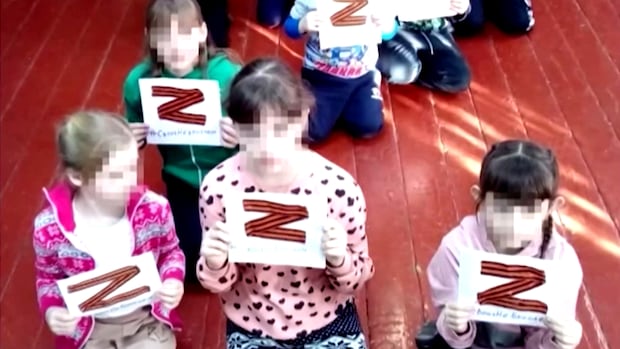
The children abducted by Putin’s war machine
Tens of thousands of Ukrainian children have been abducted to Russia, subjected to heavy indoctrination and even military training to turn them into soldiers. CBC’s Terence McKenna explains what’s happening and how Canada is leading an international effort to help.
Ukrainian officials estimate that Russia has unlawfully deported 20,000 children since the invasion began in February 2022. Of those, only about 2,650 have been returned so far.
The co-ordinated campaign has led to charges at the International Criminal Court against Russian President Vladimir Putin and Children’s Rights Commissioner Maria Lvova-Belova.
Minister of Foreign Affairs Anita Anand says she holds Putin personally responsible for the policies that have led to Ukrainian children being “stolen” from their families.
“My hope is that we ensure the full return of all Ukrainian children, and every single person who has committed an injustice in stealing these children face the consequences that international law requires,” Anand said in an interview with CBC.
WATCH | ‘We are bringing Ukrainian children home’: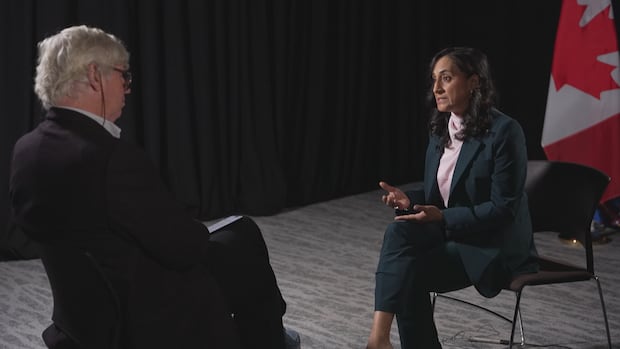
Canada committed to bringing Ukrainian children home: Anand
Foreign Affairs Minister Anita Anand says Canada is committed to promoting efforts to bring Ukrainian children home and support their reintegration, including an additional $863,000 in new funding for civil society groups in Ukraine.Children just want to return to ‘normal life’
Anand says Canada has committed nearly $7 million to support organizations that work to bring Ukrainian children home and fund psychological support for the trauma endured as a result of the “indoctrination, militarization and essentially the Russian attempt to convert these Ukrainian children into members of Russia’s war machine.”
One of those organizations is Save Ukraine, a charity that identifies kidnapped children and conducts operations to rescue them.
Its founder, Mykola Kuleba, says he is grateful for Canada’s leadership on the issue, but emphasized how critical the present situation is, with some young Ukrainians now presumably fighting as Russian soldiers and dying on the battlefield.
WATCH | What justice means for rescued children: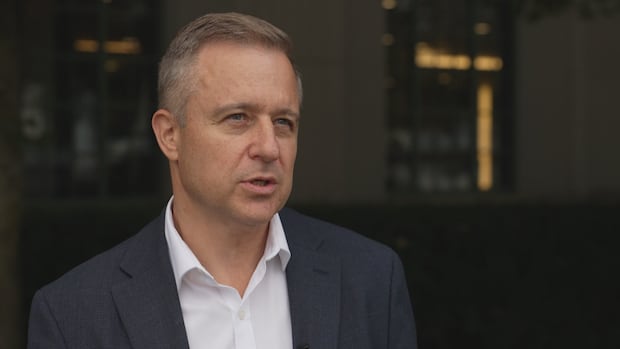
‘Long way’ to justice and accountability for abducted Ukrainian kids, says NGO founder
Mykola Kuleba, the founder of the Ukrainian non-profit organization Save Ukraine, says the children they rescue who have ‘lost everything’ tell him that justice for them simply means being able to live in peace in their hometowns with their friends and family.
“We should understand that we’re running out of time for these children, and we’re losing every day someone who’s taken forcibly to the Russian army,” said Kuleba, the former commissioner for children’s rights in Ukraine.
Kuleba says the children they bring home tell him they just want to live in peace with their families in their hometowns.
“They want [to] survive. They want to return to a normal life. They want to stay with their loved ones.”
Chos was eventually able to escape Russia with the help of Save Ukraine, which gave him food, shelter, mental health support and documentation.
But the process was nerve-racking: Chos had to travel to the Ukrainian consulate in Belarus twice, and said if Russian authorities had searched him and found anything suggesting he was pro-Ukraine, he would be facing over a decade in Russian prison.
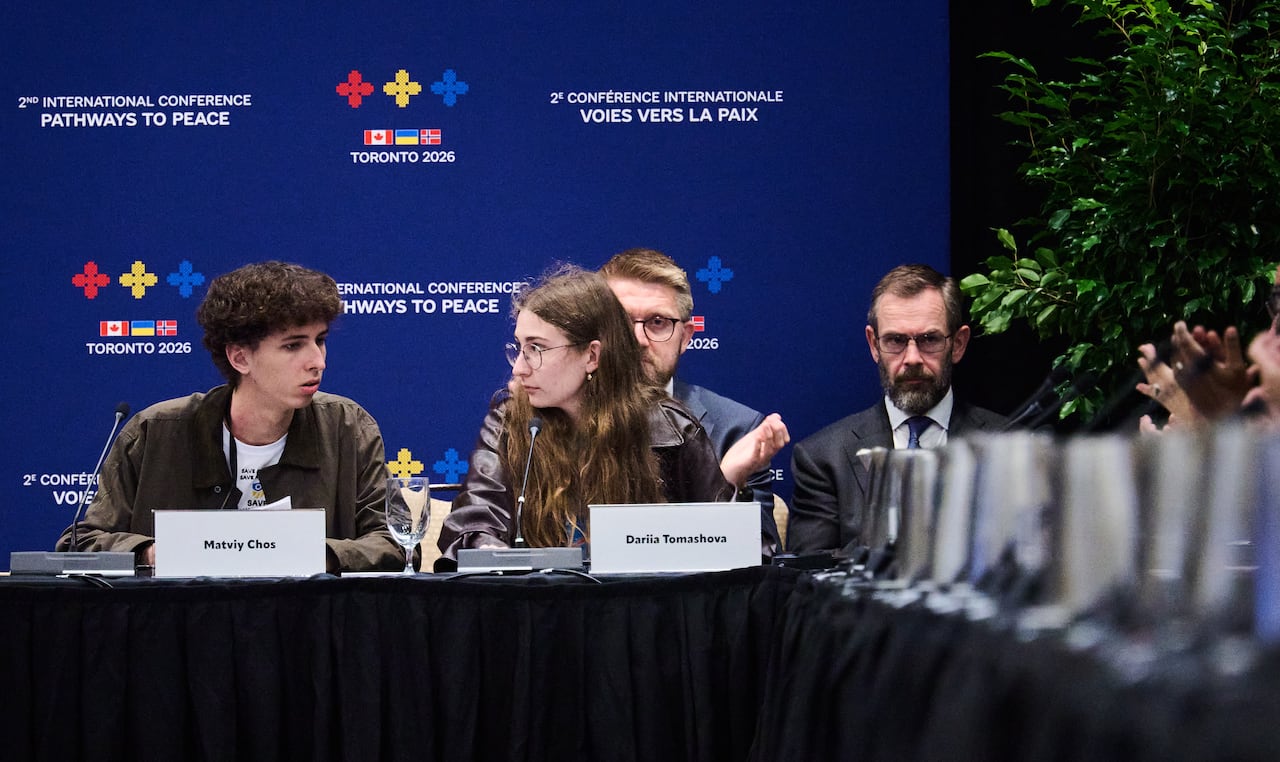
Chos, left, and Tomashova speak at the Pathways to Peace international conference in Toronto on Sept. 28. The Ukrainian couple fell in love and married after being rescued by Save Ukraine, a non-profit that identifies kidnapped children and conducts operations to get them to safety. (Sammy Kogan/The Canadian Press)
Now a married couple, Chos and Tomashova shared their experiences at the recent international conference in Toronto.
“I managed to escape,” Chos told the room of delegates, “but a lot of children are still left there.”