
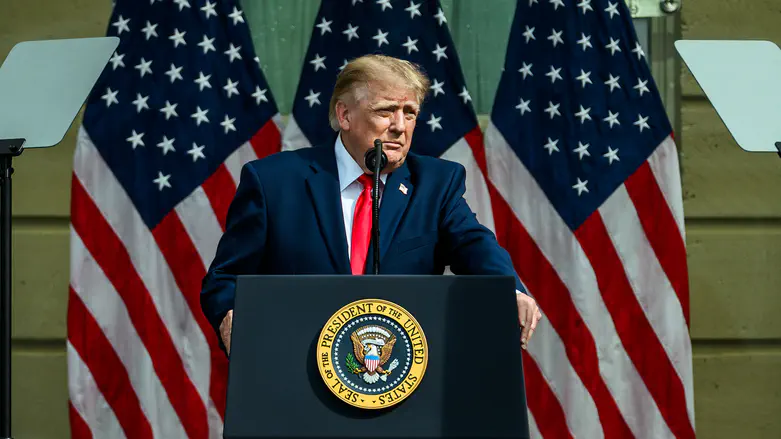
US President Donald Trump paid tribute Saturday to the 18 American servicemembers killed during the war with Iran, telling supporters at an election rally in Tennessee that their sacrifice had helped prevent the Islamic Republic from obtaining nuclear weapons.
Speaking ahead of November’s midterm congressional elections, Trump described meeting the families of fallen servicemembers as one of the most difficult responsibilities of his presidency.
“We lost 18 great people [in the Iran war]. I got to know their families. I met most of them, the families. And always the hardest thing that I have to do is go and meet the families of heroes. I call them heroes. But we lost 18. We have wounded, but we’ve stopped them from having a nuclear weapon,” Trump said.
The President argued that the military campaign had prevented a far more dangerous situation by denying Iran the ability to develop nuclear weapons.
“You want to see wounded? You want to see people wounded and killed? Let these lunatics have a nuclear weapon. You’ll see, you’ll see what would happen. What we did, we achieved something that was incredible.”
Trump acknowledged the American casualties while maintaining that the operation had achieved a lasting strategic objective.
“Now, 18 is too many. I don’t want to lose any. But we have stopped them from having a nuclear weapon, I believe, for all time. And we lost 18. Those young people did not die in vain. That was a big thing, because you can’t let lunatics have nuclear weapons. You just can’t let a total lunatic or a group of lunatics have nuclear weapons,” Trump stated.
The President also suggested that Iran could attempt further actions before the midterm elections, while warning that Washington retained the ability to bring the conflict to a rapid conclusion.
He predicted that Iran will “probably do a little bit extra before the election thinking it’s going to hurt us, but we could end it really quick. They don’t know how nice I’ve been to them.”
Trump’s remarks came as his administration continued weighing whether to resume military operations against Iran while pursuing a diplomatic agreement.
On Thursday, the President announced that the United States would not launch additional strikes against Iran before the November 3 midterm elections.
“We are having productive discussions with the Islamic Republic of Iran,” Trump wrote on Truth Social.
He also described Iran as facing significant economic and military difficulties, while emphasizing that Washington would maintain pressure on Tehran.
During a White House event Friday, Trump expressed confidence that the conflict would end soon, either through negotiations or further military action. He also predicted that gasoline prices would fall.
“We stopped Iran from having a nuclear weapon – and the [gas] prices will come tumbling [down] and it’s gonna be over soon, one way or the other,” Trump stated.
He added, “We can do it either way, but it’s very simple – one way or another it’s gonna be over soon.”
Despite Trump’s pledge to refrain from additional strikes before the elections, the Pentagon has reportedly prepared plans for another major offensive against Iran.
The New York Times reported Thursday that American military planners had developed options for attacks on Iranian missile installations, drone facilities, energy infrastructure and other military targets.
According to sources familiar with the discussions, the proposals include a concentrated military campaign lasting approximately three days.
Meanwhile, indirect negotiations between Washington and Tehran are continuing, although disagreements over Iran’s uranium enrichment activities remain a major obstacle.
Vice President JD Vance told Reuters earlier this week that the United States would require meaningful restrictions on Iran’s nuclear program before agreeing to end the war.
Vance said Tehran must demonstrate through concrete actions, rather than assurances, that it has abandoned any intention of developing nuclear weapons.
“If you don’t want a nuclear weapon, then why do you need 60% enriched fuel? And if you want to show commitment to not building a nuclear weapon, don’t build highly enriched fuel. That’s a very basic threshold issue,” Vance said.
“I think if they want to show a commitment to not building a nuclear weapon, they would do something meaningful on their enrichment capacity.”
The vice president emphasized that the administration would insist on verifiable measures to reduce Iran’s enrichment capabilities.
“We’re not going to trade words for actions,” Vance told Reuters.
Iranian officials, however, have continued rejecting American demands to curtail uranium enrichment, leaving the diplomatic effort unresolved as Trump considers his administration’s next steps.