
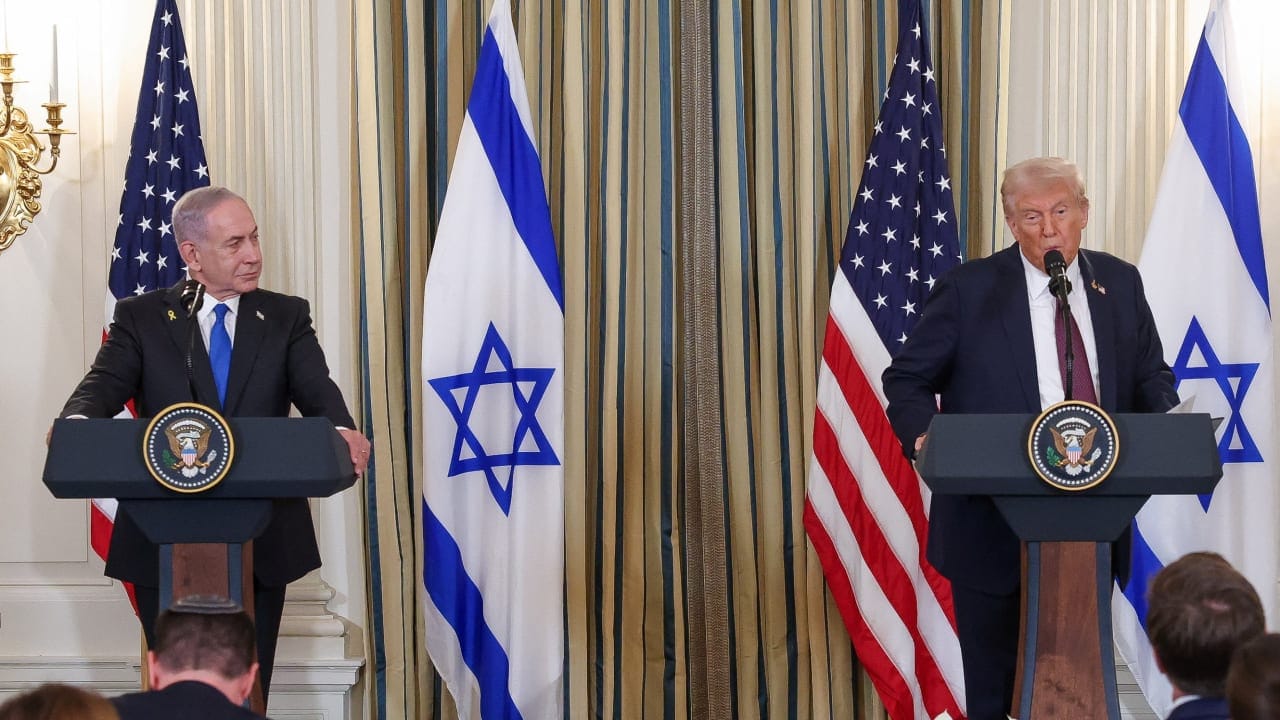
Four times since 2024, Iran has launched massive missile barrages against Israel. Four times, the US military surged capabilities to defend Israel. And four times, the US-Israeli effort performed superbly, keeping casualties and damage low.
That’s the good news.
The bad news is that this pattern of America riding to Israel’s rescue is not sustainable. Israel would be delusional to assume it is. Instead, what’s needed is an urgent effort to make Israel’s defenses as self-reliant as possible.
The trajectory of growing dependence is clear. In April 2024, Iran launched its first-ever direct attack on Israel, firing around 120 ballistic missiles. US ships deployed near Israel used advanced SM-3 interceptors to knock down six while Israeli defenses handled the rest. Fewer than 10 missiles penetrated. No Israelis died.
In October 2024, Iran attacked again, launching 200 missiles. Once more, US SM-3s destroyed six, with Israel targeting the remainder. While neutralizing a high percentage, with no Israelis killed, the number of missiles that penetrated was at least four times higher than in April.
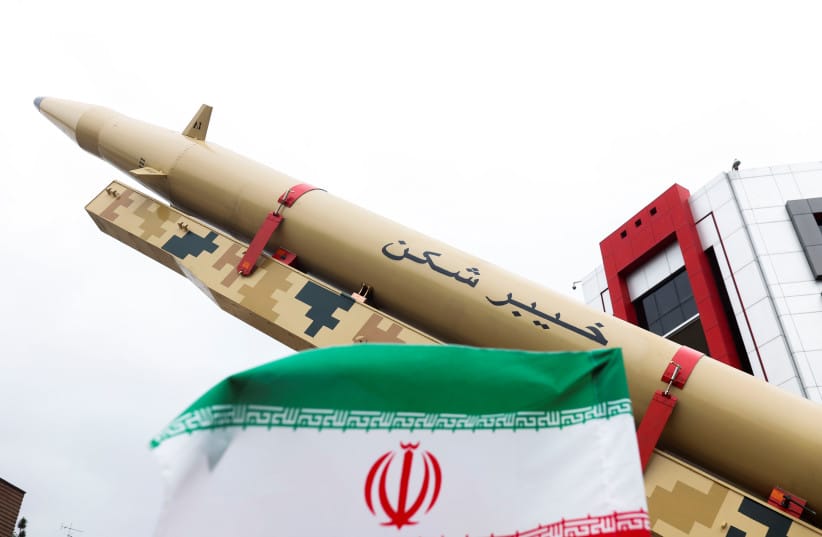 An Iranian missile is displayed during a rally marking the annual Quds Day, or Jerusalem Day, on the last Friday of the holy month of Ramadan in Tehran, Iran April 29, 2022. (credit: MAJID ASGARIPOUR/WANA (WEST ASIA NEWS AGENCY) VIA REUTERS)
Reports indicated that Israel’s stockpile of long-range Arrow interceptors had been heavily stressed, requiring rationing that prioritized populated areas over military bases.
Recognizing its growing vulnerability, Israel requested Washington supplement its naval assets with an emergency deployment of the Terminal High Altitude Area Defense (THAAD) system.
Despite having only eight in America’s arsenal, president Joe Biden quickly approved the request. Then, prior to last year’s 12 Day War against Iran, President Donald Trump dispatched a second THAAD – leaving a quarter of America’s entire inventory defending Israel.
All of it was needed. During the 12 Day War, the US fired up to 150 THAAD interceptors – 25% of its total stockpile – as well as 80 SM-3s.
The numbers were even worse during this year’s Iran war, with over 200 THAADs and 100 SM-3s expended protecting Israel. In both wars, the United States fired significantly more high-end interceptors over Israel than Israel fired itself. Reports again indicated Israel’s Arrow stockpile was in extremis.
The trend line should alarm defense planners. The issue isn’t whether the US-Israeli effort was successful. During the two wars, interception rates against 1200 Iranian missiles approached 90%. Fewer than 60 Israelis died.
The real question is whether the model can be sustained and whether Israel can count on Washington being there the next time, or the time after that. The honest answer is probably not, for two reasons.
The first is capacity. The US is a global power. Every THAAD or SM-3 fired over Israel is one less available to defend US forces in a conflagration with China that would make Iran look like a minor skirmish. Reports suggest that about 80% of America’s THAAD missiles are gone.
Even with a crash program to boost production, getting back to prewar levels could take three years or longer. Math, physics, and geopolitics are conspiring to make it impossible to sustain recent levels of US support for Israel’s defense.
The second reason is political. US public support for Israel is in free fall. While a bipartisan phenomenon, it’s gone mainstream among Democrats. Large numbers of the party’s elected officials now regularly vote against military support for Israel.
Can Israel perform brilliantly alone?
It’s easy to imagine that opposition extending to future deployments of scarce US military assets – especially when portrayed as draining America’s own readiness. No one should assume that a future president from either party will do what Biden or Trump did repeatedly since 2024.
That’s why it’s critical that good use be made of the last two years of Trump’s presidency to increase Israel’s self-sufficiency. An existing Memorandum of Understanding on defense cooperation runs through 2028 and commits Washington to provide Israel $3.8 billion in annual military assistance, including $500 million for missile defense.
If possible, a huge chunk of that money should be reprogrammed to increase the anti-missile component by three or four times – with Israel matching every dollar.
The same principle should apply to the post-2028 MOU currently being negotiated. Wisely, Israel has said this will be the last MOU seeking US financial support. However many years it covers, and whatever aid amount it includes, the balance should shift decisively to shoring up Israel’s ability to defend itself, by itself.
Getting congressional approval for more assistance will be difficult under any circumstances. But a clear prioritization of defensive over offensive weapons should help – especially if framed as reducing risk to America’s own readiness, conditioned on Israeli matching funds, and the aid zeros out at a certain date.
Israel’s defenses have performed brilliantly. The question is whether they can be made to perform brilliantly alone. The time to answer is now, when the will still exists in the White House to make progress before it’s too late.
John Hannah worked in the George H.W. Bush, Bill Clinton, and George W. Bush administrations, including as national security advisor to former vice president Dick Cheney. He is a senior fellow at the Jewish Institute for National Security of America, where Rena Gabber is a research associate.