Nashua, New Hampshire —
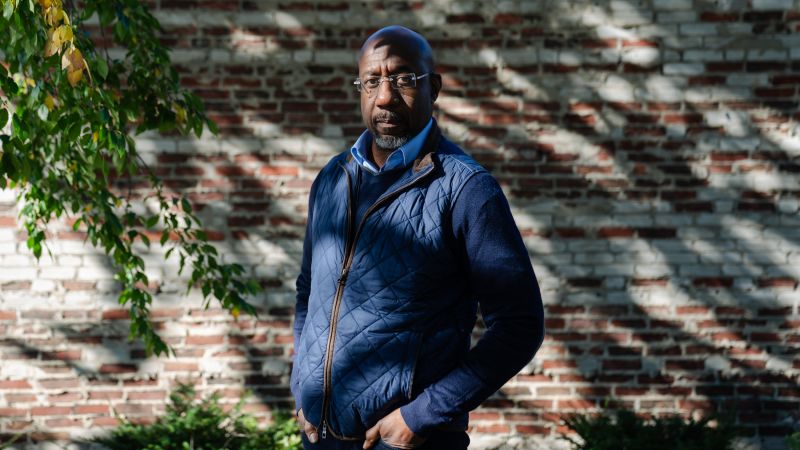
As a boy, Raphael Warnock started offering a prayer: that God would guide his feet, order his steps and direct his path. Maybe, he says, it grew out of the verses in Proverbs that say pretty much the same.
Now that path had taken him to New Hampshire, the state politicians go to when they want people to start thinking of them running for president.
“I don’t have any kind of hocus-pocus, spooky spirituality. It’s a faith that’s grounded in real life. It requires analysis, deep thought,” the Georgia Democratic senator told CNN shortly after arriving. “It respects data and science and hard work, but beneath all of that is an abiding sense that I’m a part of something that’s bigger than me.”
“My prayer is that I can be used to do the most good with the gifts that I have,” Warnock said. “And I hope that at the end of the day, at the end of my life, I want to leave it all on the field.”
Warnock’s friend and fellow Georgia senator, Jon Ossoff, immediately shuts down all speculation about whether he’ll run for president. Warnock very much does not, other than to say that he wants to make sure Democrats get through this year’s midterms first.
He is making campaign stops to boost Democratic allies while test-driving a 2028 message that critiques both parties on faith and character.
“The Democratic Party’s like most old institutions. It’s slow to change. I feel that institutional inertia and I refuse to be bound by it, so I’m going to keep pushing this because what we’re faced with is so much bigger than party,” Warnock said. “Old-school politicians who’ve been at this for a while, they have a certain way that they’re accustomed to doing this. And that way doesn’t lead to a Raphael Warnock in the Senate.”
There are two dozen or more Democrats planning a presidential run or being pushed to consider one. But there’s only one member of the party who is the 11th of 12 children of two Pentecostal ministers in Savannah, a Black senator who unseated a Republican in a red state, who has staff who can rattle off passages from Isaiah from spending time around him, and who has colleagues asking him for spiritual advice.
“They ask me to pray, and some need more prayer than others,” he jokes.
As he spoke to CNN, he stood across the street from the City Hall steps where John F. Kennedy kicked off his presidential campaign on a cold day in 1960.
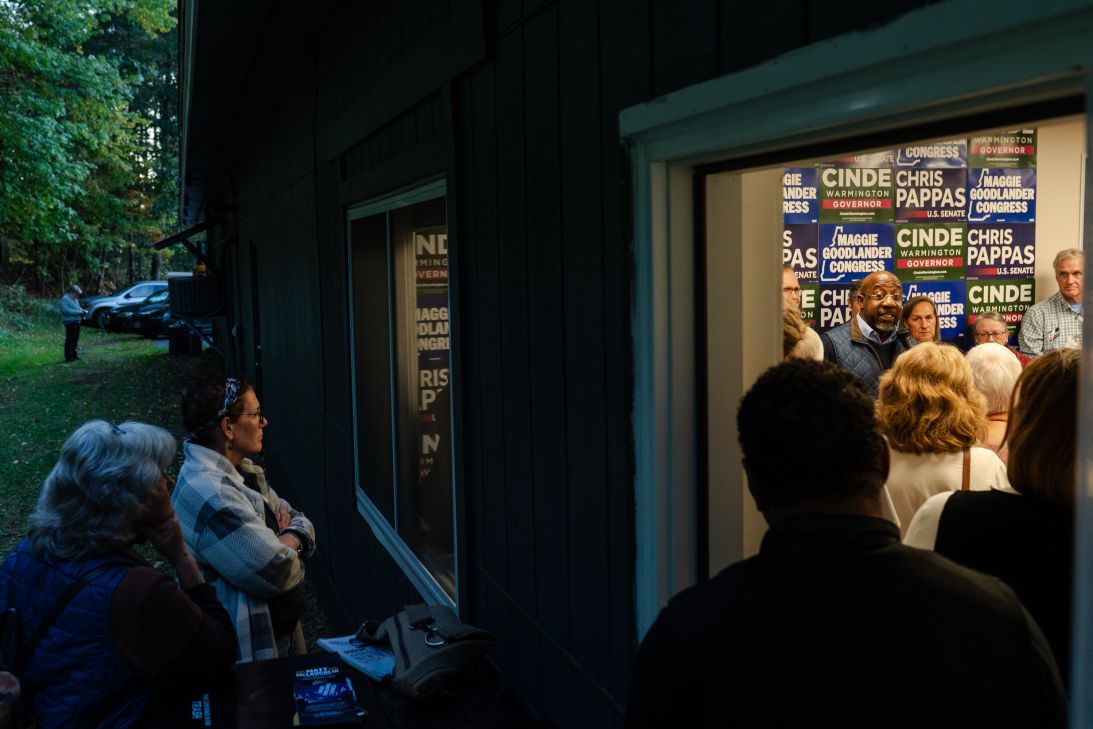
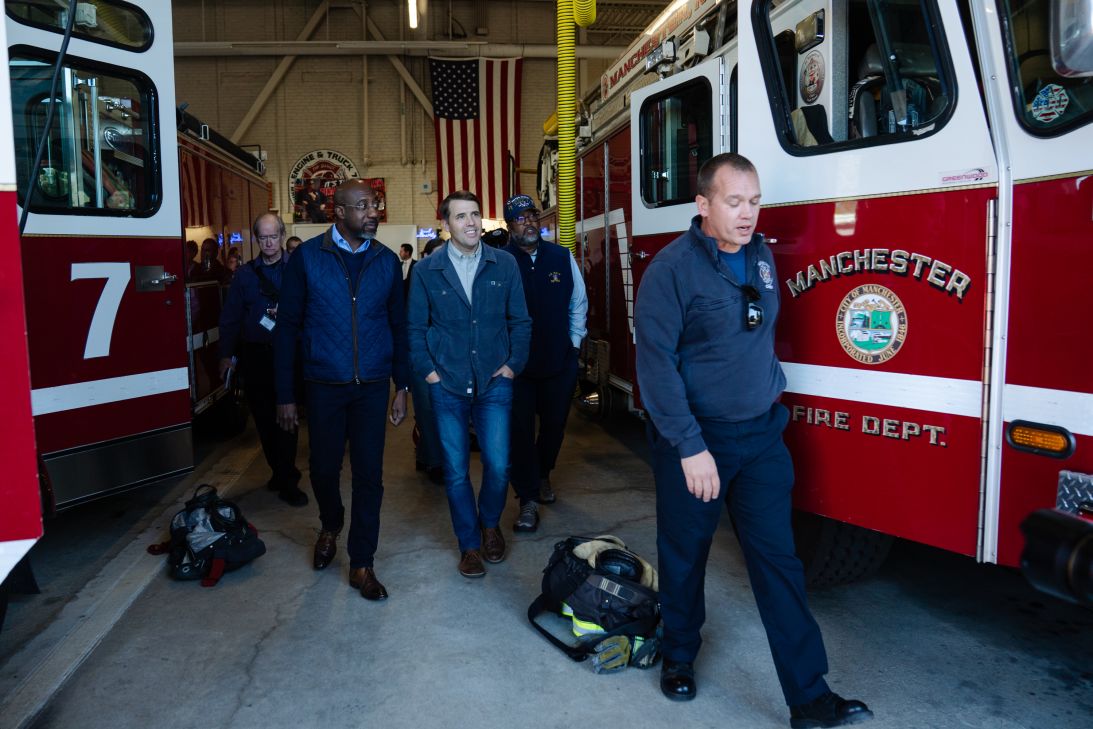
It was Warnock’s first time in New Hampshire. His day included a coffeehouse stop in Portsmouth, a lunch of barbecue chicken tenders at a firehouse, and an evening opening of a campaign office with people pouring into the hallway and out the backdoor of a space wedged between a consignment furniture store and a Brazilian jiu-jitsu parlor.
Crowds that didn’t look like his congregation back in Atlanta or sound like Georgia voters pressed in to hear.
“He was definitely connecting,” New Hampshire Democratic Party Chair Ray Buckley told CNN afterward, noting that in his decades of watching presidential hopefuls make their pilgrimages to the state, “that’s not always a given in New Hampshire.”
“I think that there’s great interest in him,” Buckley added, “and the interesting thing, of course, is that there’s also great interest in Ossoff.”
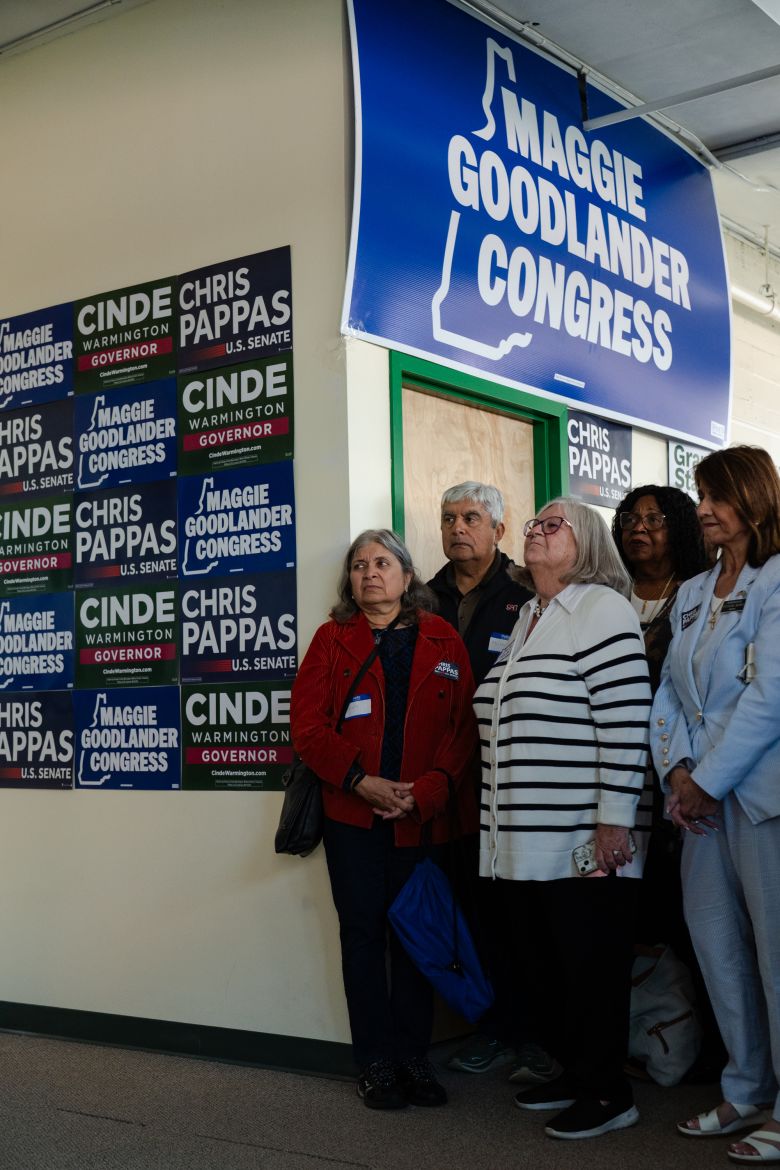
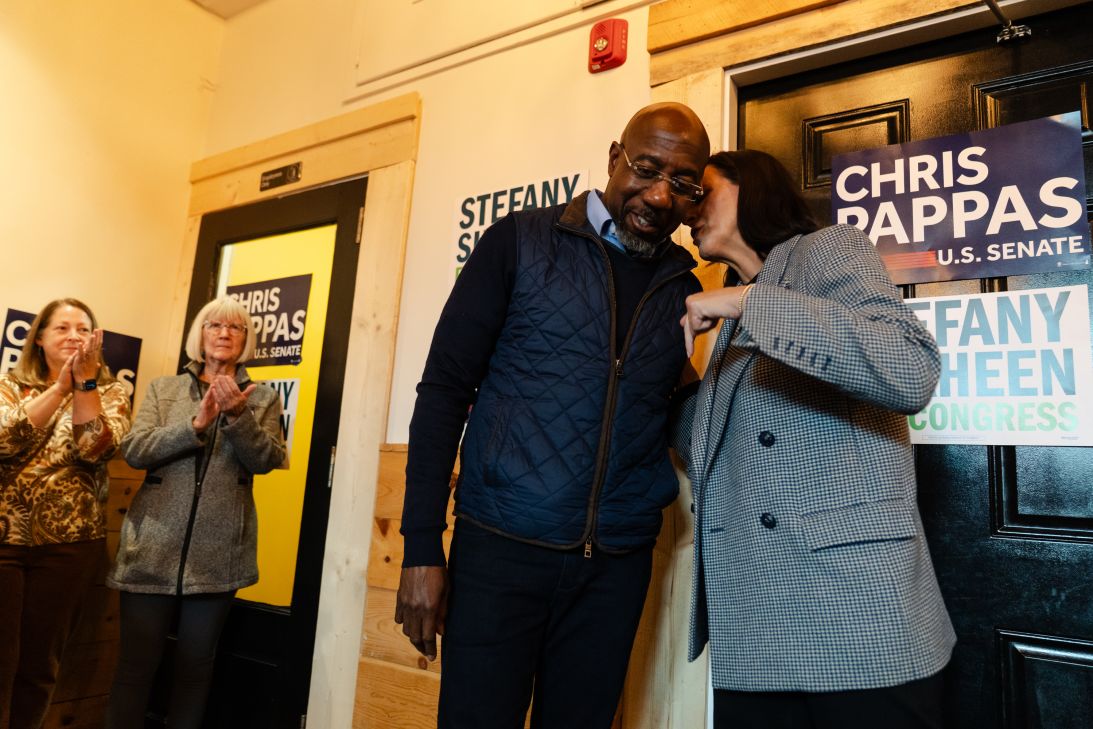
Driving along the changing leaves and lakes, snacking on the lobster roll that aides picked up for him, Warnock was officially on the ground to campaign for House candidate Stefany Shaheen and Senate candidate Chris Pappas.
He ripped into tariffs as the biggest tax any person had ever put on the “Live Free or Die” state and spoke at length on how “Donald Trump has unleashed a kind of evil and wickedness into the ether.”
But he also told a story of Lyndon B. Johnson passing the Civil Rights Act and then telling Martin Luther King Jr. he didn’t have the power to pass a voting rights bill: “If the president doesn’t have the power,” Warnock says King said, “we’re going to have to go get him some.”
Warnock’s sense of fitting into something bigger, he said several times in New Hampshire, was reaffirmed by how he arrived in Washington: He and Ossoff winning runoffs the day before the January 6 riots at the Capitol, giving Democrats a slim Senate majority that they eventually used to pass an expanded child tax credit and to confirm Ketanji Brown Jackson to the Supreme Court.
As a politician and a pastor, Warnock revs up crowds with his call to action, “Keep marching!” Most Sundays, he is back delivering his sermon at Atlanta’s Ebenezer Baptist Church in King’s old pulpit. But he’s had his own difficult time.
He has a biting joke about investigating Jesus for identity theft on the Senate floor (“I don’t know who these people are talking about”). He also senses such a deep ache in his congregation that last month he delivered a series of sermons on trauma, of people hit so hard over the last 10 years that “wherever I go, whether I’m in Georgia or New Hampshire, there’s always just beneath the surface, even in happier moments, this heaviness.”
Over breakfast in Portsmouth, Warnock said he’s had what he calls his own labors of despair living through these years of American politics.
“Any thinking person of faith living through a moment like this has some questions for God: ‘Why are we here? I can’t believe we’re doing this again,’” Warnock said. “And I’m comfortable there because as I read the scripture that actually puts me in good company with Isaiah, Jeremiah, Amos, a Jewish kid from Nazareth named Jesus.”
Warnock sees himself on a mission to redeem the soul of America — whether that’s on the Senate floor, blasting what he sees as Republicans using performative moments of prayer to cover for what he sees as immoral policy since “the prophets had harsh words for that kind of religion”; pushing Democratic leaders to reorient which candidates they invest in; or traveling over the final weeks of this election cycle to at least three of his party’s early presidential primary states.
“God is not a Democrat. And contrary to what people seem to think, God is not a Republican,” Warnock said. “God is on the side of that single mother who’s trying to figure out how she can afford daycare so she can go to work or get a job so she can afford a daycare in a country where we just spend enough money in the war in Iran to provide pre-K for every 4-year-old in America. I think God’s on the side of seniors who are having to decide whether they’re going to buy groceries or buy medicine.”
Told that Supreme Court Justice Samuel Alito writes in his upcoming book that the decision to legalize gay marriage was “perhaps the decisive point in our nation’s turn against religious liberty,” Warnock stopped and stared in apparent disbelief.
“What about slavery?” he said. “You know what I think is an insult to God? Any form of human domination over others.”
In Keene, Warnock smiled as he said he was making his high school English teacher proud by referencing Robert Frost’s two diverging roads to describe the choice he sees for the country in 2028. He’ll have to make his own choice, too.
Between a primary, general elections and runoffs, Warnock ran five tough, expensive, down-to-the-wire elections over two years in 2020 and 2022—first for the remainder of a term and then for a full one — which means his seat is up in 2028.
“That’s a moment, and I do think that ’28 will be a moment that’s even bigger than the election cycle itself,” Warnock told CNN. “I think it will be about the character of the nation, like what kind of country do we want to be.”
Most of the Democrats looking at running for president have standard lines about how they’re only focused on 2026. Warnock has his fallbacks too, in part around trying to reorient which candidates his party takes seriously, and where.
For months, he’s been pushing for more attention to the Mississippi Senate race and Democratic nominee Scott Colom, who is running against Sen. Cindy Hyde-Smith. He cites how there are more Black voters in Mississippi than in Georgia and said he tried to get donors to look at the race. He’s clearly frustrated that some of those making decisions write him off as a well-meaning leader with Sen. Chuck Schumer’s cellphone number but still a relative political newbie.
Warnock will go to Mississippi on Wednesday to campaign for Colom, but also to hold roundtable discussions with Black men.
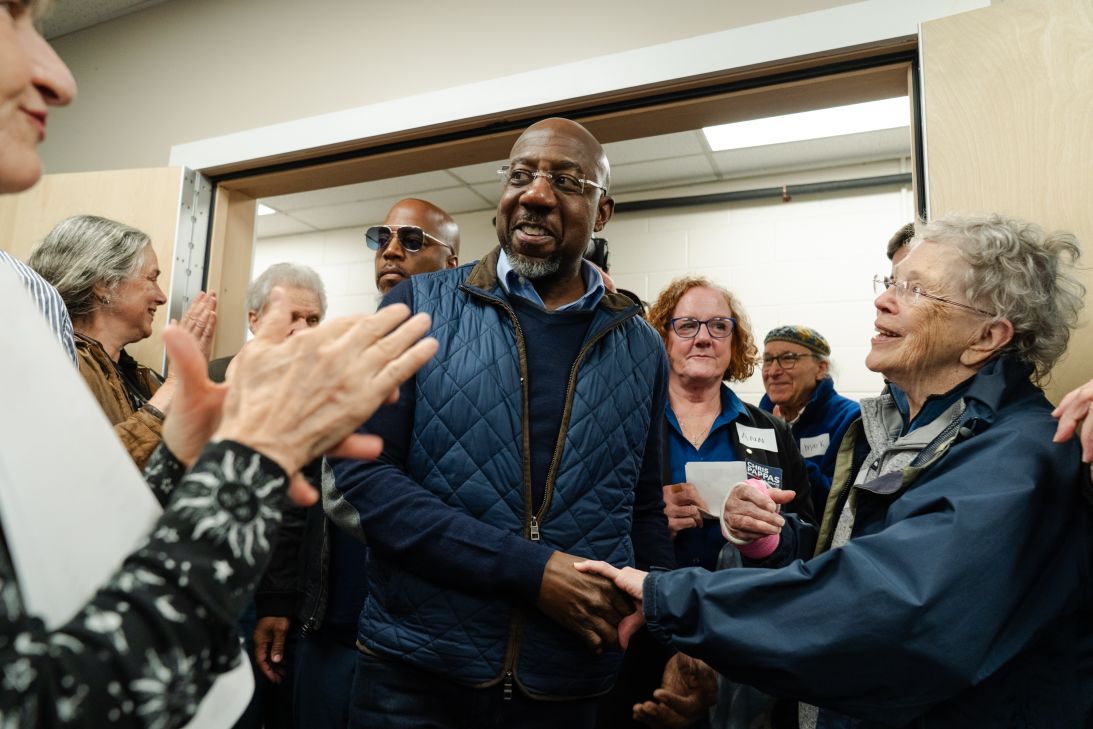
Warnock walks into rooms with a politician’s ease and a pastor’s cadence. In Portsmouth, he told a boy with Down syndrome named Michael that they were both named after angels.
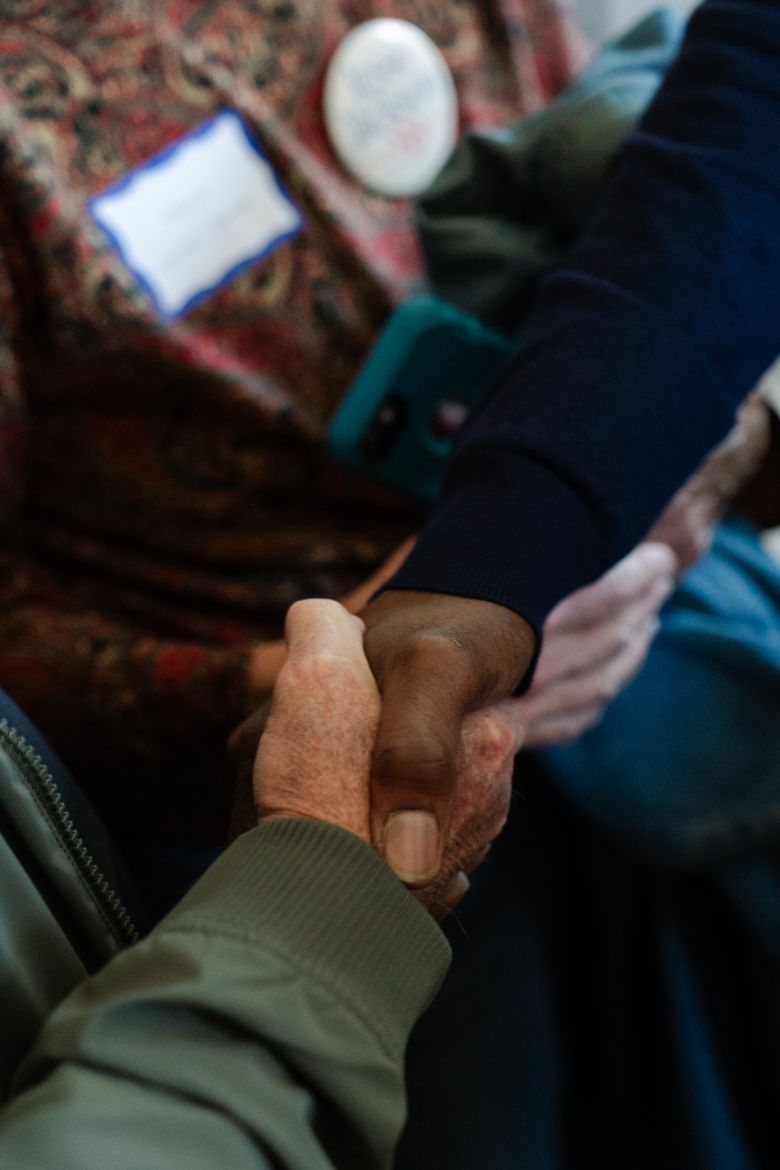
In Nashua, he told an older White woman wearing a Jesse Jackson ’88 button, which she got on the civil rights leader’s tour of the state, that she was coming to him with one of his idols. In Keene, he talked about the famous story of the rabbi who said that Jewish teaching boils down to treating others the way you’d want to be treated, and how that is what so many faiths have in common.
Pappas, who doesn’t tend to dominate rooms the same way, told CNN that what sets Warnock apart from the other potential presidential candidates who have come through New Hampshire is that the senator “provides a moral perspective that’s really important for our politics right now.”
“He achieved unbelievable victory in his two Senate races that he ran within just a few years of each other,” Pappas said. “People in New Hampshire know that example of being a coalition builder, of being a voice that matters right now.”
Some aides and advisers don’t want Warnock to give up his seat to chase this dream, hoping the analysis will lead to prayers that lead to him filing for reelection. Warnock said he hasn’t started having those real conversations with them, or with his family, including his two young children with his ex-wife.
“Look, I know that in a matter of months,” he said, “I’ll be in a race.”