
After 321 days on deployment, the USS Abraham Lincoln has finally returned home. The ship departed San Diego on November 21, 2025, and returned to port on the 8th of this month, ending a long deployment just shy of the USS Gerald R. Ford’s 326-day record set in May 2026.
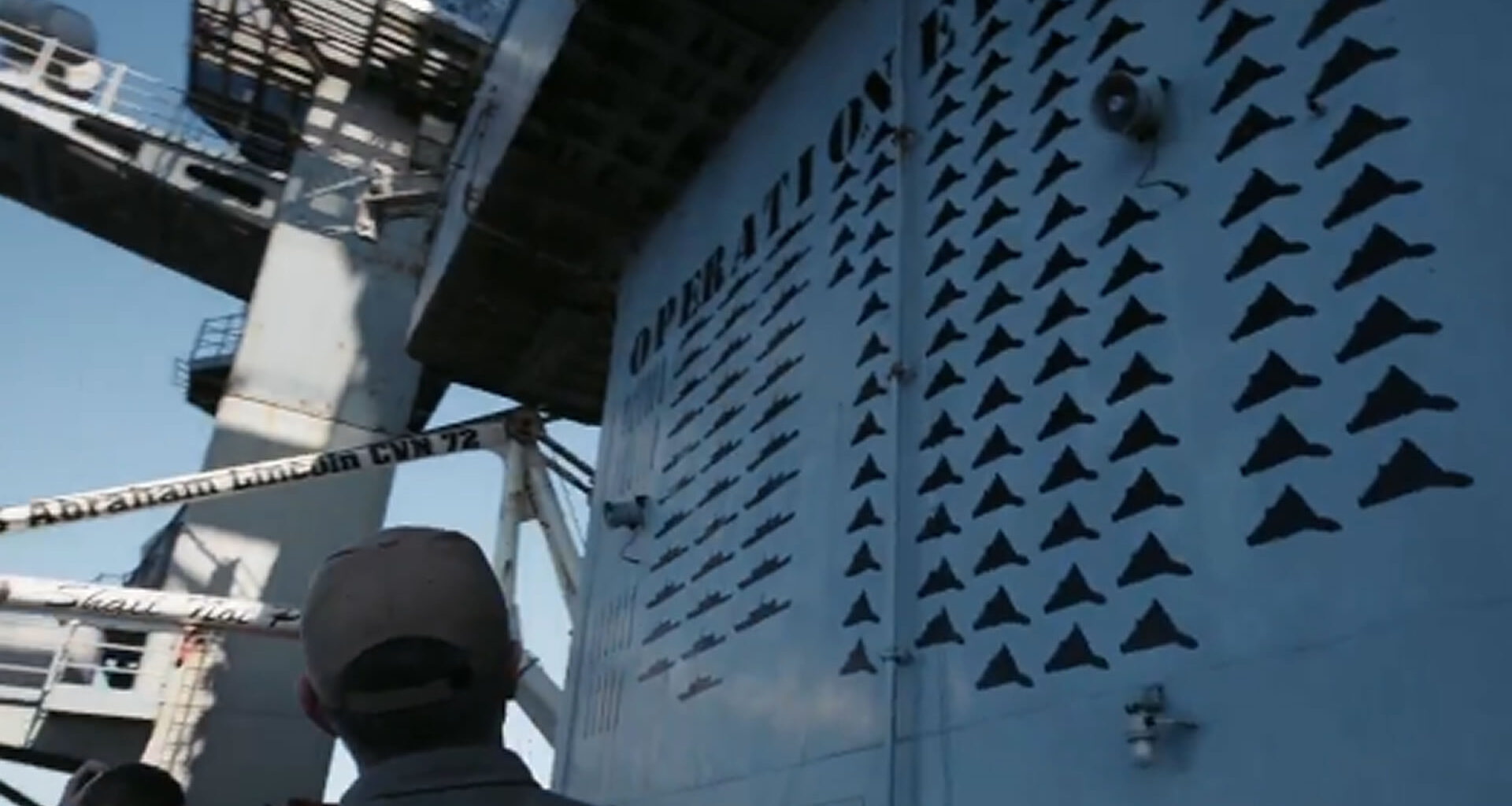
Interesting in and of itself, but what has really caught attention is the very obvious kill tally daubed onto her superstructure. A common practice across many armed forces, the USS Abraham Lincoln appears to have been very busy during its six-month action with Iran.
Images and videos released from US Secretary Pete Hegseth’s visit show the ship (and her strike group) racking up an impressive roster of kills against various enemy assets. The most numerous appear to be one-way drone kills represented by Shahed-136 stencil markings.
If the marks are to be taken literally, the carrier and her group are claiming they’ve neutralized 106 such drones during “Operation Epic Fury.” Other kills appear to include a claimed 34 surface vessels, 23 vertical missiles, and, interestingly, 10 submarines.
Impressive tally for the USS Abraham Lincoln
The kill tally also refers to around 1463 bombs/ordinance being deployed. All told, that would make a claimed kill record of about 173 individual targets.
Kill tallies of this kind are a very common practice, especially for aircraft pilots who often paint small silhouettes on their aircraft’s fuselage after successful missions. But an important distinction is that the tally on the USS Abraham Lincoln is more likely a joint record for its strike group.
This would include kills from various assets, including its aircraft complement and escort vessels. Importantly, these are also claims, not necessarily confirmed kills.
For this reason, there appear to be some discrepancies in kill numbers from the claims made. The first is drones, where the strike group has only had an official citation for about 77, rather than the claimed 106.
Surface vessels are also at odds with official records, seemingly underplaying its hand. According to official citations, the group sank around 64 surface vessels, not 34. As for submarines, there are no official citations.
At the time of writing, it is unclear why this is the case. There are several plausible explanations, however.
What’s in a number?
For example, the stencils might include kills from different periods of the deployment, use different definitions of a kill, or only depict certain types of vessels. Alternatively, some may have been credited to specific aircraft or other units rather than to the strike group as a whole.
As for the submarine kill claims, this is likely not referencing submarine-on-submarine engagements. It is known that prior to “Operation Epic Fury,” Iran’s navy operated a mix of Russian-made Kilo-class diesel-electric attack submarines and Ghadir-class midget submarines.
Since it has previously been reported that Hellfire missiles and Army Tactical Missile System (ATACMS) ballistic missiles were used against such assets before, it is reasonable to conclude that this is what they refer to.
In this case, the submarines were likely neutralized while surfaced or docked. Beyond the headlines, the strike group’s official citation from Hegseth shows an impressive record, including 3,693 combat flights and a total of 250 consecutive days at sea.