
Phil Gordon, who served in the Biden administration as then-vice president Kamala Harris’s national security advisor, issued a stark warning in an exclusive interview with The Jerusalem Post on Sunday that Israeli-US ties have been severely damaged.
“It’s really collapsed. There’s no sugarcoating it. I think Israelis need to understand that,” Gordon told the Post.
Gordon believes the damage inflicted on relations between Israel and the United States in recent years may be far more enduring than many Israelis realize, potentially extending well beyond the political careers of Prime Minister Benjamin Netanyahu and US President Donald Trump.
“I have rarely seen a turnaround in attitudes on an issue as rapid and comprehensive,” Gordon said, referring to the dramatic decline in American support for Israel over the past year.
“You have a whole generation of Americans,” he continued. “Look at the numbers on sympathy for Israelis versus Palestinians or favorable to Israel. It’s really collapsed. There’s no sugarcoating it. I think Israelis need to understand that.”
Gordon does not rule out the possibility that the deterioration could prove permanent.
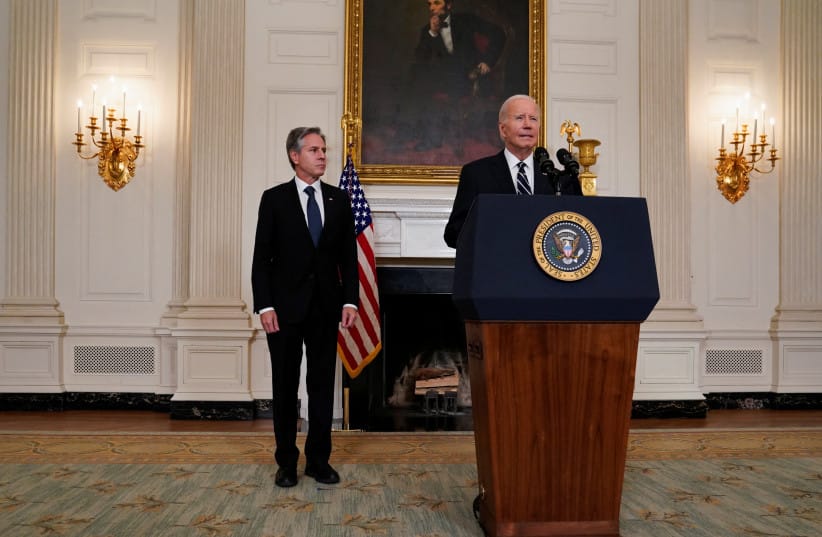 US President Joe Biden, flanked by US Secretary of State Antony Blinken, speaks about the conflict in Israel, after Hamas launched its biggest attack in decades, while making a statement about the crisis, at the White House in Washington, U.S. October 7, 2023. (credit: REUTERS/ELIZABETH FRANTZ)
Asked why he recently described the damage to the relationship as “perhaps irreparably,” he explained that his choice of words was deliberate.
“I write perhaps because I think it’s still an open question, but I also don’t rule it out,” he said. “The more important word is irreparably because it’s honestly possible.”
Why Gordon is speaking out now
Gordon’s interview comes a day after he publicly challenged efforts by Netanyahu supporters to portray a new book and interviews by Brett McGurk, a senior Biden administration official closely involved in negotiations over the Gaza war and the Israeli hostages, as vindication of the prime minister’s wartime decisions.
In a post on X, Gordon argued that McGurk’s account, while valuable, should not be treated as the definitive version of what happened behind the scenes.
“While Brett’s front-row account is valuable, that doesn’t mean it is definitive or its perspectives widely shared, including among former members of the Biden administration,” Gordon wrote.
“I would say most of my former colleagues think that President Biden should have put more pressure on Israel to conduct the war differently and end it sooner,” he added.
Gordon also wrote that few former administration officials believed Biden’s biggest mistake had been publicly distancing himself from Israel, what he described as showing “daylight” between Washington and Jerusalem.
Speaking to the Post, Gordon explained why he decided to enter the debate over one of the most contentious periods in recent Israeli-American relations.
“Everything’s charged and this is sensitive and important, which is why I thought it was important for me to weigh in with my perspective,” he said.
His account focuses particularly on the efforts to secure a hostage agreement during the summer of 2024, including a crucial phone conversation between Biden and Netanyahu that, Gordon says, revealed just how difficult reaching a deal would become.
The July 4 call: ‘We were not hearing a yes… but something closer to no’
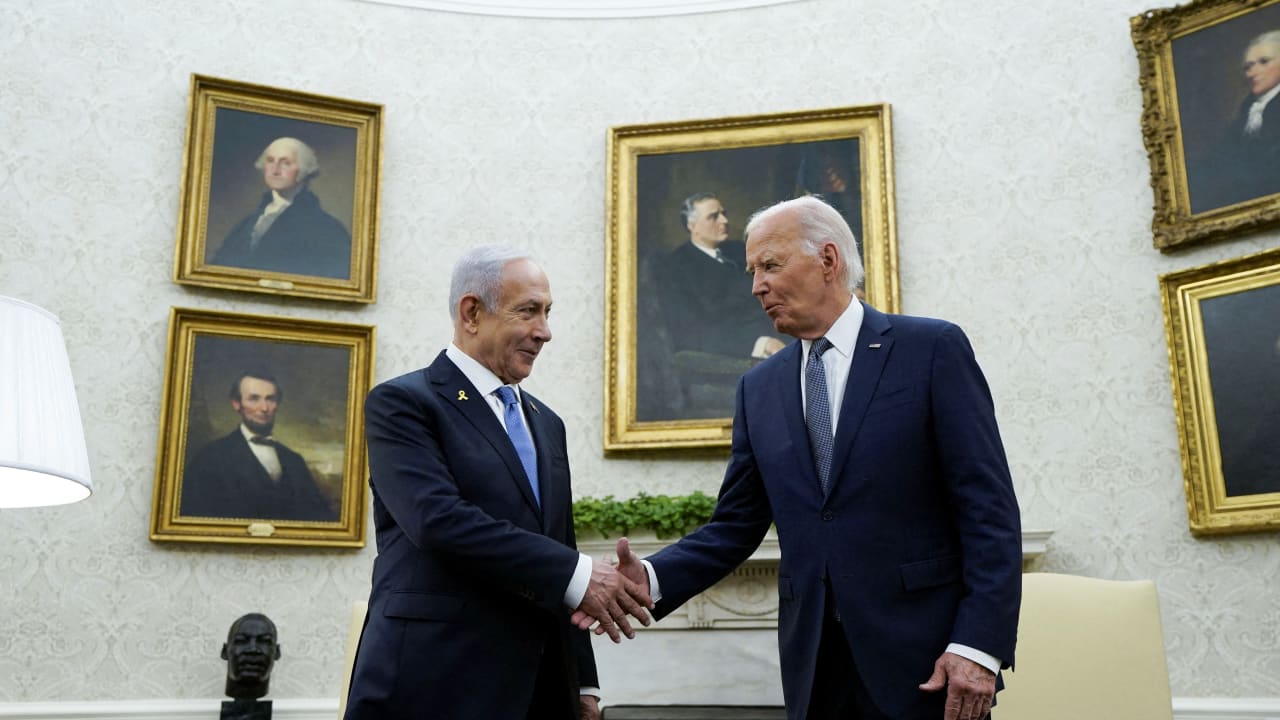
On July 4, 2024, president Joe Biden called Netanyahu at what American officials believed could be a significant turning point in the negotiations to release Israeli hostages held in Gaza.
According to Gordon, Hamas had just indicated it was willing to abandon one of its central demands, creating what Washington saw as a genuine opportunity for progress.
To understand the significance of that moment, Gordon traced the negotiations back to the spring of 2024.
For months, Hamas had insisted that Israel commit to a permanent ceasefire before any hostages were released. Israel refused to make such a commitment.
That dispute remained the main obstacle throughout May.
But toward the end of that month, Gordon said Israel signaled it could accept a phased ceasefire arrangement in which a permanent ceasefire would remain the ultimate objective without requiring an immediate Israeli commitment.
“With clever drafting, we were able to put together the proposal that President Biden rolled out publicly on May 31,” Gordon said.
Under that framework, Israel would not have to commit to a permanent ceasefire during the first phase, but good-faith negotiations over the final arrangements would allow for what Gordon described as “sustainable calm.”
The proposal represented a breakthrough because it created a possible path toward a permanent ceasefire without requiring Israel to accept Hamas’s original condition upfront.
For weeks, however, Hamas did not respond.
Then, around July 2, Gordon said Hamas finally agreed in principle to the framework.
“Hamas finally came around and sort of agreed, in principle, with the framework, including dropping its demand that a permanent ceasefire be agreed up front,” he recalled.
“That felt to us like a significant step forward. Nobody was naive in thinking that this wouldn’t be difficult.”
With that development, Biden called Netanyahu on July 4 to urge him to move ahead.
“The plan was to really urge him to take the deal,” Gordon said.
“This has gone on far too long. The hostages had suffered far too long. There was far too much catastrophic damage, Palestinian lives lost. Humanitarian conditions were horrific.”
But Gordon said Netanyahu’s response quickly dampened American expectations.
“I think we, the American side, were pretty deflated to hear Netanyahu say, ‘Okay, you know, I hear you, Joe, but here are all the things that will have to happen for this to work,'” Gordon recalled.
Netanyahu then began listing those requirements during the call.
“I could tell in that moment that we were not hearing a yes or even a yes, I can work with this, but something closer to no.”
According to Gordon, Netanyahu subsequently began what he described as “clarifying” Israel’s position, clarifications that Washington regarded as effectively introducing additional conditions into the negotiations.
Philadelphi Corridor, Gallant, and the political question
One of the most consequential Israeli demands involved retaining military forces along the entire Philadelphi Corridor, the narrow strip of territory separating Gaza from Egypt.
Gordon emphasized that Israel had not even fully controlled the corridor when the original proposals were developed.
“In that sense, it really was a new condition,” he said.
Netanyahu continued insisting on that position throughout the fall of 2024, despite objections from senior Israeli officials.
Gordon specifically cited then-defense minister Yoav Gallant, who, he said, considered continued control of the entire corridor militarily unnecessary and an obstacle to reaching a deal.
Another disputed condition involved an Israeli screening mechanism for Palestinians returning to northern Gaza, which would have required Israeli forces to remain in central Gaza.
In his earlier X post, Gordon argued that these conditions made an agreement impossible for another six months.
During that period, he wrote, nearly 9,000 additional Palestinians were killed, while more Israeli hostages died, including the six hostages executed by Hamas in August 2024.
He noted that both Israeli conditions were ultimately dropped from the agreement reached in January 2025.
Asked directly whether Netanyahu deliberately delayed the agreement to preserve his governing coalition, Gordon declined to judge the prime minister’s motivations.
“I can’t speak to or speculate about his motives,” he said.
“I know there was a lot of talk that he feared that he would lose his coalition if he compromised on certain issues.”
Gordon acknowledged that Netanyahu might genuinely have believed that continued Israeli control of the Philadelphi Corridor was militarily necessary.
“He certainly articulated over and over again that total victory was the only option,” Gordon said.
But he added that the political implications were difficult to ignore.
“It also seemed to be the case that keeping his coalition together depended on rejecting that proposal, so yeah, you can draw your own conclusions.”
Gordon stressed that no one could know with certainty whether greater flexibility by Netanyahu would have produced an agreement during the summer of 2024.
Nevertheless, he argued that Netanyahu’s insistence on those conditions had a clear consequence.
“We do know that by digging in and taking the positions that he did, which seemed to align with his political interests, and certainly aligned with his emphasis on the need for total victory, that made any deal at that time impossible,” he said.
A warning for Israel: Arms conditionality is now mainstream among Democrats
For Gordon, one of the most significant consequences of the Israel-Hamas War in the Gaza Strip is not merely the deterioration in relations between Netanyahu and the Biden administration, but a broader transformation in American political attitudes toward Israel.
Positions once considered marginal in debates over US military assistance have increasingly moved into the Democratic mainstream.
“Arms conditionality has now gone from a kind of fringe view to a mainstream Democratic position,” Gordon said.
He pointed to the growing number of Democratic senators supporting measures that would condition American assistance to Israel, including legislation concerning Israel’s planned development in the E1 area east of Jerusalem in the West Bank.
Gordon cited a Senate proposal he said virtually all Democrats supported and that would withhold assistance over E1.
Although the shift has been particularly pronounced among Democrats, Gordon emphasized that declining support for Israel is not confined to one political party.
“I know people are mostly focused on Democrats, and it’s true there’s sharper criticism of Israel among Democrats, but it exists in both parties,” he said.
A future Israeli government adopting different policies could begin rebuilding the relationship, Gordon argued, but reversing the damage would require a sustained effort.
“I think with a new Israeli government and different policies, the relationship could improve, he said.
“With work on both sides, maybe it can be repaired, but I don’t think anybody should underestimate the challenge.”
Should Biden have withheld more weapons from Israel?
While sharply critical of Netanyahu, Gordon does not absolve the administration in which he served of responsibility.
Asked what concrete pressure Biden should have applied, he rejected the idea that Washington faced only two options: continuing military assistance without conditions or imposing a comprehensive arms embargo.
“We had great respect for Israel’s need to defend itself against Hezbollah, against Iran,” Gordon said.
He noted that the threat of Iranian military action was particularly real during that period, including the ballistic missile and drone attack Iran launched against Israel in April 2024.
He explained that this security threat was a major reason the Biden administration did not support broadly withholding weapons.
But Gordon argued that Washington had many other available tools.
“There’s an awful lot between doing nothing and withholding all weapons,” he said.
“It starts with diplomatic pressure. It starts with calling out Israel and pushing it to accept these agreements. You can take diplomatic measures at the United Nations and elsewhere, and then yes, you can also start conditioning weapons.”
He cited the administration’s decision to withhold certain 2,000-pound bombs as an example of using military assistance to signal serious disagreement with Israel’s conduct of the war and its handling of the humanitarian crisis.
One episode particularly demonstrated the potential effectiveness of American pressure, Gordon argued: Biden’s response to the Israeli strike that killed aid workers from World Central Kitchen.
According to Gordon, Biden called Netanyahu and delivered a direct warning.
“You will do these things on the humanitarian front, and I need to see them immediately, or US policy is going to change,” Gordon recalled Biden telling Netanyahu.
“Israel did, and opened up further crossings, and that was an example of how US pressure could work.”
Gordon also pointed to the pressure McGurk and Steve Witkoff applied during negotiations over the January 2025 agreement, during the presidential transition following Trump’s election victory.
“When Brett McGurk and Steve Witkoff were pressing the Israelis to accept the final deal in January, and Trump behind the scenes, I think that kind of pressure also worked,” he said.
Iran before the elections: ‘A volatile and dangerous stalemate’
Gordon also addressed another question now dominating discussions in Jerusalem and Washington: Could Israel or the United States resume major military operations against Iran before Israel’s elections and the US midterms?
He refused to offer a definitive prediction, warning instead that the current confrontation was unusually volatile.
“We’ve learned over the last two years and beyond not to exclude anything,” Gordon said.
“The situation is extremely volatile.”
One of his central concerns is that both Washington and Tehran believe time is working in their favor.
“I’m afraid that both the United States and Iran feel that time is on their side,” he said.
“The United States thinks that the blockade is working or squeezing Iran or the economy, but Iran feels like midterms looming and pressure on the US economy means it can resist and last longer.”
That competing assessment, Gordon argued, explains the current diplomatic and military impasse.
“That’s what explains this current stalemate. But it’s a volatile and dangerous stalemate.”
Gordon fears that the pressure campaign may produce further escalation before Tehran agrees to American demands.
“One is that before Iran collapses, which is sort of the goal, either capitulates or collapses, which is the goal of maximum pressure, it will lash out,” he said.
He cited recent Houthi attacks against Riyadh and the earlier attack on Saudi Arabia’s East-West pipeline as examples of how regional escalation can spiral, while noting that the Houthis, rather than Iran directly, were responsible for those attacks.
Gordon also offered a notable assessment of Trump’s military decision-making in recent months.
“I would say that over the past couple of months, every time Trump has threatened it and considered it, he’s backed off because he has realized that the consequences could be devastating,” he said.
“I don’t know if that will hold, but I do think it’s worth keeping in mind.”
Gordon argued that the war has already demonstrated the danger of unintended consequences.
“I think this war, after six months now, has proven to be catastrophic, with all sorts of unintended consequences,” he said.
“If Israel or the United States did decide to resume a major escalation, for reasons of Israel’s election or our elections, I fear that we would just see even more unintended consequences of the tragic sort that we’ve been seeing for the past six months.”
Gordon’s criticism of Trump: A year of missed opportunities in Gaza
Toward the end of the interview, Gordon turned his criticism toward Trump’s handling of Gaza during the first year of his administration.
The January 2025 hostage and ceasefire agreement, Gordon argued, had created an opportunity to put Gaza on a different trajectory: bring home the remaining hostages, preserve the ceasefire, establish a new governing arrangement, and begin reconstruction for Palestinians.
Instead, he said, that opportunity was squandered.
“Once we finally got the deal in January 2025, that was an opportunity to at least start putting it on the right path, get all the hostages out, have a ceasefire, a different government in Gaza, and rebuild for Palestinians,” Gordon said.
“But instead, Israel broke the ceasefire in March. Trump did nothing about that,” he argued.
According to Gordon, a complete blockade on food, water, and medicine followed for two months, dramatically worsening an already severe humanitarian crisis.
He contended that Trump did not begin applying serious pressure for a renewed ceasefire until after Israel struck Doha later that year.
“Trump sometimes gets credit for getting the ceasefire and the 20-point plan in place, and give him credit for that, fine,” Gordon said.
“I think it’s obviously a good thing that the ceasefire was achieved, and there’s a path forward in Gaza.”
But he argued that the administration’s earlier inaction should not be forgotten.
“People shouldn’t forget that it took a year, including turning a blind eye to a complete blockade of Gaza that severely deteriorated the humanitarian situation, and then the entire summer before he got motivated,” Gordon said.
“And that was again only after Israel struck in Doha.”
For Gordon, the criticism of Netanyahu, Biden and Trump is part of the same broader argument: The Gaza war presented extraordinarily difficult choices, but he believes opportunities to end the fighting and secure the release of hostages were repeatedly missed.
Now, he warns, Israel faces another formidable challenge: Rebuilding the trust and standing it has lost among the American public.
“With work on both sides, maybe it can be repaired,” Gordon said.
“But I don’t think anybody should underestimate the challenge.”