
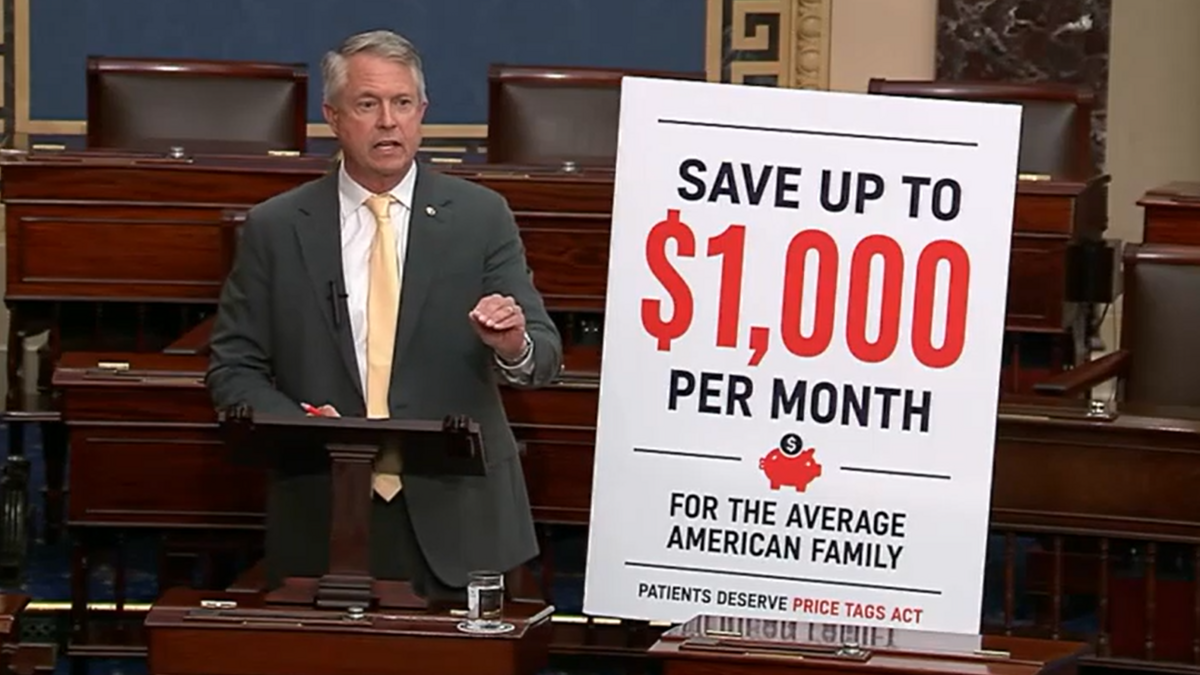
U.S. Sen. Roger Marshall of Kansas speaks for the Senate floor about the Patients Deserve Price Tags Act, a medical billing transparency bill that he co-sponsored.
Screenshot via Sen. Marshall’s YouTube page
While facing sharp criticism over the last month for his debt collection practices as an OB-GYN in Great Bend, U.S. Sen. Roger Marshall has forcefully defended himself, saying his methods were “very common.”
But an analysis of medical debt lawsuits in the Kansas court system found that although it’s not uncommon for hospitals and clinics across the state to sue patients, the 18% annual interest rate Marshall applied to unpaid bills was by far the highest of the roughly 150 medical practices whose public records were reviewed by The Star.
The New York Times revealed in September that before voters sent him to Washington, the rural doctor-turned-Republican lawmaker sued more than 700 former patients while caring for new and expectant mothers across his more than 25-year career.
The medical bills for which Marshall’s patients were taken to court ranged from several thousand dollars to as low as $101. Interest rates compounded the balance. Many debt cases dragged on for years, amid regular renewals by collections attorneys.
In reviewing thousands of court documents, The Star found no other medical providers that charged annual interest at 18% or any other specified rate above 12%.
Marhsall’s detractors include his Democratic rival, the Rev. Adam Hamilton, who has portrayed the debt collection strategies carried out on behalf of Marshall’s practice as callous and predatory toward low-income Kansans.
Court records show that attorneys representing Marshall repeatedly asked judges to issue arrest warrants for former patients who failed to appear in court. Eighty-one people with unpaid bills were arrested, and patients’ wages and bank accounts were garnished.
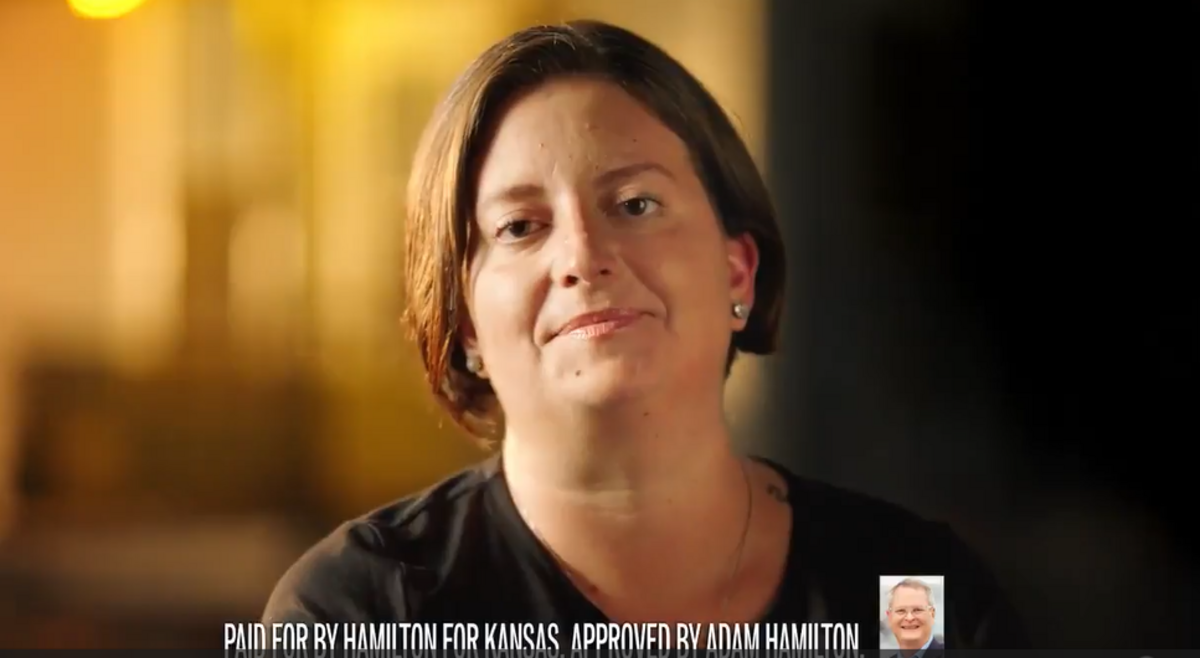 In a campaign ad for Adam Hamilton, Meischa, who says she was a patient of Kansas Sen. Roger Marshall, said she was arrested for not paying her bill. Video campaign ad: Hamilton for Kansas
“I would never want anyone to be arrested because of money that they owed myself or the hospital,” Marshall told Fox News in September. “But we had standard policies. Once they went to collections, I was never asked another — had nothing to do with the process.”
Bond money collected when patients were arrested for failing to appear in court was turned over to the doctor by court order.
Medical transparency reform bill
As his business practices have been picked apart amid a hotly contested reelection campaign, Marshall has remained an outspoken supporter of healthcare pricing and billing transparency reform.
Providers who refuse to furnish an itemized bill would face fines and be barred from turning patients over to debt collectors under the Patients Deserve Price Tags Act, which Marshall and Colorado Democrat John Hickenlooper co-sponsored.
When he took to the Senate floor in late September to ask his colleagues to adopt the legislation by unanimous consent, Marshall said requiring providers to furnish an itemized bill of charges for patients would reshape the healthcare industry for the better.
“Just like in all forms of business, transparency helps consumers,” he said.
The broadly popular bill, which passed out of committee 21-1 in July, was blocked from adoption last month by a lone senator, Republican Rand Paul of Kentucky. The Senate is now in recess, ensuring the legislation will remain in limbo until after the election.
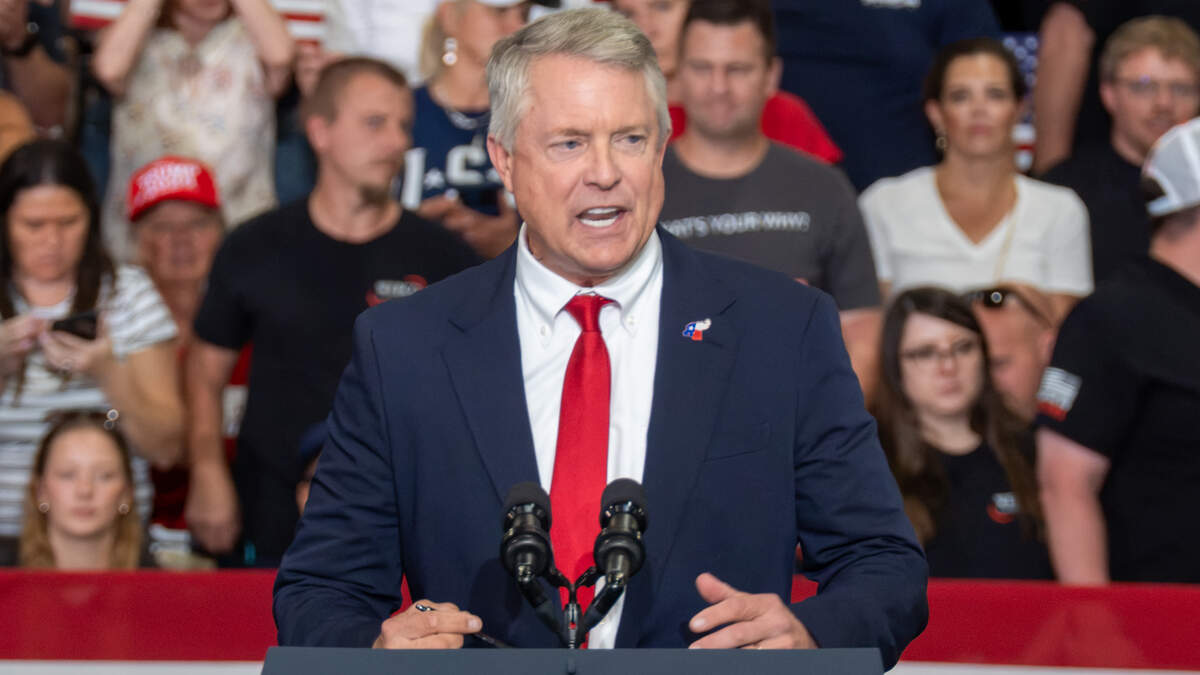 U.S. Senator Roger Marshall, a Kansas Republican, spoke before Vice President JD Vance’s appearance Monday, Sept. 14, 2026, at Webco Manufacturing Inc., a metal fabrication company in Olathe. Robert A. Cronkleton bcronkleton@kcstar.com 18% interest rate
Steven Johnson, the Great Bend attorney who personally represented Marshall and his closely held practice in many of the lawsuits against former patients, told The Star that Marshall’s office was responsible for determining how much interest patients owed on unpaid bills.
Johnson and his former law firm, which continued representing Marshall after voters made Johnson a Barton County judge, uniformly applied 18% interest on debt.
Johnson said in an interview that if one of the creditors he represented as an attorney had asked what the maximum interest rate was that they could charge on overdue bills, he would have advised them it was 18%.
 Steven Johnson Courtesy of Kansas Judicial Branch
“Nobody else was collecting more than that,” said Johnson, who served 12 years on the bench before retiring in 2025. “A lot of people were collecting that but nobody was collecting more than that.”
The Star searched Kansas’ online district court database for other instances of hospitals, clinics, private practices and individual physicians who sent patients to collections in the last 30 years.
In a sample of 35 active and defunct medical practices of all sizes that sued patients and obtained garnishments across 25 counties in every region of the state, available records indicated that none charged more than 10% interest before a judge declared the patient to be in default.
Of the medical practices included in the analysis, attorneys representing 13 practices sought a 12% interest rate after a judge declared patients to be in default.
Thirteen collections practices sought interest at the “statutory rate” after judgment without specifying a percentage, and another thirteen requested that judges grant 10% interest until debt was paid down, as “no other rate of interest was agreed upon.”
Besides Marshall’s 18% interest, 12% was the highest rate charged by medical providers included in The Star’s analysis. Twelve percent was also the interest rate tacked on to bills that were turned over to collections by Great Bend Regional Medical Center, of which Marshall was a founding partner.
“He was not the only creditor (charging 18% annual interest), although it’s starting to appear he might have been the only medical provider,” Johnson said.
Marshall’s campaign provided no comment in response to phone calls, texts and emails seeking responses to a detailed list of questions over the course of two weeks for this story.
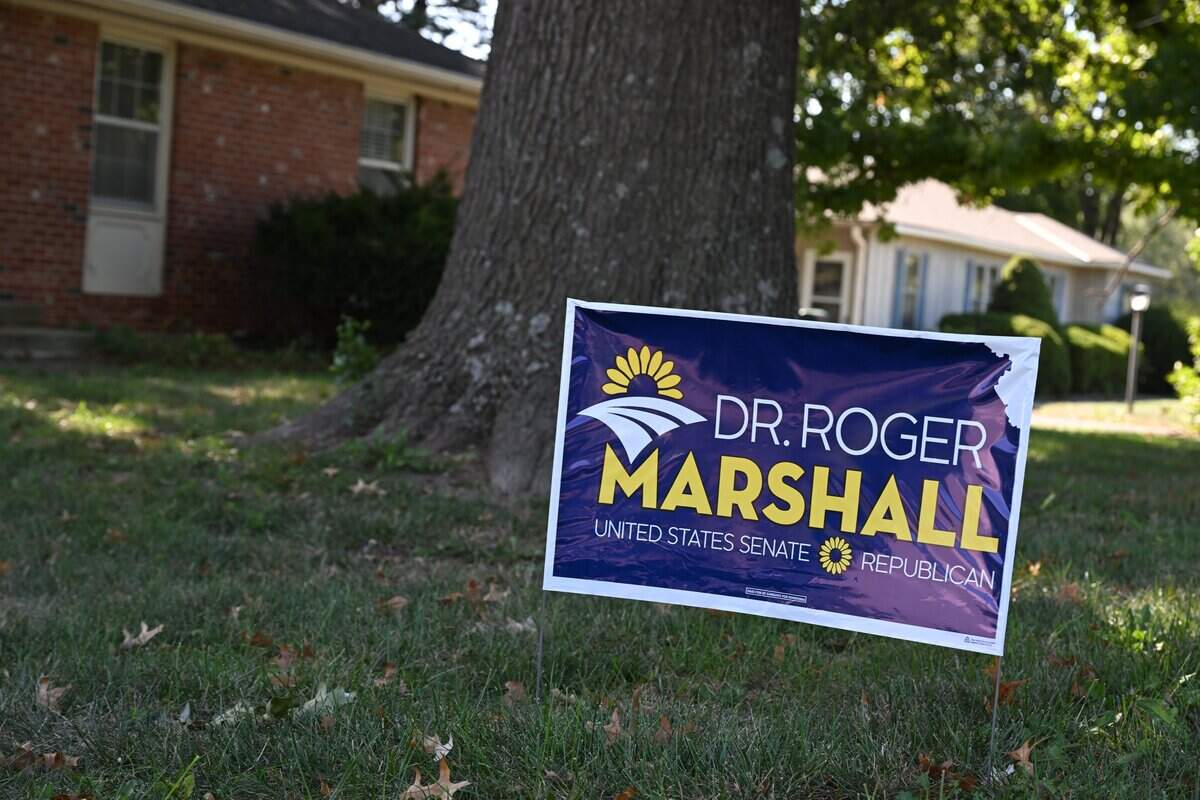 A campaign sign for Sen. Roger Marshall posted in a yard in Merriam, on Thursday, October, 8, 2026, in Kansas City. Dominick Williams dowilliams@kcstar.com Legal questions raised
Marc S. Wilson, who served a stint as Kansas securities commissioner and now works as an Overland Park-based financial services attorney, said the 18% interest rate on medical bills seems “absolutely over the top extreme.”
“You rarely see a patient prior to surgery signing a contract that is so detailed it specifies an interest rate,” said Wilson, who previously worked for the late U.S. Rep. Dennis Moore, a Kansas Democrat, when he served on the House Committee on Financial Services.
“Especially when you combine that with the way it was enforced, where they are requesting that someone go to jail for not showing up for a court appearance — to me, that implicates some of the enhanced penalties in the (Kansas Consumer Protection Act) for actions against disabled people,” Wilson said, noting that Kansas law recognizes pregnancy as a short-term disability.
He pointed to a state law that governs “any bond, bill, promissory note or other instrument of writing for the payment or forbearance of money” and caps interest rates outlined in contracts at 15% annually “unless otherwise specifically authorized by law.”
Practicing attorneys who specialize in financial services and debt collection interviewed by The Star were split over whether the 15% limit applies to medical debt. Some said the law in question exclusively regulates lenders, noting that the attorney general opinions on record tied to the statute focus on loans.
Susan Giles, executive director of the Kansas State Board of Healing Arts, said the regulating agency doesn’t get involved unless it receives a complaint about improper billing.
 Sen. Roger Marshall holds a box of milk during a visit to a Garden City elementary school. Office of Sen. Roger Marshall/Facebook
Johnson, Marshall’s former attorney, said he’s confident the 15% interest rate cap for contracts didn’t apply to the 18% charges he enforced on OB-GYN patients’ unpaid bills.
Marshall’s campaign would not say whether his former medical practice disclosed interest rates to patients before care.
“They may not remember signing the contract. But I can pretty well tell you they did because you don’t get seen (by doctors) unless you’ve done all the paperwork and signed where they said to sign,” Johnson said.
But he also suggested that the 18% interest rate could legally have been disclosed for the first time in an invoice after care was provided. By not making a timely payment, he said consumers agree to any interest rate charges disclosed in an invoice.
Other debt collection attorneys disputed that point, including some who said the higher interest rate would have only been legal if patients agreed to it ahead of time.
‘A doctor leading the way’
A spokesperson for Patients Rights Advocates, a nonprofit group dedicated to ushering in “systemwide healthcare price transparency,” said that over the last two years, Marshall has been a steadfast champion for demystifying medical bills.
“The most comprehensive price transparency bill we have on healthcare couldn’t have happened without a doctor leading the way,” said Rich Danker, who previously served as Robert F. Kennedy Jr.’s chief spokesperson at the Department of Health and Human Services.
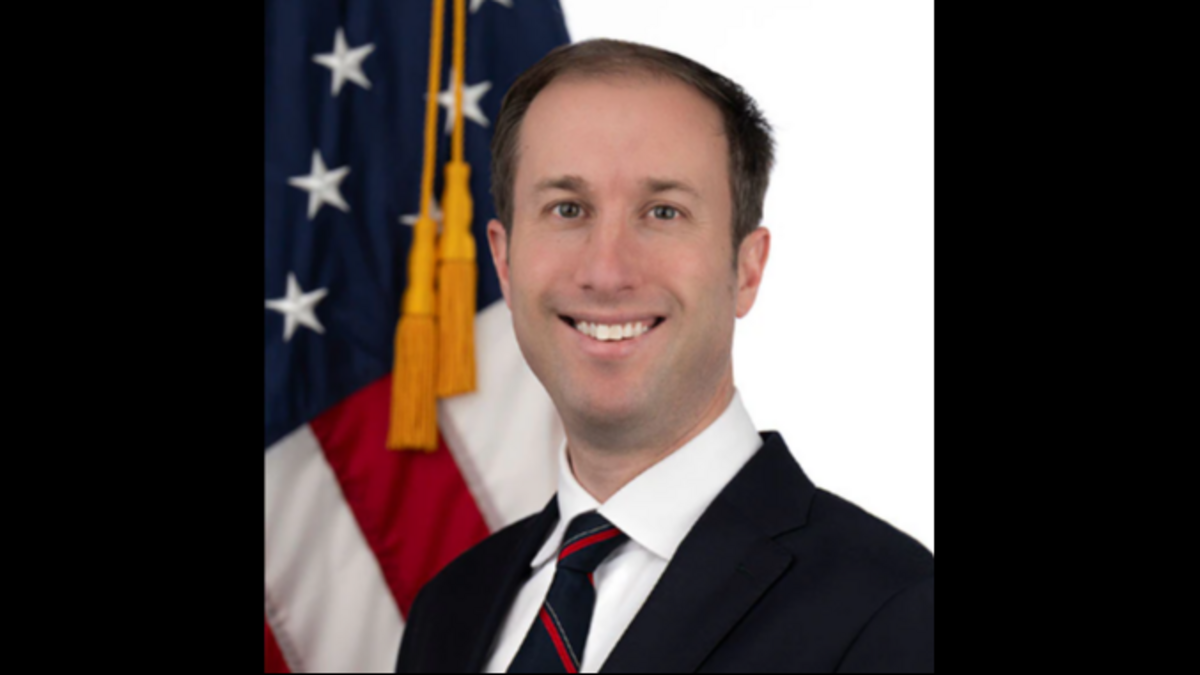 Rich Danker Courtesy of U.S. Department of Health and Human Services
“You just had to see it from the patient’s point of view the way (Marshall) did to know how important it was to deliver actual upfront prices in dollars-and-cents terms to patients and the rates they would pay through their insurer when they’re shopping for care in advance,” Danker said.
He likened Marshall to President Donald Trump, saying his intimate knowledge of the healthcare system’s inner workings makes him more effective.
“Donald Trump was a businessman for forty years and saw the ins and outs of regulation. I think it’s fair to say he certainly brought a strong perspective on that for other business owners into the White House in the ways he’s cut red tape,” Danker said.
“The fact that you’ve got everyone from Bernie Sanders to Josh Hawley lining up to support the (Patients Deserve Price Tags Act) is just an incredible show of bipartisanship,” Danker said.
He dismissed criticism of Marshall’s own debt collection practices as sensationalized.
Marshall has done the same.
“It’s just amazing to me, here I’m the only OB-GYN in the middle of sixty thousand people. On call every night,” Marshall told Fox News in the same September interview. “I didn’t get a night off, you know, for thirty years darn near. And so many people we gave free care to. So many bills that we just wrote off as well.”
Kansas consumer debt reform
Lauren Jones is legal and policy director at the National Center for Access to Justice at the Fordham Law School in New York, which analyzed consumer debt litigation laws in every U.S. state and formulated recommendations for reform.
“Consumer debt cases are now the most common cases in civil courts across the country, and what happens across the board — and this includes medical debt cases — is that people default at overwhelming rates,” Jones said.
“Oftentimes, people never even know that they’re being sued,” she said.
 Lauren Jones Courtesy of Fordham University
In the vast majority of consumer debt cases, people who are sued don’t have access to a lawyer, she said. Generally, there’s no right to counsel in civil cases.
Twenty-seven states have passed laws ensuring that defendants in consumer debt cases have the right to an attorney once jail time becomes a possibility, Jones said. Nebraska, Colorado and Oklahoma are among them.
“If somebody has missed a court date and they’re going to face contempt and there’s a possibility of jail time, they have a right to a lawyer then,” Jones said. “Kansas doesn’t do that.”
Marshall’s practices in context
Researchers with the Consumer Bankruptcy Project estimated that medical bills or illness-related income loss contribute to roughly two-thirds of personal bankruptcies.
“Private practice lives with the balance: the patient owes what insurance did not pay, and if they do not pay, the practice either writes it off against the doctor’s own margin or sends it to collections and, when necessary, litigation,” Dr. Richard Menger, a neurosurgeon, wrote in a September Forbes commentary.
“Marshall’s clinic did not invent American collections law. It used it,” Menger wrote. “One may argue the tactics were harsh — especially the interest rate and the path to warrants — without arguing that physicians must work for free.”
Dr. Gerald Early, a retired Johnson County heart surgeon who now works as a full-time clinical researcher, said he’s personally offended by Marshall’s approach to debt collection.
“Being a physician, it’s a way to make a living. But even more importantly, it’s a calling and a very special privilege,” Early said.
He acknowledged that employed physicians’ employers “not infrequently” turn patients over to collections, although practices vary widely.
“Physicians individually generally do not (sue over debt). And I and my partners, we never did,” Early said.
“You ask yourself, how badly do I need the money? And how badly do they need the money?” he said.
Jones, the consumer debt litigation expert, said that in her experience, 18% annual interest on medical bills is “extraordinarily high.”
“And when you’re talking about people who are living paycheck to paycheck, having trouble paying their bills — to charge eighteen percent interest on top of that — that adds up so fast and makes it impossible for people to pay,” Jones said.
Loading…
This story was originally published October 11, 2026 at 5:00 AM.
Related Stories from Kansas City Star

The Kansas City Star
Matthew Kelly is The Kansas City Star’s Kansas State Government reporter. He previously covered local government for The Wichita Eagle. Kelly holds a political science degree from Wichita State University.