
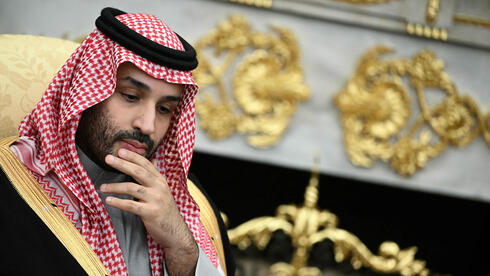
Let’s start with the bottom line: Even now, with Saudi Arabia coming under attack three times in a single week by the Houthis, backed of course by Iran, the common enemy of Israel and the kingdom, Crown Prince Mohammed bin Salman is in no hurry to seek Israeli assistance. He is receiving intelligence support through American mediation. A lion from Riyadh facing something less than a Houthi tiger. The Saudi crown prince is keeping his poker face.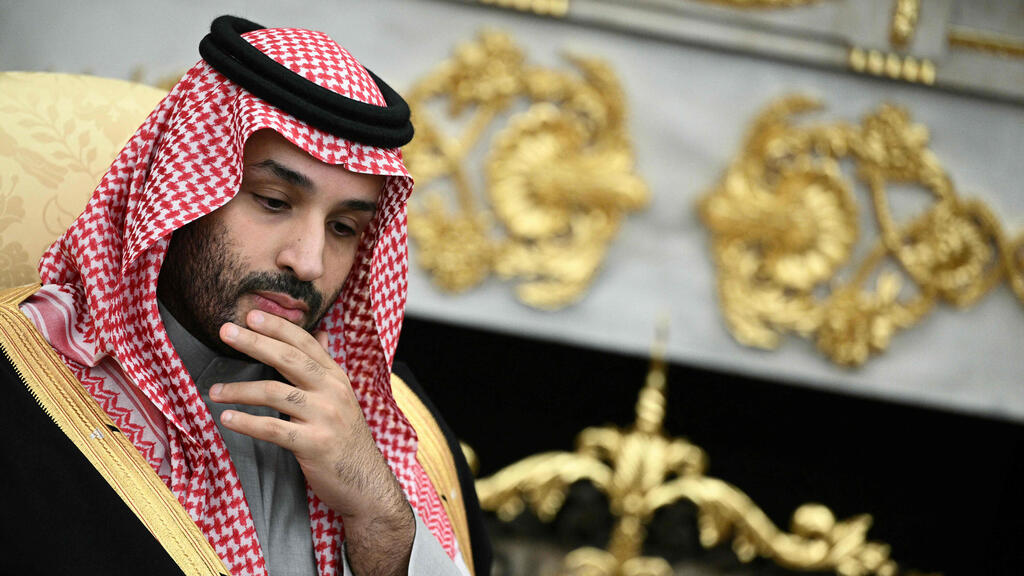
Saudi Crown Prince Mohammed bin Salman is in no hurry to seek Israeli assistance
(Photo: Brendan Smialowski / AFP)
The Iranians can sit back and relax. Trump is paying little attention to the Houthis, for better or worse. This is despite the fact that his senior advisers are well aware of the relationship between the Houthis and Iran’s Revolutionary Guards, including the scale and nature of the assistance provided and the training conducted by experts sent from Iran.
Bin Salman also still has unfinished business with Netanyahu over the leak of their secret meeting in the city of Neom six years ago. Netanyahu leaked the meeting, the Saudis were furious and rushed to deny it. Since then, there have been additional secret meetings between Israelis and Saudis, most notably one held last month at an abandoned ski resort in Germany, attended by seven Arab military chiefs of staff, including Saudi Arabia’s, and IDF Chief of Staff Lt. Gen. Eyal Zamir.
The Saudis are now anxiously awaiting the results of Israel’s elections. Last week, a senior official in Riyadh told me: “There is no chance that Crown Prince Mohammed bin Salman will embark on another adventure with Netanyahu. If he loses the election, we can turn over a new leaf. If he wins again, we won’t be the only ones in trouble.”
Saturday saw the most powerful and devastating Houthi attack yet on King Khalid International Airport in Riyadh. Twelve people were killed and 309 wounded, and the death toll could rise six- or sevenfold because of the severity of the injuries.
Two days before the attack, Pakistan, Saudi Arabia’s new ally alongside Turkey, issued a statement pledging to defend the kingdom. Yet its forces failed to shoot down even a single Houthi missile over the course of a week. Turkey also issued a halfhearted pledge, while Britain sent a vague message that offered no meaningful military assistance. Citizens of European countries and the United States are now being warned to stay away from “sensitive areas.”
Consider how complicated the situation has become. Washington’s reluctance to launch an attack does not mean the U.S. administration is abandoning Saudi Arabia, certainly not the hundreds of millions of dollars that continue to flow.
But the United States is approaching its midterm elections, and President Trump’s political standing is far from encouraging. As far as he is concerned, the fighting in the Gulf can wait. The same goes for Netanyahu, who knows perfectly well what people in the royal palaces think of him.
Meanwhile, Saudi embassies are inviting citizens who have become “stranded” abroad to get in touch for assistance with their day-to-day arrangements. In Riyadh, the capital, authorities have decided that schools and universities will switch to remote learning.
As the saying goes, this story is far from over.