
Summary
Iran and the United States are exchanging diplomatic proposals, but significant disagreements remain over concessions, maritime security, and the Strait of Hormuz. Tanker incidents and continued military tensions are increasing uncertainty across regional shipping and energy markets. Meanwhile, Iran faces growing domestic challenges, including university funding shortages, healthcare affordability problems, import disruptions, and potentially tighter restrictions on international travel. The central challenge for Tehran is balancing its diplomatic leverage against the escalating economic and social costs of prolonged confrontation.
Key Takeaways
Iran-US negotiations remain unresolved. Washington has responded to Tehran’s seven-day proposal, but Iran considers the response insufficient. The reopening of the Strait of Hormuz remains tied to American concessions, while no formal nuclear agreement or ceasefire has been confirmed.
Maritime tensions are increasing regional and economic risks. Reports of tanker attacks, threats to shipping, and uncertainty around the Strait of Hormuz are complicating diplomacy, disrupting trade, and increasing transportation and insurance costs. Iran is simultaneously applying pressure at sea and pursuing diplomatic engagement with regional powers.
Iran’s domestic economic and social pressures are intensifying. Universities face a 37.7 trillion toman student meal funding shortfall, low-income patients are abandoning treatment because of costs, and customs authorities are relying on emergency procedures to facilitate essential imports. Proposed security legislation could also expand government oversight of citizens’ foreign travel.
The Reply Has Arrived, but There Is Still No Deal
The main diplomatic development on October 12, 2026, is Iranian confirmation that the United States has responded to the seven-day plan Tehran submitted through intermediaries.
Kazem Gharibabadi, deputy foreign minister for legal and international affairs, said the Iranian proposal had been transmitted through several countries, including Qatar, and that Washington’s positions had been received and were now under review in Tehran. According to him, Iran’s response will be sent back through the same channels.
The details of the seven-day plan have not been published. It is not known what steps each side is supposed to take on each day, whether the proposal is a framework for a ceasefire, an arrangement for navigation through the Strait of Hormuz, or a broader plan that also covers sanctions and the nuclear issue. For now, it can be established that indirect negotiations are taking place and that documents are passing between the two sides. It cannot be established that they are close to an agreement.
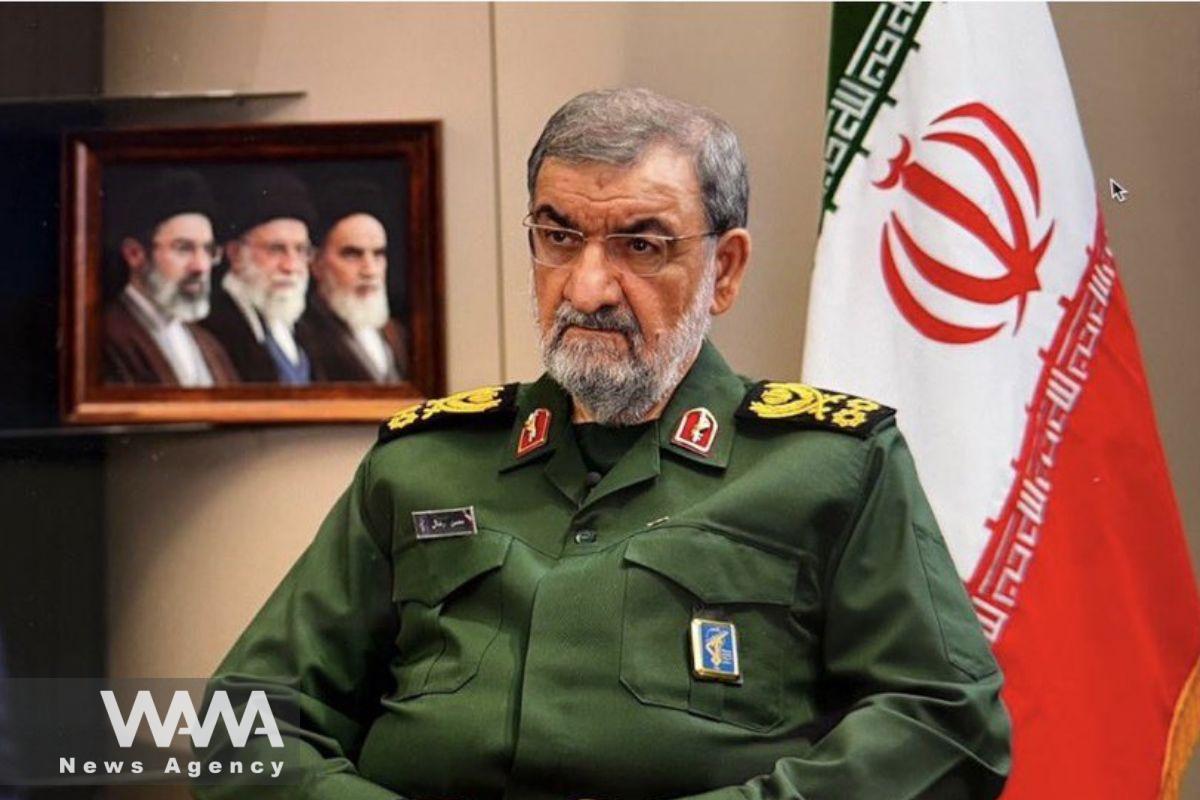
Mohsen Rezaei, secretary of the Supreme National Security Council, lowered expectations when he said: “The Americans have responded to us, and we consider their response insufficient.” According to him, Washington must clarify the ambiguities in its response before the process can move to the next stage.
That wording says a great deal about the state of the talks. The contacts are no longer limited to general declarations of willingness to engage in dialogue, but the sides are still arguing over the conditions that would allow the process to begin. Each is demanding that the other take the first step and demonstrate a willingness to pay a tangible price.
Gharibabadi explicitly linked the diplomatic process to the Strait of Hormuz. According to him, a return to normal conditions and the reopening of the strait depend on the United States returning to its previous commitments. The term “previous commitments” remains ambiguous. It could refer to understandings conveyed through intermediaries, commitments dating back to the nuclear agreement, or American proposals discussed since the outbreak of the war.
The ambiguity is not necessarily a flaw. It allows Tehran to demand something in return without publicly setting its exact threshold in advance, while preserving the option of presenting a range of American measures as an Iranian achievement.
Russia Wants to Mediate, but Iran Is in No Hurry to Entrust It with the Deal
Iran’s economic press also devoted attention this morning to the possibility of Russian mediation. Moscow has experience with the nuclear file, an open channel with Tehran, and the ability to speak with actors with whom Iran has no direct relations.
Those advantages do not make Russia a neutral mediator. It has relationships with Arab states, economic interests of its own, and limited ability to influence decisions in Washington and Israel. Tehran is also aware that Russia could use the Iranian crisis to advance its interests in other arenas.
The discussion does not point to an agreed mediation track. It indicates that the question in Tehran is no longer whether to maintain a diplomatic channel, but which channel to use and how much power to give the mediator. Qatar can convey messages, Russia can propose formulas, and Oman can deal with shipping arrangements. Iran prefers to spread the process among several countries rather than depend on a single intermediary.
The Nuclear Issue Is in the Room, Even If No One Is Talking About It Out Loud
No announcement was made this morning about the opening of formal nuclear negotiations. Nor were details provided about enrichment levels, uranium stockpiles, centrifuge activity, or the return of International Atomic Energy Agency inspectors to additional facilities.
The absence of such details does not mean that the nuclear issue has disappeared from the talks. It is difficult to assume that the United States would agree to broad sanctions relief without demanding something in return on the nuclear front. Tehran, for its part, continues to present the right to enrich uranium as a red line.
It is therefore plausible that the seven-day plan initially addresses more urgent measures: reducing the risk in the Strait of Hormuz, halting attacks, regulating shipping routes, and releasing some funds or facilitating some trade. The nuclear issue could emerge at a later stage, after a minimum level of trust has been established between the parties. This is a possibility, not a detail confirmed in an official statement.
At present, there is no basis for saying that a new nuclear track has been opened or that a compromise has been reached on enrichment. Proposals are being exchanged, but the substance of the potential concessions remains undisclosed.
In the Strait of Hormuz, Every Incident Becomes an Argument at the Negotiating Table
Alongside the diplomatic contacts, the Revolutionary Guards reported that a tanker carrying 750,000 barrels of oil struck a naval mine and caught fire. The statement described it as “the third tanker” to be hit.
The statement did not provide the vessel’s name, the flag under which it was sailing, its precise location, or information about the crew. No independent confirmation of this particular incident was found. It can be verified that the Revolutionary Guards published the claim, but its details still cannot be independently verified.
A separate incident near the Omani port of Sohar received more substantial confirmation. The United Kingdom Maritime Trade Operations center reclassified the incident as an “attack” after a drone strike on a tanker was confirmed. Local authorities assisted in evacuating the crew, but the extent of the damage and the environmental impact remain unclear. No evidence has been published that would allow the attack to be attributed to a particular party.
It is important not to conflate the two incidents. The claim involving a mine strike and “the third tanker” comes from the Iranian establishment and has not yet been independently verified. The drone strike near Oman was confirmed by an external maritime authority, but the identity of the attacker remains unknown.
Both incidents make clear why Hormuz has become the heart of the bargaining process. Iran no longer treats the strait as a simple switch that is either open or closed. It is seeking to shape a traffic regime in which transit rules, the level of oversight, and the degree of risk are tied to diplomatic agreements.
Kayhan described the mines as a tool that disrupted the American plan and called for “punishing the aggressor” rather than hesitating or entering negotiations. The headlines do not prove an operational achievement. They do show how the hard-line camp wants the public to understand the situation: Iran is not seeking an arrangement because it has lost its ability to act, but because it has demonstrated that it can impose a cost.
Tehran Threatens at Sea and Tries to Reassure Saudi Arabia
While the Revolutionary Guards emphasize the maritime threat, Foreign Minister Abbas Araghchi is trying to prevent the escalation from spreading to every country in the region. In a conversation with his Saudi counterpart, Faisal bin Farhan, he warned that continuing down the military path would deepen the crisis and offered Iranian assistance in opening a dialogue between Saudi Arabia and Yemen.
The proposal does not indicate that Iran is abandoning pressure in Hormuz. It demonstrates a division of labor within the system. The security branches remind others that they can disrupt trade and shipping, while the Foreign Ministry offers Gulf states a way to distance themselves from the confrontation.
From Tehran’s perspective, Saudi Arabia is not merely a regional actor. It can influence the energy market, the positions of Gulf states, and the ability to build a broad Arab front against Iran. A reassuring message to Riyadh is intended to reduce the likelihood that American pressure and fears of disruptions to shipping will bring the region’s states together in a single camp.
The Anti-Infiltration Law Reaches the Passport Too
The external confrontation continues to expand the boundaries of domestic oversight in Iran. Esmail Kowsari, a member of parliament’s National Security Committee, addressed the proposed law on “combating infiltration” and said it was intended to increase awareness among citizens leaving the country so that they would not become tools in the hands of foreign actors.
The headline given to his remarks was broader, claiming that people would have to provide notification before leaving Iran, “so they don’t get into trouble later”. No full text of the law, reporting mechanism, or evidence that such a requirement has already taken effect was presented.
The “infiltration law” is the name given to a proposed law seeking to expand the registration, authorization, and oversight of contacts between Iranian citizens and organizations and foreign actors. It is not limited to espionage or the transfer of secrets. Under versions discussed so far, contacts with media outlets, universities, organizations, embassies, and foreign citizens could also fall within the category of sensitive activity.
Bringing foreign travel into the same discussion expands the boundaries of suspicion even further. A professional meeting, academic conference, or family visit could acquire security implications if the authorities claim that the citizen was exposed to a recruitment attempt or prohibited contact.
Kowsari presents the mechanism as a protective measure intended to prevent people from getting into trouble. For citizens, that same “protection” could become a requirement to explain in advance where they are traveling, whom they will meet, and the purpose of the visit. Until the full text of the law is published, it is impossible to know where the line will be drawn.
Universities Are 37.7 Trillion Tomans Short of What They Need for Meals
The most striking economic figure this morning came from university dining halls. According to a report by parliament’s research center, the 1405 budget allocated 22 trillion tomans for student meals, while estimated needs stand at 59.7 trillion. The shortfall is 37.7 trillion tomans.
The system must provide food for more than 600,000 students at more than 100 universities. According to the data, in 1403 students paid only about 16 percent of the actual average cost of a meal, estimated at 272,000 tomans. The state and universities covered the remainder.
A gap of this magnitude cannot be closed through efficiency measures alone. Unless additional funding is provided, universities will have to reduce portions, lower food quality, increase the students’ share of the cost, or accumulate debts to suppliers.
Subsidized food is not a marginal benefit of campus life. For students from poor and middle-class families, university meals are part of what makes it possible to study away from home and remain in higher education. A significant increase in prices could turn a budgetary problem into student dropout or deter people from pursuing higher education in the first place.
While the state portrays its stance in Hormuz as a defense of sovereignty, its educational institutions are finding that the budget is insufficient to sustain the existing model of providing a basic meal. This is not merely a rhetorical contradiction. These are two uses competing for the same public resources.
Customs Shifts to Emergency Procedures to Keep Medicines and Food from Getting Stuck
Iranian Customs has extended an emergency procedure for releasing goods through November 6. The decision allows the full release of cargo belonging to government entities and 90 percent of cargo belonging to the nongovernmental sector, provided that a valid registration exists, without waiting for a bank tracking code.
The exemptions also apply to perishable food, pharmaceutical raw materials, medical equipment, and spare parts. In practical terms, they could prevent essential goods from remaining at ports while importers wait for banking approval or foreign currency allocations.
The measure provides relief, but it also reveals the depth of the problem. When the state is forced to bypass a central stage of the banking process to release medicines and food from customs, it means the normal payment system is not operating at the required pace.
Sanctions make transferring funds more difficult, shortages of foreign currency delay importers, and maritime risks increase insurance and transportation costs. Even goods that have already reached Iran can remain stuck because the necessary banking document has yet to arrive.
“I Don’t Have Money, So I Don’t Get Treatment”
An adviser at the Health Ministry warned that low-income patients are postponing or discontinuing treatment because of the costs. She also acknowledged that the system does not have an organized database showing how many patients have dropped out of treatment for financial reasons.
The sentence chosen as the report’s headline was simple: “I don’t have money, so I don’t get treatment”. Behind it lies a problem that is difficult to measure precisely because the patient stops showing up. A person who does not schedule another appointment, buy the medication, or continue with testing may disappear from the data before the system recognizes that the treatment has been abandoned.
The absence of a nationwide figure requires caution. It is impossible to determine how many Iranians have stopped receiving treatment because of its cost. It also points to a failure in its own right: the Health Ministry is unable to identify those at risk in time, contact them, and offer assistance before their condition deteriorates.
Postponing treatment saves a family money in the short term, but it can increase public expenditure later. An illness that could have been treated at an early stage may eventually require an emergency room visit or prolonged hospitalization. In this way, the erosion of household income becomes an additional cost for the healthcare system.
Thousands of Polluting Factories, with Unclear Enforcement Results
The head of the National Center for Air and Climate Change said that approximately 18,000 large industrial units are inspected every quarter, with more than 3,500 polluting units identified in each inspection cycle.
The factories are referred to the Tax Administration and may be required to pay a levy equal to between half a percent and one and a half percent of sales. In cases of persistent violations, the factory may also be shut down.
The figures demonstrate that a monitoring mechanism exists and that a large number of factories fail to meet the requirements. They do not show how much has been collected in fines, how many factories have changed their operations, or whether pollution levels have declined as a result of enforcement.
During a period of economic pressure, the government faces a difficult choice. Closing a polluting factory could hurt employment and production, while failing to enforce the rules leaves public health to bear the cost. When thousands of facilities repeatedly appear on the lists, the mere existence of a fine does not guarantee that pollution has become economically unviable.
Desk Conclusion
Iran has succeeded in bringing the Strait of Hormuz to the negotiating table. The American response to the seven-day plan is being reviewed in Tehran, and an active channel exists for exchanging messages. This is still not an agreement, nor is it a formal nuclear negotiation.
Hormuz gives Iran bargaining power because the risks there do not stop at its borders. Every tanker that is hit and every new warning affects Gulf states, insurance companies, importers, and the energy market. That same leverage also harms Iran: it increases the cost of transporting food and medicines, delays trade, and forces customs authorities to adopt emergency procedures.
The domestic bill is already mounting. Universities are 37.7 trillion tomans short of what they need to fund meals. Poor patients are postponing treatment, and the healthcare system does not even know how many of them have disappeared from care. A security bill intended to address espionage is beginning to extend into citizens’ travel as well.
The question facing the leadership is not whether to talk to the United States. The talks are already taking place through Qatar and other channels. The question is how long it can continue raising the cost of waiting before the cost inside Iran rises even faster.
FAQ
What is preventing Iran and the United States from reaching an agreement?
The primary obstacles include disagreements over American commitments, the conditions for reopening the Strait of Hormuz, and the sequencing of concessions. Iran considers Washington’s response to its seven-day proposal insufficient, while the details of potential compromises remain undisclosed. Nuclear issues may eventually become part of negotiations, but no formal nuclear agreement has been announced.
How are tensions in the Strait of Hormuz affecting the regional economy?
Maritime security threats are increasing shipping risks, insurance expenses, and transportation costs while complicating regional trade. A drone attack near Oman has been independently confirmed, although responsibility remains unknown, while a separate Iranian claim involving a tanker striking a mine remains unverified. Prolonged instability could further disrupt energy shipments and increase the cost of importing essential goods.
What are the most serious domestic challenges facing Iran?
Iran faces mounting pressure on education, healthcare, and essential imports. Universities need an estimated 59.7 trillion tomans for student meals but have received only 22 trillion in budget allocations, leaving a 37.7 trillion toman gap. Financial hardship is also forcing some patients to postpone treatment, while banking delays and trade disruptions have required emergency customs measures to keep medicines, food, and medical equipment moving.