
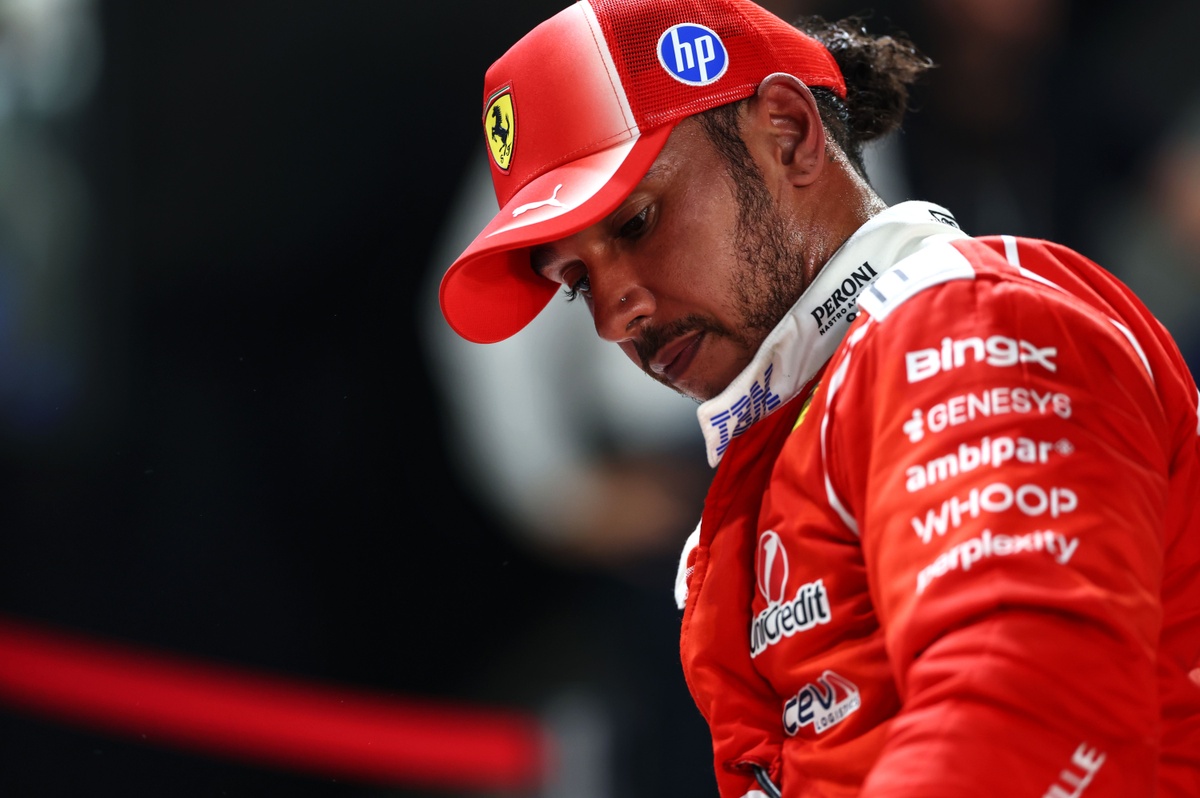
Ferrari team boss Frederic Vasseur has grown accustomed to being peppered with difficult questions recently, though chiefly these have concerned his own future at the team. Unfortunately for him, a shift in the point of attack has proved no less irksome.
Post-Singapore, the natural focus was on Lewis Hamilton not pitting under the virtual safety car triggered by Lance Stroll‘s Aston Martin turning up its toes on lap 39 of 62. Aston Martins conking out or crashing, and reshaping race outcomes, have become such a predictable feature of Formula 1 in 2026 that surely bookmakers must have ceased taking bets on such events by now.
It was an Aston Martin breathing its sorry last during the Barcelona Grand Prix earlier this year that enabled Hamilton to pit cheaply and make the best of an offset strategy to claim his first GP win for Ferrari. Circumstances have changed since then, apart from the grinding inevitability of a backmarker clad in British Racing Green popping off to meet its maker mid-race.
Ferrari’s championship challenge has itself spluttered as the season progressed. For any other team, running second in the constructors’ championship after a difficult few years would be considered a positive step, but Ferrari’s illustrious history and the expectations of its home nation have long been proverbial millstones around the team’s neck.
Perhaps it’s a factor of Mercedes’ dominance, along with McLaren and Red Bull underperforming for the first half of the season, that Ferrari hasn’t been permitted to celebrate its improvements, but instead being punished for the disappointments and failures to execute. There have been many operational and strategic missteps, plus a seeming inability or unwillingness to lay down the law with Hamilton and Charles Leclerc.
By starting Leclerc and Hamilton on different tyres in Singapore – Charles on softs and Lewis on mediums – Ferrari was already in damage-limitation mode, trying to compensate for its drivers not qualifying ahead of Max Verstappen. Putting Leclerc in a position to potentially gain track position at the start, with Hamilton on rubber theoretically more likely to last longer into the race, seemed to cover all the eventualities as neatly as possible.
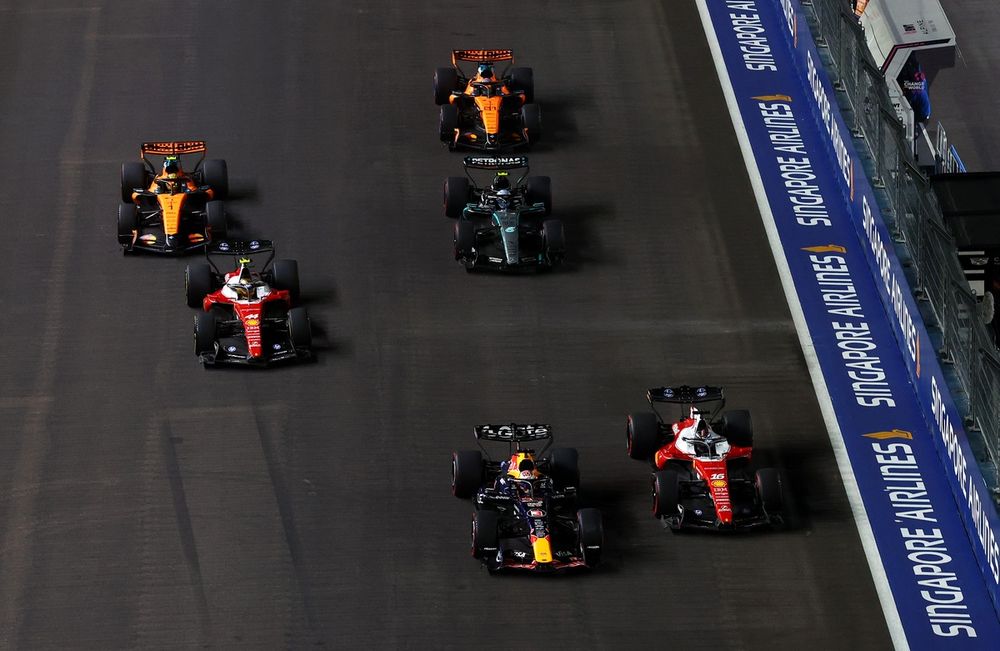
Ferrari split its strategy from the start to allow Leclerc to attack early and Hamilton to build into the contest
Photo by: Joe Portlock / Getty Images
Still not as good as starting on the front row, though, on a track where overtaking between cars with similar performance envelopes is tricky without a substantial tyre offset.
What transpired was the C5 soft-compound tyres proved a much better race tyre than expected, while the mediums didn’t offer a substantial uplift in life. “Soft tyres less degradation than expected” popped up one of those insufferable no-shit-Sherlock Amazon ‘strategic insight’ graphic on the TV feed. By then it was already over for Ferrari, Hamilton having pitted early (the end of lap 18) to get off the mediums.
Read Also:
As Vasseur said after the race, P2 and P3 were on for the Ferrari drivers, Verstappen being untouchable provided all other inputs remained equal. What was difficult to understand was Hamilton not pitting under that Virtual Safety Car when he was on scrubbed soft tyres that had already done 20 racing laps on top of seeing service in qualifying. Leclerc had pitted for mediums at the end of lap 24 and was already finding them sub-optimal.
Given where the cars were when the VSC was deployed, and that both were instructed to pit at the same time, it requires an epic feat of mental gymnastics to believe that Hamilton accidentally missed the pit entry
Leclerc and Hamilton were circulating four seconds apart, and going through Turns 10-11 with Leclerc 5.7s behind Verstappen, when the yellow flag for Stroll’s expired Aston Martin was upgrade to a VSC. What followed has caused some confusion, since the onboard footage from Hamilton’s car around this period is subject to interference and audio drop-outs – not that all radio communication between car and pitwall is broadcast anyway.
If you were to view the separate feeds in isolation, you would think that only Leclerc was instructed to pit, but Vasseur was adamant that both cars were signalled to come in.
“We called two cars. ‘Guys, you pit behind the VSC,'” he said. “One of my guys [Hamilton] said, ‘No, I prefer to stay on track’. Or he didn’t say – he said, ‘I missed the pit entry.’ Don’t blame the team.”
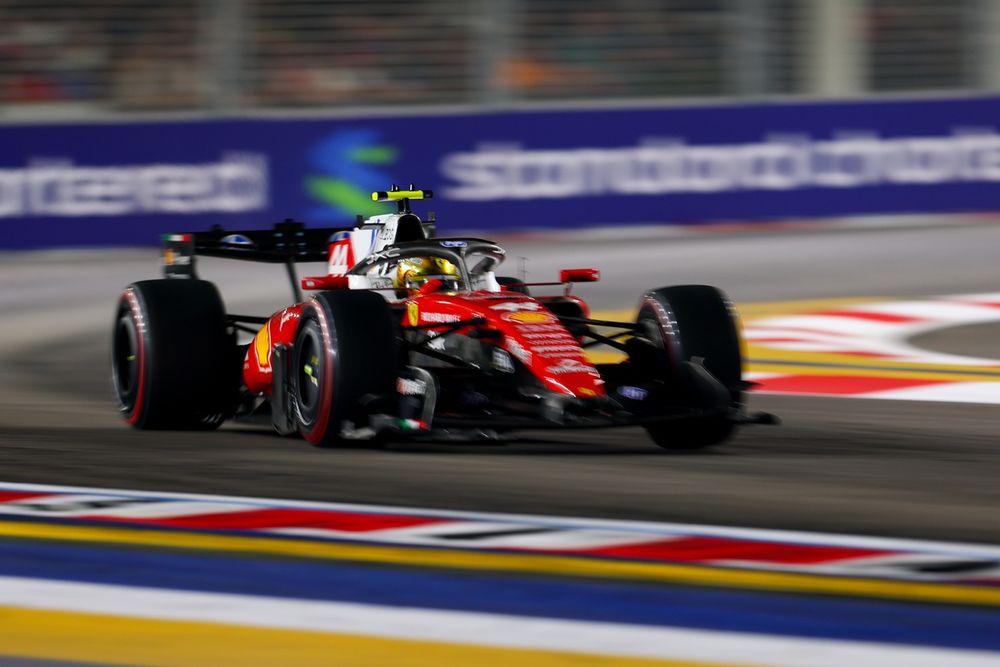
Hamilton opted not to pit when every indication pointed towards it being the right decision
Photo by: Simon Galloway / LAT Images via Getty Images
This is highly peculiar. Given where the cars were when the VSC was deployed, and that both were instructed to pit at the same time, it requires an epic feat of mental gymnastics to believe that Hamilton accidentally missed the pit entry. There was enough space between them for a double-stack pitstop to have had minimal impact on Hamilton’s race – he would likely have emerged ahead of Lando Norris, who had pitted a few laps earlier. Leclerc certainly did.
For Leclerc, getting off the unfavoured mediums and back onto softs, even scrubbed ones, was the best option. He gained ground on Verstappen later in the race, though never presented a serious threat. For Hamilton it would have been a similar scenario, though he would have remained P3.
Ferrari subsequently tried to persuade Hamilton to stop under green-flag conditions, telling him he was six laps short of being able to make a one-stop work – the tyres would give up on him. This would have cost him track position to Kimi Antonelli and the two McLarens, but at least he would have had the tyre offset to potentially attack Norris and Oscar Piastri. Antonelli would have been more difficult since he also stopped under the VSC.
Hamilton declined, wanting to hold out for another safety car deployment. A driver of his experience really ought to know that this is a lose-lose scenario: holding out for a course neutralisation that may never come is a strategy of last resort. Inevitably his tyre performance fell off in the final 10 laps and he slumped to sixth at the chequered flag.
Although Hamilton apologised to the team over the radio on the cool-down lap, he said he felt poorly after the race and went to the medical centre, after which he was excused from the regular round of media duties. For this reason all we have to go on is Vasseur’s occasionally tetchy post-race session along with Ferrari’s press release, in which Lewis is quoted as saying “It was a painful lesson, but I take full responsibility for the decisions I made” and “the team called me in but I missed the entry”.
Hamilton’s early stop for a scrubbed set of softs meant that when Leclerc pitted at the end of lap 24, he emerged only fractionally ahead of his team-mate and Hamilton immediately began campaigning to be allowed past. Leclerc responded by setting the fastest lap of the race.
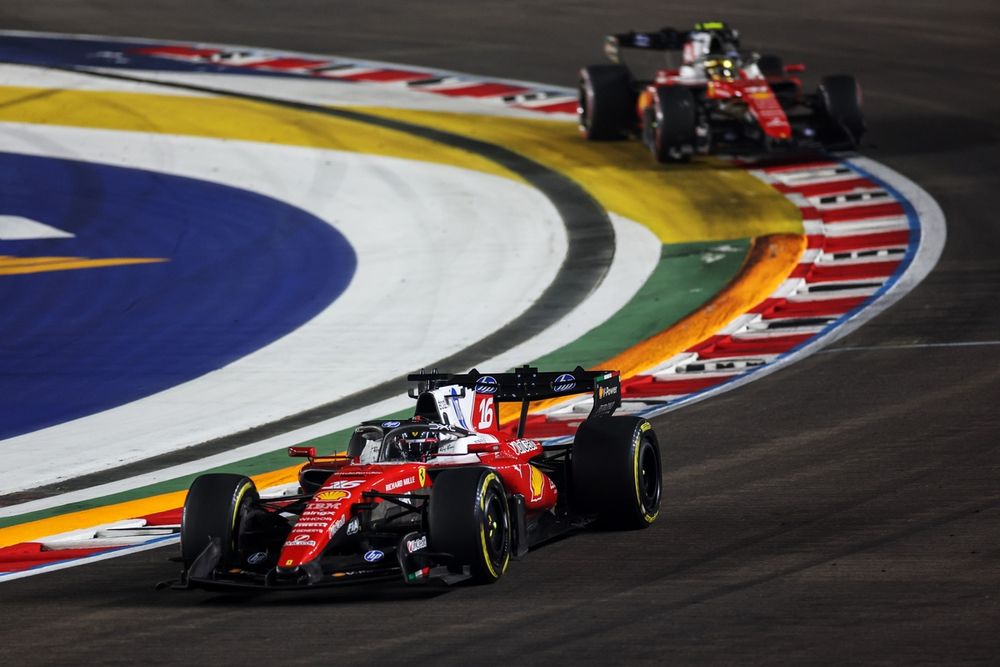
Being stuck behind Leclerc the entire race might have had an impact on Hamilton’s decision-making process
Photo by: Alastair Staley / LAT Images via Getty Images
There were echoes of Zandvoort, where Hamilton felt he was being held up and that Leclerc wasn’t being told to get out of the way – to the extent that he began shouting at race engineer Carlo Santi, which is quite out of character. Hamilton has often been abrasive with the pitwall in his career, but never actually raised his voice in that way.
After Monza, of course, where Leclerc nudged him into the gravel at the first corner, Hamilton compared the Ferrari regime unfavourably with his tenure at Mercedes, saying “here there are no rules”.
But there have also been many occasions where Hamilton has appeared prone to ‘senior moments’, such as in qualifying for the Hungarian Grand Prix, where on the closing stages of his final push lap he passed McLaren’s Piastri on an out-lap, then appeared to forget about Piastri’s existence and meander into his path when the Australian opened his own push lap. In Madrid he was roundly berated for dawdling in the middle of the track through the banked La Monumental corner.
It points to a certain lack of faith in the Ferrari decision-making hierarchy
Hamilton’s ability to grasp strategy has never quite been up there with the likes of Fernando Alonso, and it really does feel that his attention to detail is slipping as he advances into his 40s. Could it be that he ‘missed’ the pit entry in Singapore deliberately, wanting to roll the dice rather than be consigned to finishing behind Leclerc?
People who profess to “seize the moment” often have a habit of getting themselves into trouble and this was arguably the wrong time to try to take the initiative. It points to a certain lack of faith in the Ferrari decision-making hierarchy. Based on several outcomes through recent seasons, you could argue he is right to challenge their thinking. But to believe he can do better himself?
Well, your answer is there on the results page: P6 and nearly a minute off the winner in Singapore.
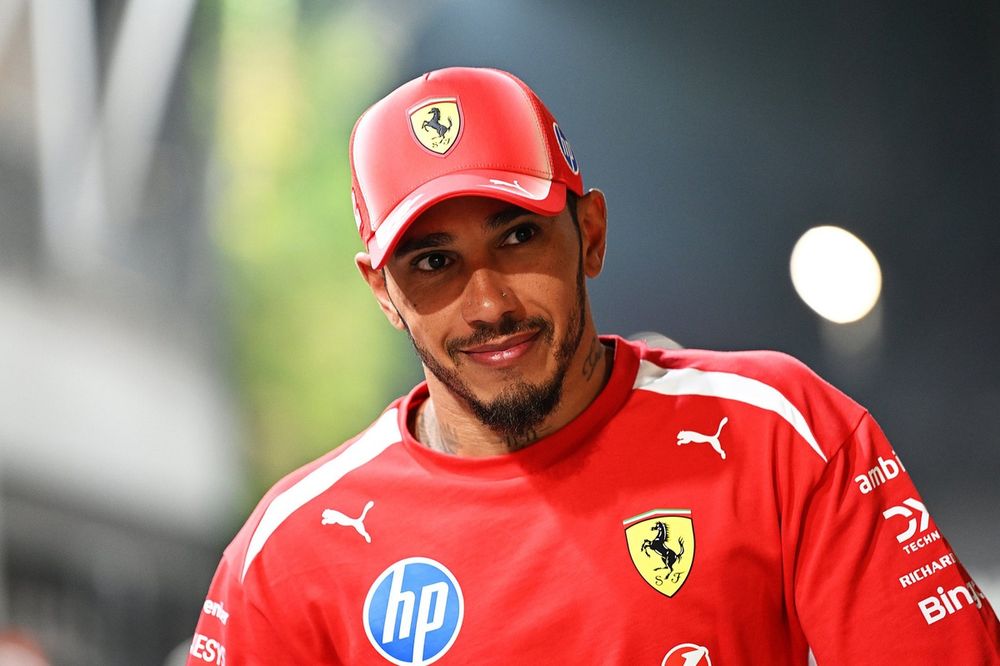
Hamilton and Ferrari still have work to do on their partnership
Photo by: Sam Bagnall / Sutton Images via Getty Images
We want to hear from you!
Let us know what you would like to see from us in the future.
– The Autosport.com Team