
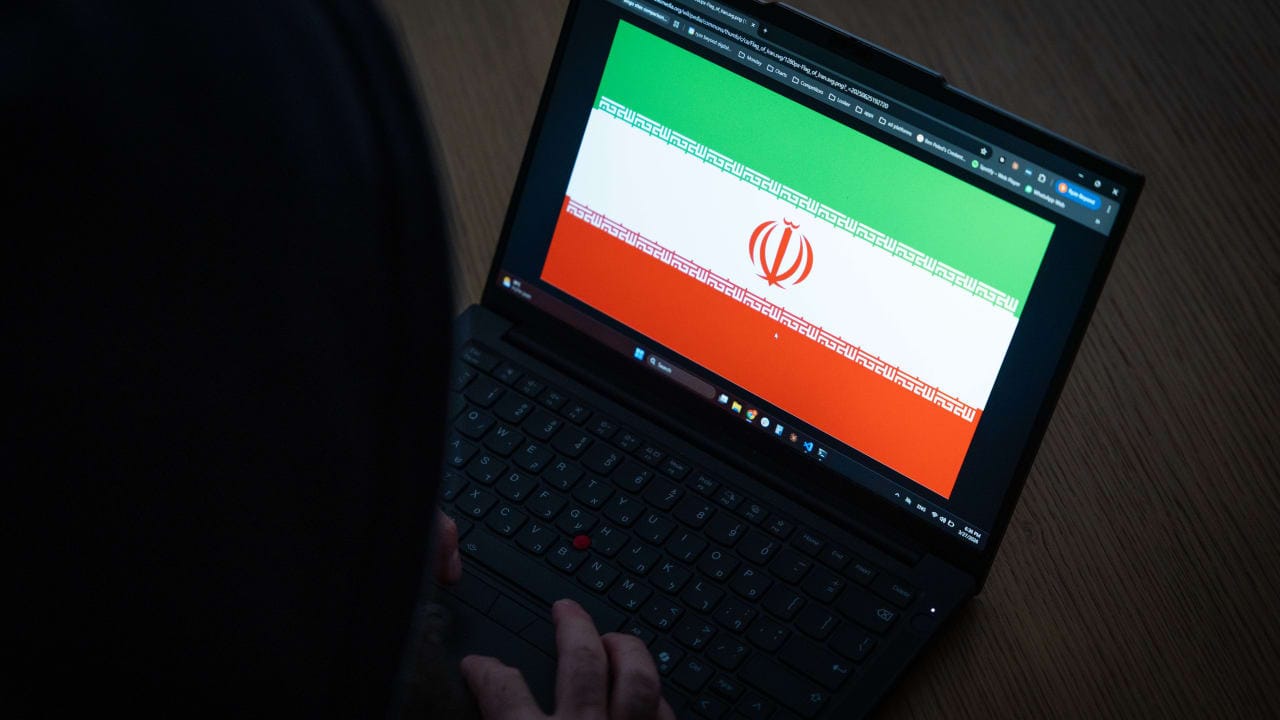
Iran used artificial intelligence to generate social media comments, create at least seven fake journalist personas, and pitch long-form articles to global media outlets as part of a covert influence operation, OpenAI confirmed in an announcement released on Thursday.
OpenAI said it had disrupted two influence operations, one originating in Russia and the other in Iran, that abused its technology to create “false front entities” to promote their narratives about the Russia-Ukraine and US/Israel-Iran wars. The company said both campaigns used “questionable or outright deceitful methodologies to exaggerate the operators’ effectiveness.”
Although influence operations predate the advancement of AI, OpenAI acknowledged that the technology has made them easier to conduct. It noted that Iran’s fake journalists closely resembled “Alice Donovan,” a fictitious journalist created as part of a Russian influence campaign in 2017.
OpenAI rated the Iranian campaign a four on its six-point Influence Operation scale, with one representing the lowest level and six the highest. The rating reflected the campaign’s success in placing content in mainstream media outlets. Referring to the 30 covert operations it had uncovered over the previous two and a half years, the company said such campaigns aim to get social media posts and other content published by legitimate media outlets to expand their reach and impact.
AI used to disseminate false information through fake authors
Beyond helping operators place content before wider audiences, OpenAI said AI enabled malicious actors to conduct operations with greater scale, efficiency, linguistic fluency, and editorial ability.
 Developer working on AI systems. (credit: SHUTTERSTOCK)
According to OpenAI, a cluster of ChatGPT accounts originating in Iran was used to generate content in both Persian and English. The actors reportedly accessed ChatGPT through a VPN and used the model to improve long-form articles and editorial pitches published under fabricated bylines.
The fake bylines belonged to Ervin B. Hoskins, Noah Lamington, Sophia Gonzalez, Michael Harrison, Ericka Feusier, Jenny Williams, and Alice Johnson. All were presented as Western journalists focusing on international politics, the Middle East, human rights, or conflict.
The Jerusalem Post located an article by “Noah Lamington” published in International Policy Digest that sought to portray political insecurity in Israel. The article was headlined “The Knesset Revolt Netanyahu Couldn’t Prevent.”
An article by “Sophia Gonzalez” was also found in the News Register under the headline “Sophia Gonzalez: When diplomacy becomes another weapon of war.” Meanwhile, “Ericka Feusier” appeared to have published extensively on insecurity in Iraq and American unemployment on websites including Eurasia Review, Common Dreams, and the IA Forum.
The articles focused primarily on the US-Iran war, while a smaller proportion of the generated comments addressed US domestic politics. OpenAI identified nearly 100 articles produced by the operation that appeared in syndicated publications and small and medium-sized media outlets around the world.
The earliest article identified by OpenAI was published in July 2025, while the latest appeared in October 2026. The volume of content increased following the outbreak of the US-Iran conflict.
Online outlets shared the AI articles to millions of social media followers
One online outlet that published articles from the influence campaign had nearly two million Facebook followers, approximately 355,000 followers on X/Twitter, and more than 544,000 on Instagram as of August 2026.
Several of the fictitious journalists also maintained social media accounts on X, Facebook, Instagram, or Threads. However, further investigation found that the accounts were operated from within Iran or elsewhere in West Asia.
Despite the campaign’s success in placing articles in media outlets, OpenAI noted that none of the generated social media comments attracted substantial engagement.
In July, for example, the campaign produced several X posts claiming that the US was preparing a “large-scale assault” on Iran, followed by a burst of comments posted within a 10-to-13-minute window. Some comments included screenshots of articles generated as part of the campaign, promoting them in an apparent attempt to make the content appear popular.
Based on the operation’s overall activity, OpenAI suggested that those behind it were likely commercial actors running a for-hire influence campaign.