
GAZA, Palestine (MNTV) — Israeli forces have pushed concrete markers associated with Gaza’s so-called Yellow Line closer to displaced Palestinians’ tents, forcing families to flee again and further reducing the territory available for shelter.
According to The New Arab, dozens of families in Gaza City’s Shuja’iyya neighborhood fled on Sunday morning amid heavy gunfire after Israeli forces moved yellow-painted concrete blocks without warning.
Mahmoud Obeid, a 42-year-old father of four, said the markers had advanced to within a short distance of his family’s tent. He spent the night with another family while his wife and children remained behind, awaiting alternative shelter.
Obeid said he did not know where to take his family because western Gaza City was already overcrowded with displaced people.
Another resident, Um Mohammed Owaida, described the repeated displacement as a constant struggle to protect her children. Each time her family finds somewhere to stay, she said, circumstances force them to leave again.
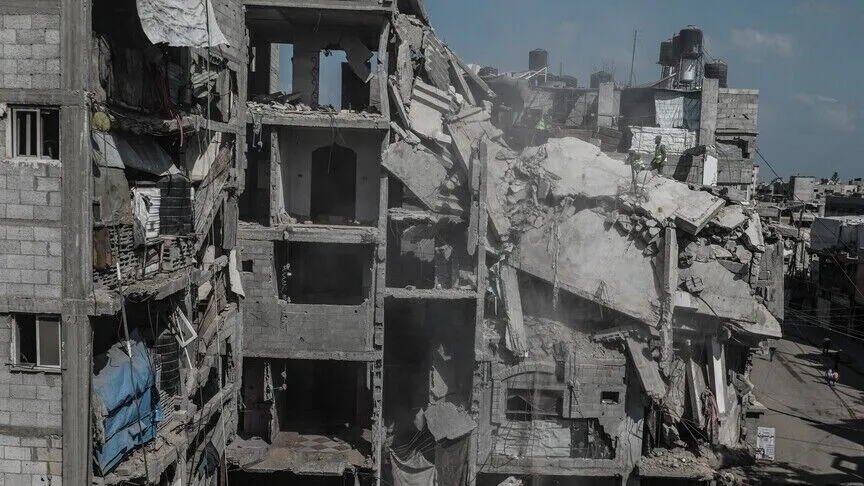
The advancing markers are intensifying the consequences of Israel’s genocidal assault on Gaza, where widespread destruction has left families with few safe places to seek refuge.
Palestinian estimates cited by The New Arab indicate that Israel controls approximately 70 percent of the Gaza Strip, an area of around 365 square kilometers. More than two million Palestinians are consequently concentrated in increasingly restricted spaces, much of which has already suffered extensive destruction.
The repeated displacement is especially dangerous for elderly people, children and those with illnesses or disabilities. Families must repeatedly carry their remaining belongings while facing uncertainty over whether their next shelter will remain accessible.
Um Abed al-Batniji, an elderly Palestinian woman, said she no longer had the strength to repeatedly leave her shelter or carry her possessions over long distances.
Gaza-based political analyst Ahed Ferwana said the advancing line appeared intended to impose a new reality on the ground by restricting Palestinian movement and determining where people could live.
According to Gaza’s Government Media Office, Israeli forces had committed 5,474 reported violations of the ceasefire agreement since it took effect the previous year. The office also reported at least 1,488 Palestinians killed and 5,280 wounded during that period.
The expanding boundary markers have intensified concerns that Gaza’s displaced population will be pushed into ever smaller areas, leaving families with fewer options for shelter and little prospect of returning home.