
Editor’s note: this story was translated from the original VOA Persian article.
In light of the free-fall of Iran’s national currency, the regime’s security crackdown on traders has intensified.
The Greater Tehran Economic Security Unit chief said earlier this month that his forces have detained 40 percent to 50 percent additional individuals in the past six months, compared to the same period last year.
Mehdi Afshari told the state-owned Iranian Students News Agency ISNA that uniformed and undercover police are identifying currency dealers and “disruptors of the foreign exchange system.” Afshari described currency dealing as an activity that generates “unusual profits.”
Despite the arrests, he added, the individuals return to the trade once freed due to the high profit margins. He identified Ferdowsi Square as one of the main black-market locations in Tehran where unauthorized currency transactions take place. Iran’s financial regulations mandate that foreign currency be traded solely at licensed exchange offices and banks.
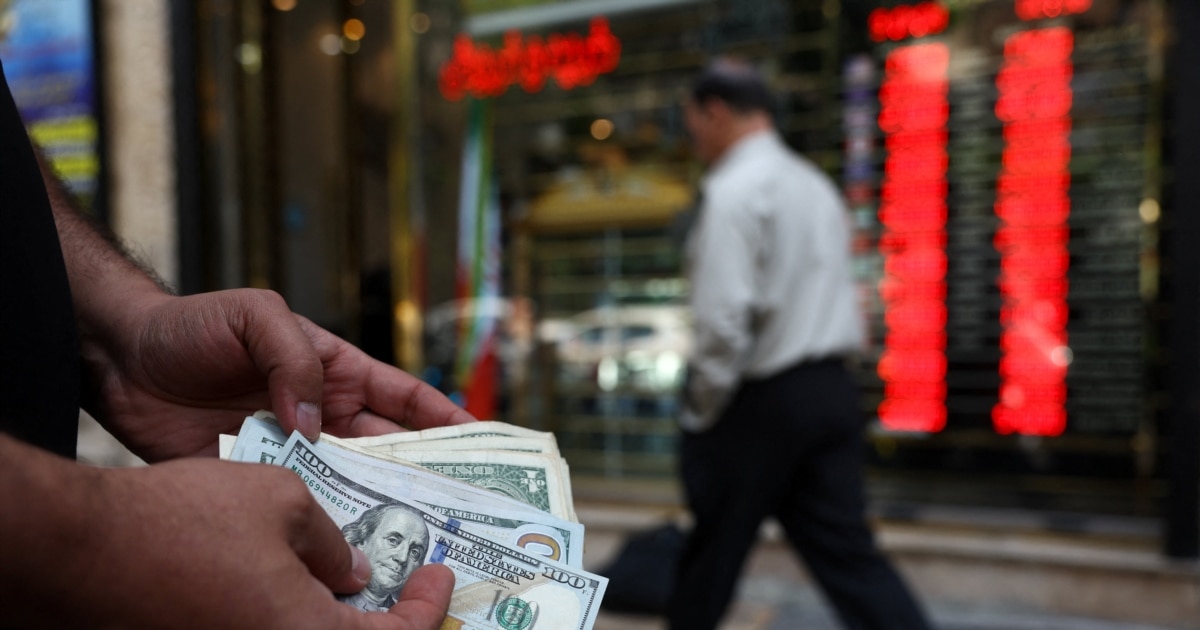
In recent days, the value of one U.S. dollar against the rial (Iran’s national currency) has fluctuated between 263,000,000 and 268,000,000 rials in Tehran’s open market; remaining below the 270,000,000-rial threshold. The Iranian daily Etemad Online reported on October 12 that the value of the free-market dollar against the rial decreased by 10,000 rials during Monday’s early trading hours.
On October 3, the Central Bank of Iran began selling foreign currency at five banks; allowing individuals presenting their national identity card to purchase up to $10,000 dollars.
The bank’s selling rate is lower than the open-market price. This price difference amounts to hundreds of millions of rials for each allocation.
Several Iranian parliament members have objected to this practice. These objections have been reflected in headlines on media outlets including Khabar Online and Zoomit, and described the scheme as criminal. The headlines raised the question: “How could an ordinary citizen afford to purchase $10,000?”; implying that currency traders were likely the only group who could make the purchase.
The new decline in the foreign currency exchange rate, however, has not been officially attributed to the arrests.