
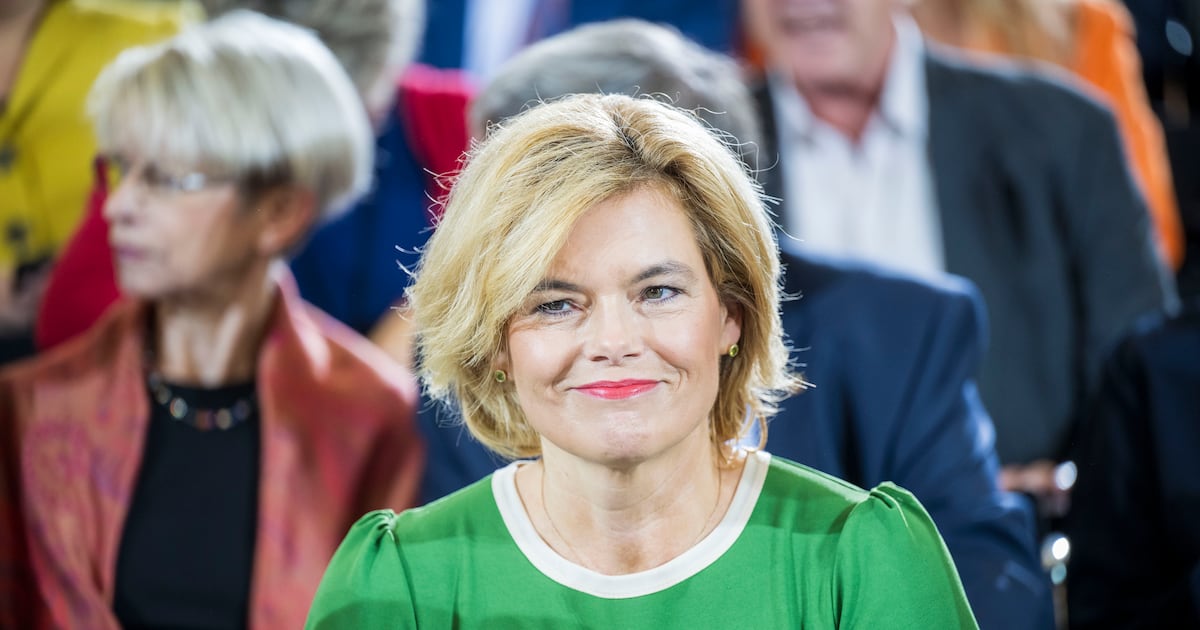
Summer loving happens so fast, particularly if you’re Julia Klöckner, a former Rhineland wine queen and ex-conservative minister who was elected president of the Bundestag last March.
The 52-year-old may now be number two in Germany’s constitutional pecking order, below the president and above the chancellor, but Klöckner hasn’t let the burden of office dim her lust for life – or love.
This week readers of gossip magazine Bunte enjoyed a breathless four-page breakdown on Klöckner’s whirlwind romance with television quizshow host Jörg Pilawa.
News had been leaking for weeks about how the two divorcees met at a wine-fuelled pool party in July where, a nameless friend told Bunte, “it was love at first sight”.
“Both are just so damn nice,” another said, recalling their first chat about “getting older, change and new beginnings … and how, rather than regret it later, you should follow your heart”.
The couple have followed their heart throughout Germany this summer – pursued by gossip columnists and smartphone sleuths – from the vineyards of Klöckner’s Rhineland constituency to locales on the windswept Baltic island of Sylt.
The summer romance is perfect media fodder in Germany’s “Sommerloch”, or silly season, and a reflection of our smartphone era when no public cuddle goes unnoticed.
It reflects, too, a shift in political life that has come late to Germany. Until recently politicians here kept their private lives private, a decision respected by voters and media outlets alike.
Klöckner has led the way in blurring the public-private barrier, with carefully curated Instagram content that, depending on your perspective, personalises or banalises politics.
Her Instagram feed, which she insists represents her “personally and as an MP”, remains a controversial topic.
While there is no explicit ban on social media, some wonder if Klöckner’s labradoodle posts on Instagram are in keeping with rules to represent the parliament with dignity.
Klöckner’s promotion to Bundestag speaker surprised many in Berlin given her two failed attempts to become the Christian Democratic Union (CDU) premier of her home state of Rhineland-Palatinate.
Her surprise elevation hasn’t banished lingering doubts about Klöckner’s competence and political neutrality, reflected in just 61.9 per cent of MPs – a historic low – backing her as the speaker of the lower house of Germany’s parliament.
So far, Klöckner has brushed off the critics.
“I’m not a political neutral. I wouldn’t be parliamentary president if I wasn’t a member of parliament through the CDU parliamentary party,” she told the Table.Media podcast.
A conservative throughout her political career, Klöckner opposes abortion and backed a public burka ban. Her hard line on migration a decade ago, demanding more checks and border-adjacent reception centres, was a public affront that Angela Merkel never forgave.
Today it puts her in the post-Merkel CDU mainstream as it shifts rightwards – and may have played a role in her new role.
Klöckner’s first major outing as parliamentary president was historic, for all the wrong reasons.
In a hoarse voice, with frozen face and fringe, Klöckner announced that Friedrich Merz had fallen short of a majority to be elected chancellor.
Hours of uncertainty followed until Klöckner, caught off guard by this unprecedented turn of events, read her parliamentary rule book and called a second vote that afternoon.
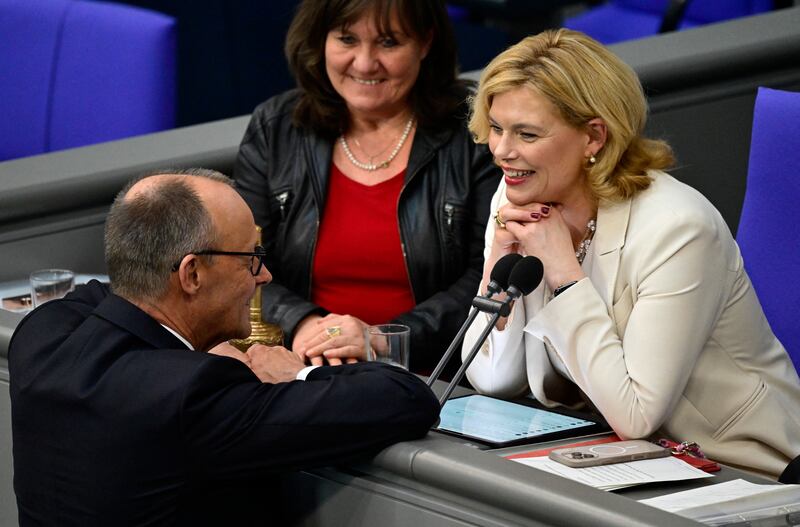 Friedrich Merz talks to Julia Klöckner in the Bundestag. Photograph: John Macdougall/Getty
She hit her stride within weeks, expelling a leftist politician from the chamber for wearing a Basque beret, because otherwise “someone else will come along with a [Nazi-era] steel helmet”.
It was not a steel helmet that came along a fortnight later, but another leftist MP in a T-shirt bearing the word “Palestine”. She, too, was kicked out for, in Klöckner’s view, undermining the dignity of the chamber and breaching rules banning political statements on clothing.
Klöckner’s war on political fabric continued in July when she broke with previous practice and ruled the rainbow flag would not fly from the Reichstag parliament building for Berlin Pride.
She is no stranger to political controversies, but the latest flap has eclipsed even her summer romance.
On Monday Klöckner attended a summer party for a Rhineland tech billionaire who co-finances Nius, a new hard-right news platform that agitates against migrants and “woke” culture.
Asked if it was a good idea to associate with the backer of such an outlet, she sparked uproar by suggesting Nius was the right-wing equivalent of the left-wing Die Tageszeitung (Taz) newspaper.
Germany’s journalism union spoke for many by wondering aloud if Klöckner “by pushing the acclaimed Taz into the far-left corner is pursuing a political agenda”.
As silly season draws to a close, relationship experts at Bunte magazine have urged Klöckner and Pilawa to take time out “to decide what they really want and how they will get to know each other better out of the spotlight”.
After almost losing the spotlight once, Klöckner seems determined to hold on to it now. Don’t tell Jörg.