
WILLIAMSBURG, Ohio — Jessica Baker sifted through an overflowing pile of political mailers she has received over the past month.
Lowering costs? “That’s common sense,” she said. Reducing gas prices and utility bills? “We need that.” Party division, culture wars — it’s all there. But none of it touched the issue she wants to hear about before she votes: data centers.
“My home’s under attack,” Baker, a lead organizer for the grassroots advocacy group Conserve Ohio, told MS NOW in her living room. Just a few steps away were piles of petitions and homemade maps marking where data centers are being built across Ohio. In just a few months, she said, the issue turned her from someone who was mostly apolitical into someone who ferries petitions to and from the statehouse. There isn’t a data center in her town, but there are plans to build one just a few minutes’ drive away.
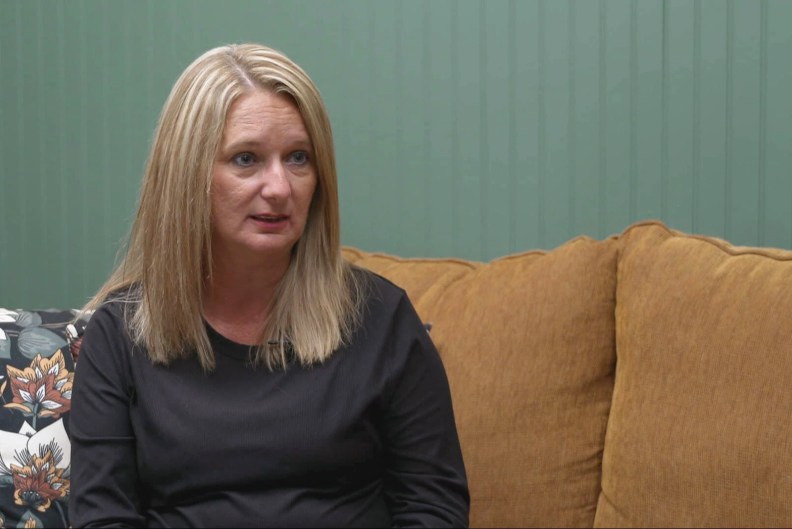 Jessica Baker in her living room in Ohio.MS NOW
“Everything doesn’t stop at that property line. So, once we started realizing that they were coming everywhere, and nobody would listen, we had —” she stops herself. “There was no choice. There’s just no choice.”
She pointed back at the mailers. “That’s what’s not on here: The people are not on here.”
But the people will vote in November.
Ohio has competitive races this year for governor, Senate and House — and Democratic wins in the congressional contests could help tip the balance of power on Capitol Hill. Ohio also has more data center-related ballot measures than anywhere else in the country: 21 of them, spread across 16 counties, mostly in areas that overwhelmingly voted Republican just two years ago.
Data centers are unpopular across party lines. In a September NBC News poll, nearly half of Republican voters said they would be less likely to vote for a candidate who supports building data centers in their local communities.
That is making an already competitive election even less predictable, and nowhere more so than in the Senate race.
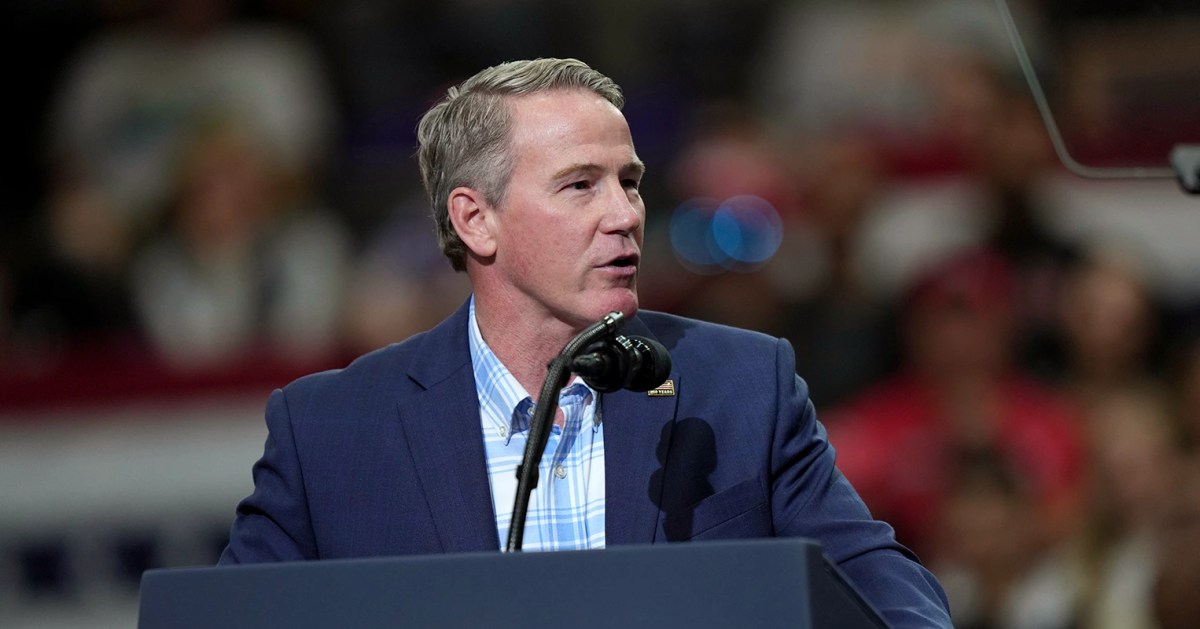
Ohio has been reliably red for more than a decade. So, in theory, the race to serve the rest of Vice President JD Vance’s Senate term should be an easy win for Republican Sen. Jon Husted, who was appointed to the seat in 2025. But bipartisan backlash to the state’s data center boom — and former Democratic Sen. Sherrod Brown’s strategy of laying the blame at Husted’s feet — could return the Buckeye State to its swing-state past.
 Sherrod Brown speaks with supporters after casting his ballot at the Franklin County Board of Elections on Oct. 6, 2026, in Columbus, Ohio.Jeff Dean / Getty Images
More than $14 million has been spent on data center-related ads in the Husted-Brown race alone. That is six times as much as in any other Senate race in the country. Nearly all of the ads target Husted, casting him as the “face of data centers” in Ohio and attacking him for backing tax breaks for developers when he was lieutenant governor.
Republicans are worried. In an August memo reported by Politico, the National Republican Senatorial Committee, which works to protect and expand the GOP’s Senate majority, warned that Brown’s strategy was working and that data centers had become an “anchor hanging around Husted’s neck.”
Asked by MS NOW about that assessment, Husted sidestepped it.
“People in Ohio, I can tell you, after I fought to make the data centers pay their own freight so that we could lower electricity prices, and Chuck Schumer and the Democrats blocked it — that has been an eye-opening piece of information to them,” he said. “Because they’re like, ‘What’s the truth?’ And now they know the truth that the Democrats are blocking our efforts to make data centers accountable, and that’s really been a shift here in the last week in the campaign.”
Democrats did block the bill, called the Ratepayer Protection Act, before the Senate left Washington for its pre-midterm October recess. They argued it was “toothless” because it only asks companies to consider paying for the costs their data centers create, rather than requiring them to.
Husted glossed over that distinction, telling MS NOW his legislation would “force data centers to pay for their own power.”
Still, the fact that he spent precious time in the Senate fighting for it is a telling sign of how much the issue matters back home. It also helps explain why Brown, who is trying to win his way back to the Senate, isn’t letting up.
“It really is part of the rigged system,” Brown says of data centers. “I’ve spent my career fighting against this rigged system, whether it’s Wall Street, whether it’s the oil companies, now whether it’s the tech boys. Now these data centers come in, and it shows an even more rigged system because people had no say whatsoever. Local communities had no input in what these [centers] are doing.”
Baker agrees. But she doesn’t think either candidate is doing enough as both find their footing, in real time, on an issue that is rapidly reshaping politics in Ohio and beyond.
More articles
“I’m an action person, not a words person, so I would say you need to get down to the areas that are actually being completely affected by what’s happening in our state, and talk to the people that are living it every day,” she said.
In the end, Baker said, she’ll vote for the candidate she thinks “is not gonna invade my home.” She thinks that’s Brown. But she wants him to show up more on the issue.
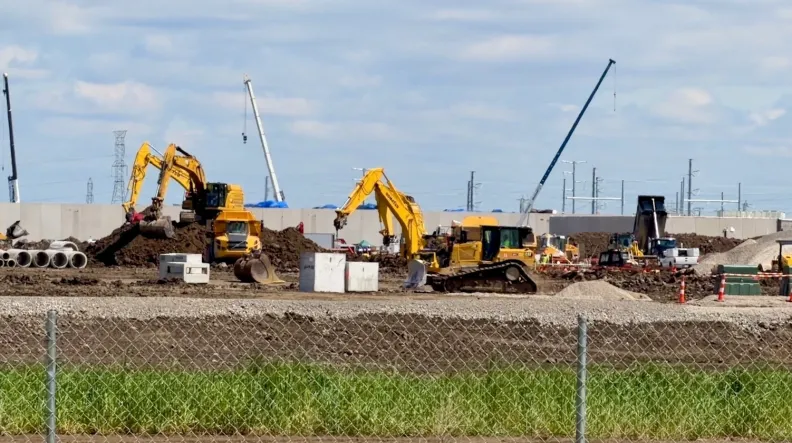 Construction on Meta’s data center on May 13, 2026, in Middleton Township, Ohio.Eric Cox / Reuters
In downtown Cleveland, voters told MS NOW they care about data centers, and have seen the ads, but can’t quite tell which candidate stands where.
“I see the commercials, but you know, so many of them they kind of get washed out. I really don’t know who’s for data centers and who’s against them,” said Ryan Czaruk, a Cleveland electrician who said the potential economic benefits for his trade don’t outweigh his concerns about the environmental impact.
In truth, both candidates have a nuanced view. Neither candidate is simply for or against all data centers. Both have said residents deserve a say in what gets built in their communities and should be protected from higher costs. And neither wants to scare off investment in a state that stands to gain plenty of jobs from data center construction.
“I’m making sure that if these jobs are there, that they’re good union jobs and they have benefits,” Brown told MS NOW. “What I say is, you know, electricians, people doing this work, they don’t want their electricity prices going up, and they are.”
“They can bring billions of dollars in private investment; in construction work for electricians, pipefitters, equipment operators, and other skilled trades,” Husted said on the Senate floor last month. “But those benefits should not come with a hidden charge of electric bills for families, farmers, and small businesses.”
The candidates are treading carefully. President Donald Trump is not. He has met with tech leaders, hailed data centers as “the golden goose” and chided voters who don’t want them in their communities as “wanting to be backwards and poor.”
Back in Clermont County, Baker knows change, both on data centers and in the politics around them, will come slowly.
“I would hope that maybe we can all start coming together and realizing that it’s not one party or the other,” she said. “So I think this election — even probably, maybe the presidential election in 2028, I don’t think that it’s far enough out to have the big change. But I never went to a council meeting before January. I never circulated a petition, and now I have the whole thing…I never thought I had that in me, I really didn’t. So it’s just interesting.”
For whoever wins here, November is just the start of a long road.
Asked if he thought the Senate — a body in which he served for 18 years and is not known for its expeditiousness on urgent issues like AI and data centers — could tackle such a complex issue, Brown was non-committal. “I hope so. I don’t know.”
Alexander Trowbridge contributed reporting.

Ali Vitali is an MS NOW senior congressional reporter and the host of “Way Too Early.”

Lillie Boudreaux is a desk associate at MS NOW. She primarily covers politics and Capitol Hill.