

For the first time in medical and legal history, a prisoner has “survived a complete execution attempt in the U.S.” According to the Death Penalty Information Center, Christa Pike’s failed execution was “the worst we’ve seen and unlike any other botched execution in the modern era (since 1976). There is no precedent.” This game-changing bioethics case may even end lethal injection.
About 7,000 people were executed in the U.S. between 1900 and 1976, and 1,683 people after 1976. Ultimately, since 1900, only 0.6% (55) have been women. Pike is now the second woman on death row the U.S. Supreme Court declined to rescue from a botched execution.
On June 18, 1953, the controversial case of accused spy Ethel Rosenberg, who had two small children, also came before the Supreme Court. It overturned her stay of execution. The following day, on June 19, 1953, the electric chair execution of Rosenberg failed; the settings were not properly adjusted for a woman of Rosenberg’s size, and she did not die after the first round of electrocution.
A doctor examined her and informed the state she was not dead and that they needed to electrocute her a second time. The report from United Press International and The New York Times described the debacle and the role of two physicians involved who “ordered” more electrocution. According to Rosenberg’s biographer, “she was removed from the electric chair after three charges, only for it to be discovered her heart was still beating, so, gruesomely, she had to be strapped back into it.”
Nineteen years later, in 1972, after five more women were executed without incident in the U.S., the Supreme Court of California ruled the death penalty unconstitutional in People v. Anderson, which led to the commutation of all California death sentences to life sentences. This included three of the women involved in the brutal Manson murders — Susan Atkins, Patricia Krenwinkel, and Leslie Van Houten — all scheduled to be gassed. That same year, the U.S. Supreme Court ruled that capital punishment violated the Eighth Amendment in Furman v. Georgia.
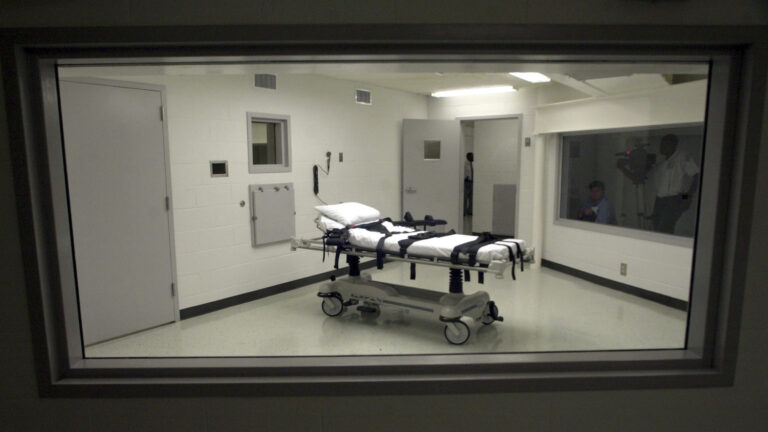
I’m an anesthesiologist. Kenneth Smith’s execution by nitrogen gas was far from ‘textbook’
In response to the Furman ruling, states began to explore more humane methods of execution, which is what led to the current lethal injection protocol, originally pioneered by Oklahoma’s state medical examiner at the time, Jay Chapman in 1977, and later adapted by Jack Kevorkian as a method of “medicide” — an early version of what we now call medical assistance in dying.
In 1976, the U.S. Supreme Court sanctioned state executions again in Gregg v. Georgia because it saw lethal injection as a “sanitized, quasi-clinical procedure” upholding the Eighth Amendment. Lethal injection became the norm when executions restarted in 1977; Ronald Reagan compared it to putting an animal to sleep. On June 11, 2001, Oklahoma City bomber Timothy McVeigh was executed using the Chapman protocol. It was even broadcast on a closed-circuit system to survivors and affected families.
But over time, due to a variety of systems issues with obtaining certain medications, the lethal injection protocol has deviated from the standard devised by Chapman.
More importantly, since the lethal injection protocol requires an intravenous line insertion, the person administering it has to be competent in IV infusion. But the people facing execution often have veins that are tricky to access. A disturbing report in 2022 found that more than a third of executions are “botched” because of unskilled personnel.
Since the American Medical Association and the American Nurses Association state that it is unethical for medical providers to participate in any way in executions, state prisons struggle to find skilled personnel to handle lethal injection, resulting in many failed attempts. The case of Lee Hamm, another failed attempt at lethal injection, raised numerous questions about the role of health care providers after a botched procedure.
Just prior to Pike’s planned execution, NPR reported that the opaque Tennessee protocol does involve health care providers, and some are willing to cross ethical lines. Physician Mark Fowler, for instance, was involved in the failed execution case of Tony Carruthers in May.
But the Carruthers case created a bioethics chasm where “dozens of Tennessee medical professionals told the governor that health care professionals shouldn’t help with executions, ever. No matter the method.” Fowler reportedly was involved in Pike’s failed execution as well.
The majority of health care providers maintain either the American Medical Association’s code of ethics or the American Nurses Association’s position. A recent Hastings Center Bioethics Forum essay concludes that lethal injection is unethical, while other bioethicists have suggested that the presence of a health care provider would not only be “lending the prestige of medicine to the execution” but also provide the false impression that lethal injection was being supervised by doctors, and therefore more acceptable.
The Pike case is novel not only because it’s the first time in legal history a prisoner has survived a completed execution procedure resulting in dizzying legal repercussions, but because of the “hot mess” clinical ethics case that has emerged.
When Pike remained alive after the failed procedure, she was rushed to the hospital for lifesaving treatment. What were the “goals of care”? To make her medically stable enough for another attempt at execution? (Tennessee’s Prison Commissioner resigned, and the state has paused executions for the remainder of the year, but not indefinitely.) Per national and local news reports on Oct. 7, Pike initially remained intubated and unconscious as her health care team planned to remove life support in the belief that Pike was progressing to brain death. Pike also remained in restraints (handcuffed and shackled to her bed), which complicated her care.
But then she awoke and spoke, raising new questions about her neurological status. Pike first inquired: “Where am I and who are you?” Her attorneys state: “There is still a lot of cognitive confusion. … She is very aware that the state tried to execute. … She is very aware up to a point.”
Any clinical ethicist would advise at this juncture that Pike may fully regain decision-making capacity and is already showing signs of understanding and appreciation. Patients who are inmates and have decision-making capacity can make all medical decisions, including end of life decisions, but the correctional institution may limit options based on costs. In general, correctional officers should not be involved with inmates’ medical decisions, but health care providers do not have the authority to remove restraints; such decisions reside with the correctional facility.
Bioethicists have been actively debating this case, with consensus that if Pike were deemed to be incapacitated, a court-appointed surrogate decision-maker (someone who makes decisions in the best medical interests of a patient who does not have autonomy) would be necessary since the state — even Tennessee’s Adult Protective Services — would have a conflict of interest. Pike’s biological family has provided insight into her childhood that would also raise questions about authentic surrogacy. Because of Ford v. Wainwright, incapacitated prisoners cannot be executed, so if Pike regains capacity, the legal road is unclear.

What the death rattle and capital punishment have in common
As of this writing, it’s impossible to predict Pike’s ultimate prognosis or fate, but the legal and medical issues in the Pike case are on a collision course. Pre-Pike, lethal injection was “passing” as a “death with dignity” medical assistance in dying procedure, which, ironically, is illegal in several death penalty states, including Tennessee. Post-Pike, lethal injection will never be the same. Its procedural flaws have been exposed; it’s the emperor with no clothes because it only “pretends to be medicine.” Of course, there are other forms of execution that actually look like one instead of medicine, as in the case of the planned execution by firing squad of the Fort Hood shooter, which may even be streamed live.
For states that want to continue lethal injection, medical expertise at various points in the process — whether it’s training prison staff, providing medical opinions on “candidacy” for lethal injection, or actually participating — will likely become a requirement that most health care providers will find ethically incompatible with clinical ethics principles of practice. If medical expertise becomes a legal requirement for lethal injection, but no reputable health care provider will participate, then the stigma of participation may effectively end lethal injection as we know it.
M. Sara Rosenthal, Ph.D., is professor and founding director of the University of Kentucky Program for Bioethics and Oncology Ethics Program and chair of the UK HealthCare Ethics Committee.