
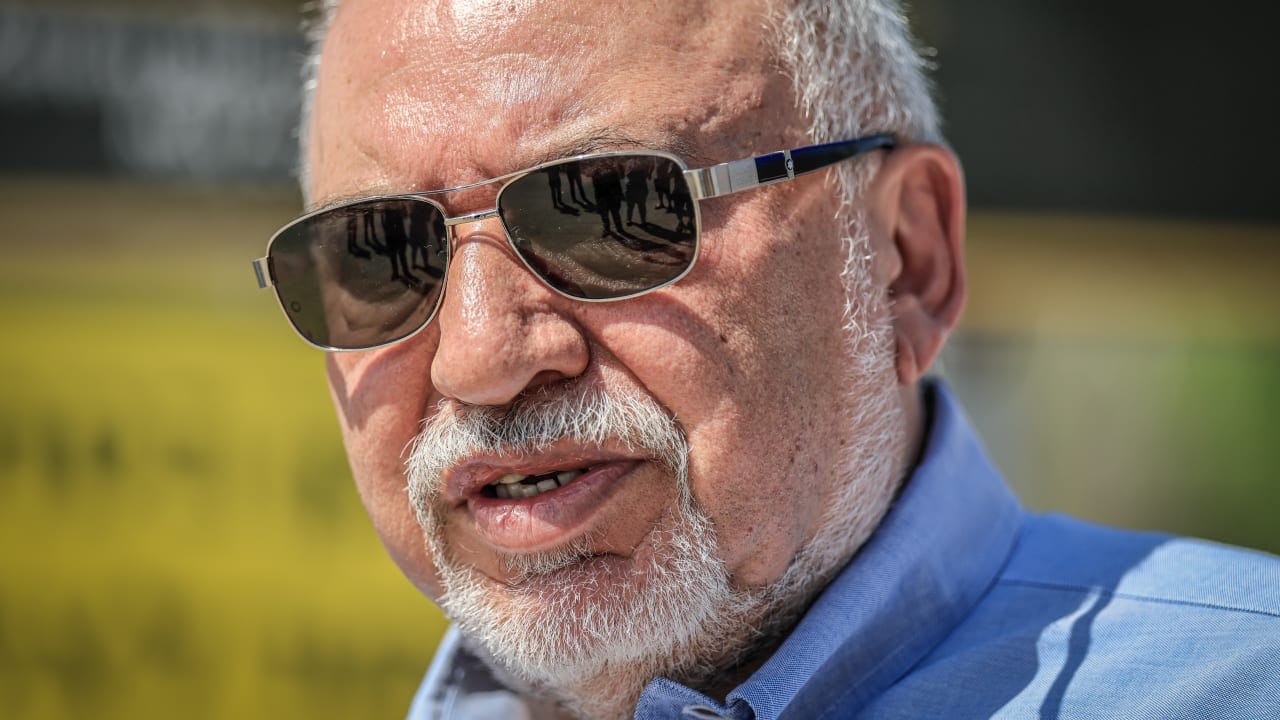
Yisrael Beytenu, chairman Avigdor Liberman, warned Tuesday that the United States could recognize a Palestinian state and impose sanctions on Israel within two years if current policies continue, a scenario he said could have devastating consequences for Israel’s high-tech industry.
Speaking at the annual venture capital summit organized by the Israel Advanced Technology Industries (IATI), Liberman said that Israel’s deteriorating international standing threatened one of the country’s most important economic engines.
Former prime minister Naftali Bennett, who also addressed the gathering, called for a national effort to bring Israeli entrepreneurs and skilled workers back to the country, warning that Israel must do more to prevent technology companies from moving their operations abroad.
The summit, held as part of EY’s Journey 2026 conference, brought together managing partners and executives from approximately 200 venture capital funds and investment organizations operating in Israel.
Liberman warns of diplomatic and economic consequences. Liberman said he believed that if Israel continued on its current course, the United States could recognize Palestinian statehood and begin imposing sanctions within two years.
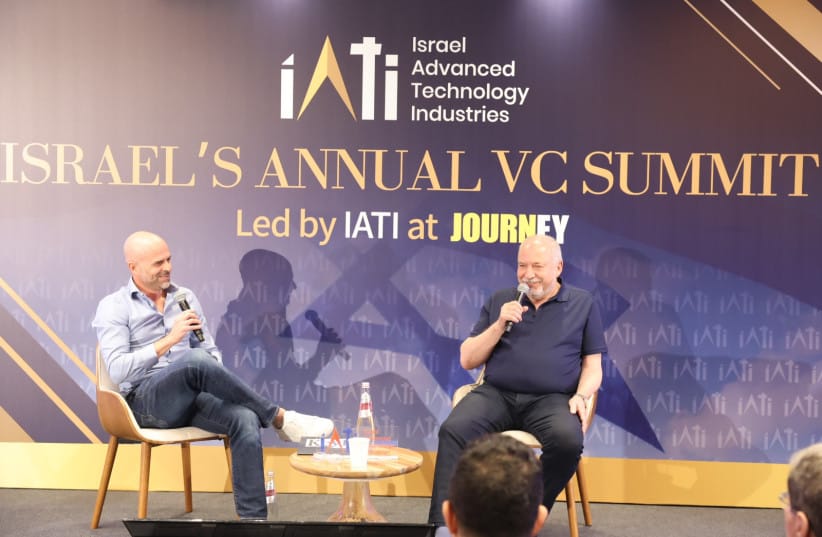 Yisrael Beytenu chairman Avigdor Liberman (right) speaks at IATI’s annual venture capital summit, held during EY’s Journey 2026 conference. (credit: RAFI DELOYA)Liberman: Britain discussing sanctions against Israeli industries
He also claimed that Britain was already discussing possible sanctions against Israeli banks.
“An industry like high-tech requires mobility, the ability to fly, communicate, and be accepted by the international community,” Liberman said.
He argued that Israel’s technology sector, which depends heavily on international investors, clients, and partnerships, would struggle to withstand such developments.
Liberman called for urgent efforts to restore Israel’s international standing, including a joint emergency initiative involving the government and Jewish communities abroad to address international public opinion.
He said modern conflicts were fought simultaneously on military, diplomatic, and public opinion fronts, warning that declining public support for Israel could eventually translate into diminished political and economic backing.
On economic policy, Liberman called for expanding opportunities for Israeli institutional investors to invest in domestic startups, including through venture capital funds, with appropriate financial guarantees.
He also proposed reducing bureaucracy and consolidating regulatory authorities, questioning whether Israel needed separate regulators overseeing securities and capital markets.
Turning to domestic political issues, Liberman called for universal military or civilian national service and mandatory core curriculum studies as a condition for state funding of educational institutions. He argued that both measures were essential for increasing workforce participation and securing Israel’s economic future.
He also proposed drafting a constitution within six months and submitting it to a national referendum.
Asked who should lead the political bloc seeking to replace the government, Liberman offered a brief response: “Whoever is smartest.”
Bennett: Israel must stop losing its entrepreneurs. Bennett, who leads the Beyachad party, focused on the conditions required to keep Israel’s high-tech industry competitive.
“High-tech holds up the country and the economy,” Bennett told participants.
He said the central question facing policymakers was how to make Israel the most attractive place for entrepreneurs to establish and develop companies.
Bennett outlined plans for a broad initiative to encourage Israeli professionals living abroad to return home and attract Jewish professionals from around the world.
He suggested that rising antisemitism internationally could also create opportunities to encourage Jewish professionals to relocate to Israel.
Bennet calls for political, regulatory stability
Bennett called for greater political and regulatory stability, arguing that Israel needed to improve its overall business environment and remove obstacles that made operating companies unnecessarily difficult.
He also advocated establishing a constitution, presenting it as an important measure for retaining Israel’s liberal population.
Among his proposals were expanding access to advanced mathematics, English, and physics studies in peripheral communities, incorporating practical artificial intelligence education into schools, and improving transportation connections between the country’s center and outlying regions.
Bennett expressed support for regulatory and taxation proposals presented by IATI president and CEO Karin Mayer Rubinstein, including measures aimed at improving business certainty.
He proposed establishing a centralized mechanism through which companies could report bureaucratic obstacles directly to a senior professional official, allowing the government to identify recurring problems and address their underlying causes.
However, Bennett expressed reservations about government efforts to direct pension savings toward high-tech investment, arguing that returns for savers must remain the deciding consideration.
He also warned that damage to Israel’s international reputation could affect trade, investment, and relationships with foreign customers.
Industry leaders demand certainty ahead of elections. Mayer Rubinstein said the upcoming elections presented an important opportunity to place the future of Israeli high-tech at the center of the national agenda.
She stressed that the next government would need to provide regulatory certainty, competitive business conditions, and incentives for entrepreneurs and investors to continue operating in Israel.
IATI is promoting several proposals, including the possibility of a capital gains tax exemption modeled on the US Qualified Small Business Stock framework, designed to encourage investment and company formation.
The organization is also working on measures to address the impact of the strong shekel on companies earning revenue in dollars, alongside efforts to provide greater clarity regarding international corporate tax rules.
EY Israel co-CEO Noam Kanti said the industry was confronting a combination of security challenges, political uncertainty, currency fluctuations, and the rapid transformation brought about by artificial intelligence.
The conference also featured a discussion on Israel’s national artificial intelligence strategy, with the participation of Erez Eskel, head of the National AI Directorate in the Prime Minister’s Office.
Former minister Izhar Shay spoke about his son, Staff-Sgt. Yaron Ori Shay, who was killed in battle on October 7, 2023, and reflected on remembrance and the country’s future.
The summit also included a tribute to outgoing Israel Innovation Authority chief Dror Bin.