
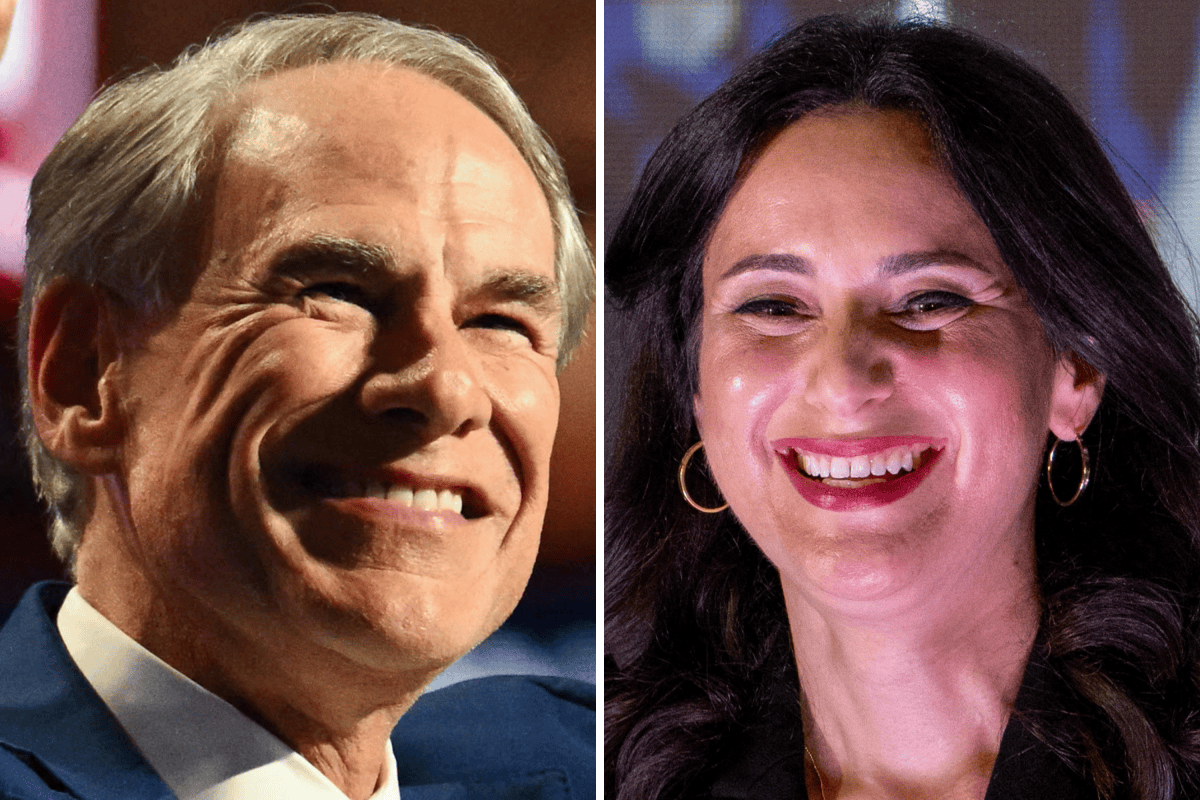
Texas Governor Greg Abbott has moved narrowly ahead of Democratic challenger Gina Hinojosa in a new poll, reversing last month’s result as the race enters its final weeks.
The ReconMR survey found that 48 percent of likely Texas voters would support Abbott, a Republican, while 47 percent would back Hinojosa, a state representative.
Some 2 percent selected someone else or said they would not vote, while 3 percent were undecided or declined to answer.
Read More on Politics
The one-point difference is within the poll’s margin of error, meaning the survey does not establish a clear leader.
Still, it marks a five-point shift from September, when Hinojosa led Abbott by four points, 49 percent to 45 percent.
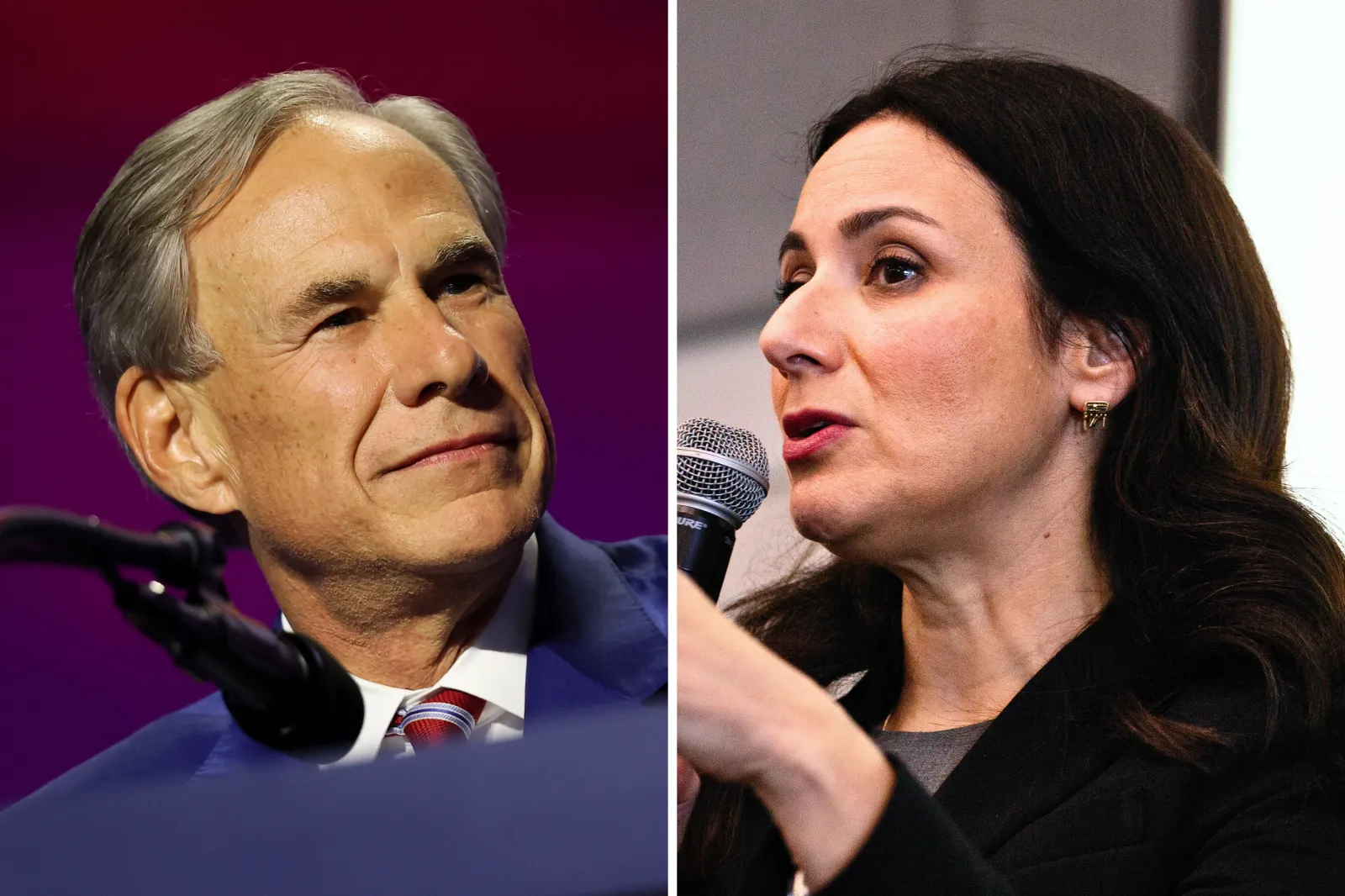
In an email to Newsweek, Lindsey Hendren, a senior research analyst at ReconMR, cautioned against assuming that the movement represented a decisive change in the race because both surveys remain subject to sampling error.
She said the clearest shift was among independent voters.
Hinojosa led that group by 65 percent to 27 percent in September, a 38-point advantage. Her lead narrowed to 57 percent to 34 percent in October, cutting the margin to 23 points.
“I think that’s to be debated,” Hendren said when asked whether the statewide movement was meaningful.
She said Abbott’s spending advantage and polling that previously showed him behind may have helped mobilize Republican voters, while emphasizing that “all polls are subject to a margin of sampling error.”
The finding adds to evidence of an unusually competitive contest in a state where Abbott has won three gubernatorial elections.
“The race remains much more competitive than many anticipated earlier this year, or even just a few months ago,” Hendren added in a press release on the new poll.
A separate YouGov poll, conducted from September 28 to October 5 among 3,625 likely Texas voters, put Hinojosa one point ahead, 48 percent to 47 percent. Its margin of error was plus or minus 3 percentage points.
Together, the surveys show the candidates effectively tied rather than demonstrating that either has opened a statistically significant lead.
Newsweek emailed the Abbott and Hinojosa campaigns for comment on Tuesday morning and is awaiting responses.
How Abbott and Hinojosa’s Support Breaks Down
Abbott retains overwhelming support among Republican voters, leading Hinojosa by 92 percent to 5 percent.
Hinojosa leads among Democrats by 94 percent to 2 percent.
Regional figures show Abbott ahead by 25 points in rural Texas.
Hinojosa leads 75 percent to 22 percent in Austin, 52 percent to 44 percent in Houston and 53 percent to 42 percent in San Antonio and South Texas.
The candidates are tied at 48 percent in Dallas-Fort Worth.
Abbott’s job approval rating remains negative, with 48 percent approving and 51 percent disapproving, ReconMR reported.
His favorability rating stands at 46 percent favorable and 50 percent unfavorable.
Hinojosa is viewed favorably by 44 percent and unfavorably by 37 percent, while 20 percent do not know enough about her to offer an opinion.
That represented a marked change from September, when Hinojosa’s rating was 48 percent favorable and 27 percent unfavorable, with 25 percent declining to express an opinion.
Hendren said the closing challenge for Hinojosa was to preserve her advantage among independents while building favorable name recognition. Abbott, she said, needed to win over more independent voters and improve perceptions of his performance as governor.
Despite the close voting intention numbers, 62 percent of respondents said they expected Abbott to win, compared with 29 percent who predicted a Hinojosa victory.
The Democratic challenger continued campaigning in South Texas during the final stretch, appearing at an October 11 rally in Eagle Pass with Democratic officeholders and candidates.
Her campaign has focused on costs, public education and data-center development, according to a local report on the event in the Eagle Pass Business Journal.
Abbott, meanwhile, campaigned in College Station on October 7 and appeared with law enforcement officials in Arlington the following day, emphasizing Republican turnout and his public-safety platform, according to campaign press releases.
 James Talarico Retains Lead Over Ken Paxton
The same ReconMR poll placed Democrat James Talarico four points ahead of Republican Ken Paxton in the U.S. Senate race, 48 percent to 44 percent.
That represented a slight narrowing from September, when Talarico led 49 percent to 43 percent.
The difference is also within the survey’s margin of error.
Talarico led among Democrats by 92 percent to 2 percent, while Paxton held an 87 percent to 7 percent advantage among Republicans. Likely independent voters favored Talarico by 60 percent to 30 percent.
Regionally, Talarico led by 74 percent to 21 percent in Austin and by 56 percent to 38 percent in San Antonio and South Texas.
His advantage in the latter region had narrowed from 33 points in September to 18 points in October.
Paxton led by 18 points in rural Texas, while the candidates were virtually even in Houston and Talarico held a slight Dallas-Fort Worth edge, according to ReconMR.
Talarico’s favorability rating stood at 48 percent favorable and 43 percent unfavorable, down from 50 percent to 39 percent in September. Paxton was viewed favorably by 40 percent and unfavorably by 55 percent.
The poll was conducted during a politically eventful period for Talarico, whose campaign said he had been suffering from flu.
He disclosed the illness on September 30 while appearing remotely at a U.S. Hispanic Business Council event that he had planned to attend in person.
The illness kept him away from public campaign events for more than a week.
Paxton’s campaign used the absence to attack its opponent, while President Donald Trump described Talarico as “MISSING IN ACTION” in a social-media post.
Talarico returned publicly on October 9 with an unannounced appearance at the Austin City Limits music festival.
The timing is notable because all four days of ReconMR’s October 5 to 8 fieldwork fell during the latter part of Talarico’s absence.
Hendren told Newsweek that Talarico was absent throughout the poll’s fieldwork but that the short October 5-8 interviewing window and the survey’s sample and quota management made it difficult to identify meaningful differences by interview date.
She said it was possible that his absence, combined with Trump’s appearance in San Antonio, affected the Senate findings by giving Trump and Paxton an opportunity to portray the Democrat as weak.
However, the survey cannot isolate the effect of those events from advertising, spending and other developments in the campaign, she said.
Hendren also pointed to the volume and placement of Republican-backed advertising during NFL and college football broadcasts as part of the wider environment in which voters were encountering the race.
His campaign followed the return with two television advertisements, including one in which he criticized former President Joe Biden over border policy and another targeting Paxton over his connections to the data-center industry.
There was also a divide between voter preference and expectations of the eventual Senate result.
Although Talarico led the head-to-head question, 46 percent of respondents expected Paxton to win, compared with 44 percent who predicted a Talarico victory. Nine percent did not offer an opinion.
Newsweek emailed the Paxton and Talarico campaigns for comment on Tuesday morning and is awaiting responses.
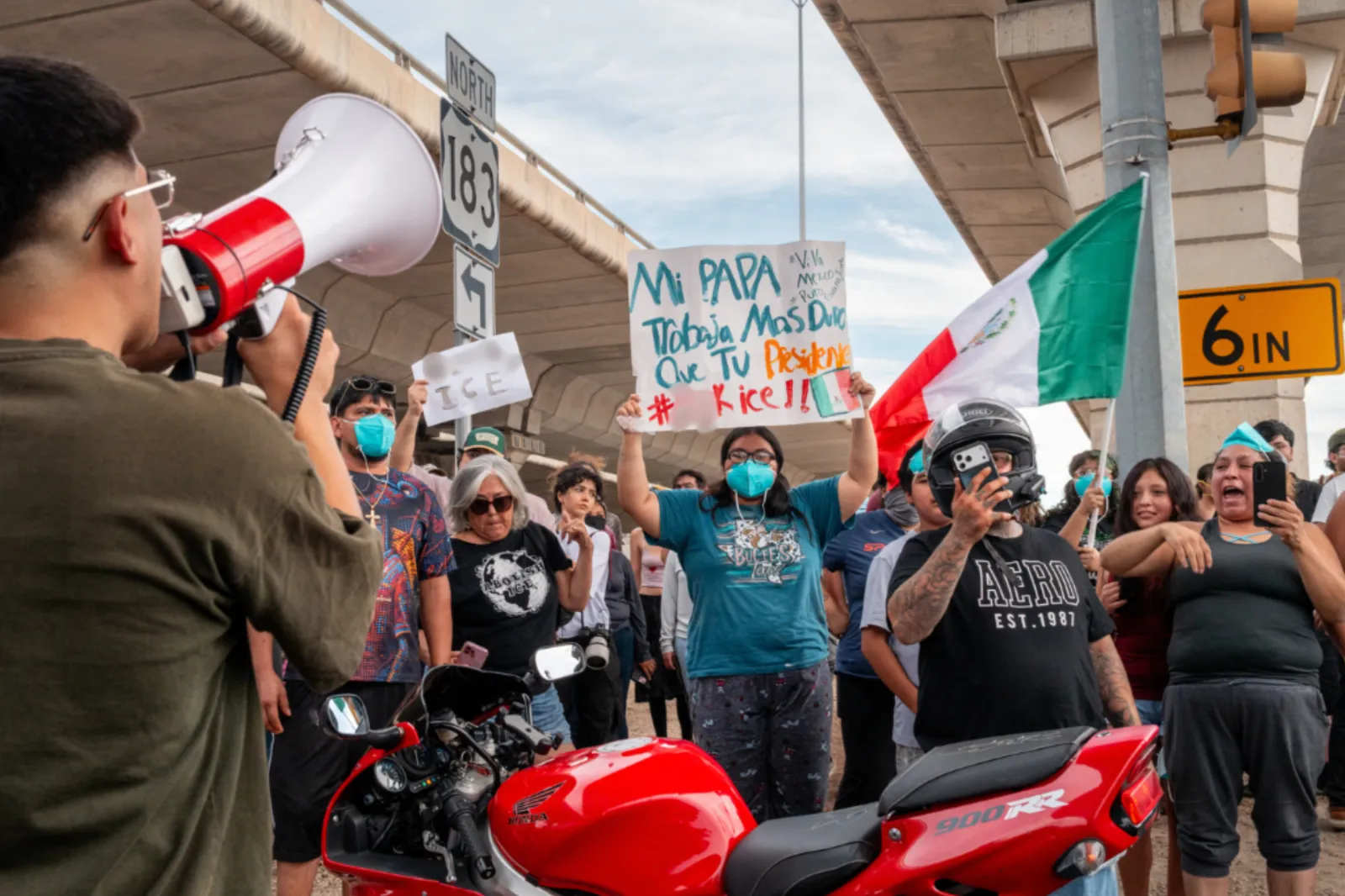 Texas Voters Disapprove of ICE Arrest Tactics
The poll also found negative views of Immigration and Customs Enforcement (ICE) among likely Texas voters following heightened scrutiny of enforcement activity in the state.
Fifty-three percent held an unfavorable opinion of ICE, compared with 43 percent who viewed the agency favorably. Fifty-four percent opposed the way ICE agents were working to arrest people suspected of living in the country illegally, while 42 percent supported it.
Fifty-six percent said the agency’s tactics had gone too far. Twenty-nine percent said they were about right, 11 percent said they had not gone far enough and 4 percent did not express an opinion.
Views divided sharply along partisan lines. Among Democrats, 97 percent viewed ICE unfavorably and 99 percent opposed how agents were conducting arrests. Among Republicans, 85 percent viewed the agency favorably and 84 percent supported the way it was working.
Independent voters were closer to Democrats on all three questions: 65 percent viewed ICE unfavorably; 67 percent opposed its arrest methods; and 69 percent said its tactics had gone too far.
Among Republicans, 56 percent said the tactics were about right, while 23 percent said they had not gone far enough.
The findings come after an ICE agent shot and wounded a man in North Austin on September 20.
Local officials said the man was transported to a hospital in serious but stable condition, while the circumstances preceding the shooting remained under investigation in the reporting provided for this story.
Austin officials called for local participation in the inquiry.
Police Chief Lisa Davis said residents deserved answers, while Mayor Kirk Watson argued that an internal federal review alone would not provide sufficient public confidence.
Newsweek contacted the Department of Homeland Security, which oversees ICE, for comment via email on Tuesday morning and is awaiting a response.
The poll’s longer trend data suggests that sentiment toward ICE had weakened modestly since June.
The agency’s favorable rating fell from 45 percent to 43 percent, while its unfavorable rating rose from 50 percent to 53 percent. Views of arrest operations and tactics were comparatively stable against ReconMR’s July measurements.
 What Else the Texas Poll Found
The findings point to broader dissatisfaction among likely voters. Fifty percent said Texas was moving in the wrong direction, compared with 39 percent who said it was on the right track.
At the national level, 58 percent said the United States was headed in the wrong direction and 37 percent said it was on the right track.
Democrats led the generic congressional ballot by 47 percent to 46 percent, reversing a one-point Republican advantage in September.
Voters also preferred Democratic control of the U.S. Senate by 49 percent to 47 percent. Both differences are within the poll’s margin of error.
Trump had a 44 percent favorable and 54 percent unfavorable rating. His job approval stood at 45 percent, while 54 percent disapproved, with 49 percent saying they strongly disapproved.
ReconMR surveyed 617 likely Texas voters from October 5 to 8, 2026. Respondents were contacted through a dual-frame landline and cellphone design, with 217 completing the poll through text-to-web. Interviews were offered in English and Spanish.
The results were weighted for party, age, region, race and ethnicity, education and gender. The overall margin of error was plus or minus 4.4 percentage points, including the design effects of weighting.
As with all polls, sampling error is only one potential source of error, and subgroup findings are generally subject to greater uncertainty than the statewide totals.
What Happens Next
Early voting is scheduled to begin October 19, with Election Day on November 3.
The central question in the final weeks is whether the apparent movement toward Abbott in the ReconMR survey is sustained, or whether the governor and Hinojosa remain locked in the statistical tie shown across the latest polling.
Newsweek’s reporters and editors used Martyn, our AI assistant, to produce this story. Learn more about Martyn here.
Contact Newsweek editors on this story: Sam Stevenson and James Debens.