
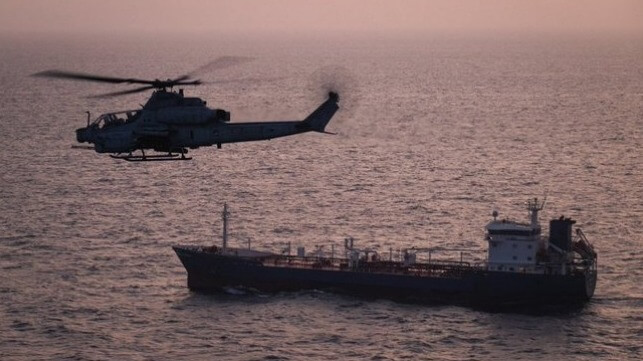
Iran filed a formal protest at the International Maritime Organization, asserting that U.S. military forces are misusing VHF Channel 16, turning it into “an instrument of military intimidation and psychological pressure against civilian crews.” It is the latest in the efforts by Iran to pressure the United States in hopes of loosening the blockade of Iranian shipping and its ports.
In a letter filed with the IMO at the end of last week, Iran’s ambassador and permanent representative to the IMO said the government instructed them to raise the serious concern affecting maritime security, distress communications, and the safety of seafarers in the Persian Gulf. It says it has received reports from commercial vessels, shipping companies, and maritime operators that VHF Channel 16 is being misused by the U.S. military. It points out that, under the IMO resolution, the channel is reserved for distress, urgency, and very brief safety communications.
“Iranian seafarers have been addressed in Persian with threatening, abusive, and provocative language and, in certain instances, urged to abandon their vessels. Such conduct has disrupted the proper availability of this essential maritime safety channel and caused serious stress and psychological pressure upon civilian crews,” Iran writes in its protest letter.
Iran declares to the IMO that the misuse by the military forces of a channel designed for maritime distress and safety communications for hostile and intimidating communications further violates SOLAS regulations. It says the U.S. is obstructing the effective discharge of obligations in safety and distress situations.
It, however, does not make mention of the attacks conducted by Iran, which, according to the IMO’s calculations, numbered 15 so far in October. These are, of course, creating the safety situations that Iran references. The IMO calculates that since the start of the conflict, there have been 106 incidents with 24 fatalities, including two sailors missing in October and 12 others injured.
“Neither armed conflict nor a naval blockade can justify turning an internationally protected maritime safety channel into an instrument of military intimidation and psychological pressure against civilian crews,” Iran asserts in its letter to the IMO.
Iran’s ambassador is calling for the relevant bodies within the IMO to “take appropriate action.” It asks that the letter be distributed to all member states.

Stay on Top of the Daily Maritime News
The maritime news
that matters most
Get the latest maritime news delivered to your inbox daily.
CENTCOM highlights that U.S. forces resumed America’s blockade against all ships entering or departing Iranian ports on July 14. As of October 10, it reported that four commercial vessels have been disabled and 135 ships have been turned around during three months of strict enforcement. Additionally, U.S. forces, it reports, have destroyed 10 tankers linked to the Islamic Revolutionary Guard Corps’ multibillion-dollar shadow network.
Iran appears to be using all avenues to attempt to apply pressure on the United States, especially as the midterm elections are only weeks away. Donald Trump has said the U.S. would maintain its current posture until at least the elections but that it might resume attacks after that point. The U.S. in the past has conducted strikes when Iran hit commercial ships, but has been largely quiet as the strikes escalated, although the U.S. did disable a Panama-flagged bulk carrier on October 10 that it said was attempting to run the blockade.