

Listen to this article
Estimated 4 minutes
The audio version of this article is generated by AI-based technology. Mispronunciations can occur. We are working with our partners to continually review and improve the results.
As the province prepares to remove a stretch of bicycle lanes in Toronto’s west end, a cycling advocacy charity and its co-applicants have announced they are taking the next legal step in their fight against the move.
Cycle Toronto said Tuesday they will seek leave to appeal to the Supreme Court of Canada, with the hopes that the country’s top court will put a stop to Ontario’s plan to pull out bike lanes on three major Toronto roads.
“It’s very clear in terms of the facts of this case that they haven’t changed, that bike lanes do not cause traffic congestion, that ripping them out will put people’s lives at risk,” said Cycle Toronto executive director Michael Longfield at a Tuesday morning news conference.
The request for the Supreme Court to weigh in is the latest chapter in a legal case over a 2024 law empowering the province to take out the bike lanes — a move framed by the province as a bid to cut down on traffic congestion. The legislation also requires municipalities to seek approval to install new bike lanes that cut into traffic.
A lower court initially ruled the province’s plan to replace 19 kilometres of bike lanes with car lanes on three major roads was an unconstitutional risk to cyclist safety.
But the Ontario Court of Appeal overturned that decision in an August ruling that said the trial judge had improperly strayed into policy-making and political considerations.
Asked about Tuesday’s Cycle Toronto application, a spokesperson for the Ministry of Transportation said that the Court of Appeal’s judgement should be allowed to stand.
“[The court’s] decision was clear,” wrote Dakota Brasier.
“The people of Ontario gave our government a clear mandate to tackle the traffic that is costing our economy over $56 billion a year.”
Case is of ‘national importance’: lawyer
Cycle Toronto and its co-applicants are being represented by Ecojustice, an environmental law charity, and Paliare Roland Rosenberg Rothstein LLP.
“We are asking the Supreme Court to hear this case in order to provide clarity about the scope of the rights to life and security of the person protected by Section 7 of the Charter,” said Bronwyn Roe, a staff lawyer with Ecojustice, at Tuesday’s news conference.
“This is a matter of public and national importance,” she continued.
WATCH | What happens after the Etobicoke lanes are taken out?: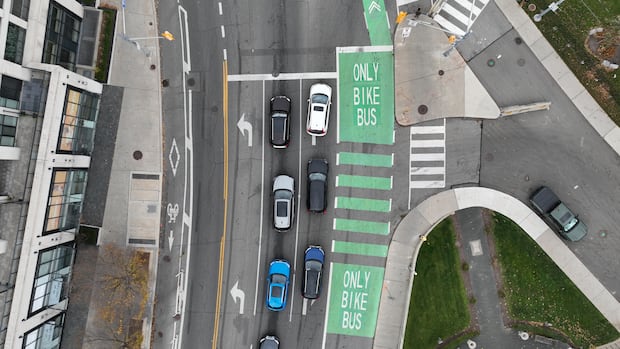
Ontario to begin removing Toronto bike lanes. Here’s what you need to know
Ontario will begin removing bike lanes from a stretch on Bloor Street W. in Etobicoke on Tuesday, the Ministry of Transportation says. CBC’s Karina Zapata breaks down why there’s still a lot of uncertainty about which lanes come next.
Anyone who receives a judgment from a top provincial or territorial court can ask the Supreme Court to consider their case.
The court only hears a fraction of those cases — just about eight per cent, according to a Supreme Court report in 2021 — which typically must involve a key constitutional question, conflicting lower court decisions or a new issue of law.
Application won’t stop imminent removals
Roe said that although their application is now in, it will make no difference to the province’s planned Tuesday evening removal of the Etobicoke lanes.
“We may seek a stay of the Ontario courts decision, pending appeal,” she said. “But that wouldn’t stop the work that is going to start today. It could stop the work that is supposed to start, likely in the spring, on the remaining bike lanes.”
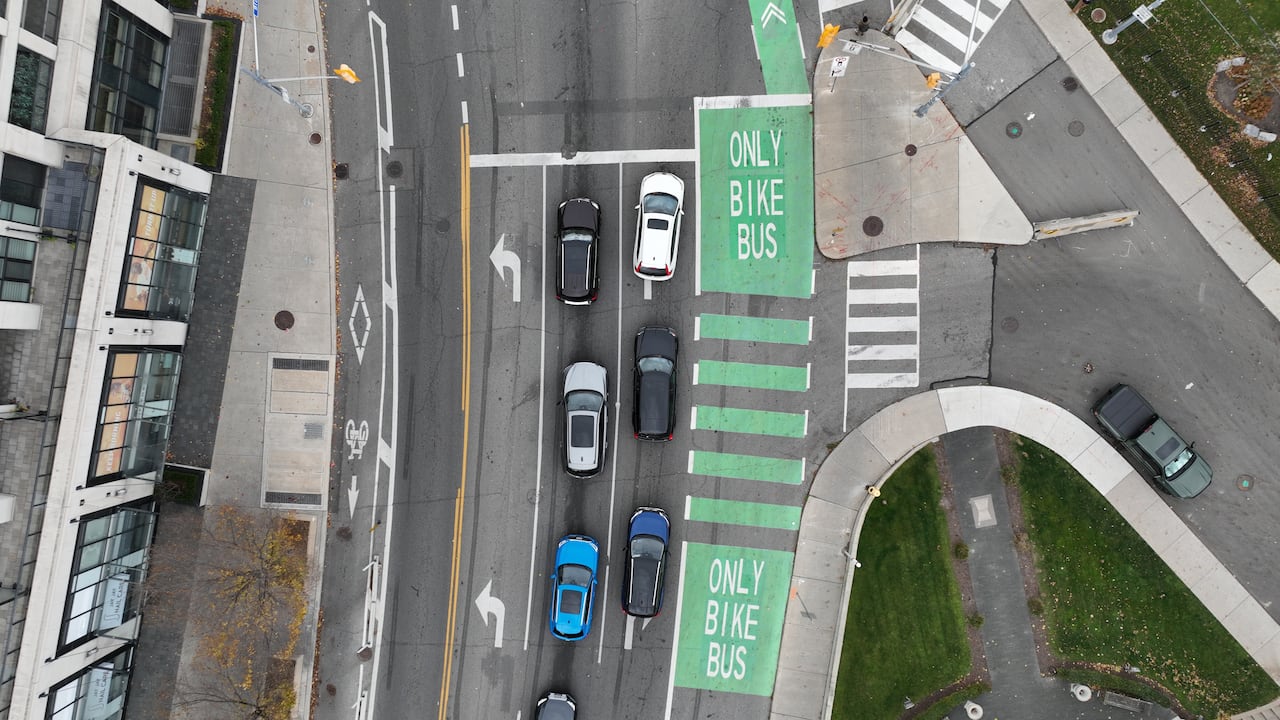
Bike lanes on Bloor Street West near Jane Street, just east of the area in Etobicoke where lanes are set to be removed in Etobicoke. (Patrick Morrell/CBC)
Last month, the province announced it had issued a request for proposals to “study and provide design options” that could retain or reconfigure bike lanes on remaining sections of Bloor Street West, as well as Yonge Street and University Avenue.
A spokesperson for Mayor Olivia Chow told the Canadian Press that the city repeatedly shared designs with the province that would keep both vehicle and bike lanes intact.
Work has already been completed to restore a car lane and keep the bike lane on a short stretch of Bloor Street between Kipling and Islington subway stations.
In an interview with CBC Radio’s Metro Morning, city manager Paul Johnson said the city is still in touch with the province about possibilities to “work together” on the broader cycling network in a way that complies with Ontario’s legislation.
“This doesn’t stop our cycling work. We will continue to install new cycling infrastructure,” Johnson said.