
After four years of speculation, leaks, and briefings by anonymous sources, the world is finally about to hear evidence given publicly under oath in a German courtroom about how the Nord Stream gas pipelines were blown up — in a case that could prove politically explosive.
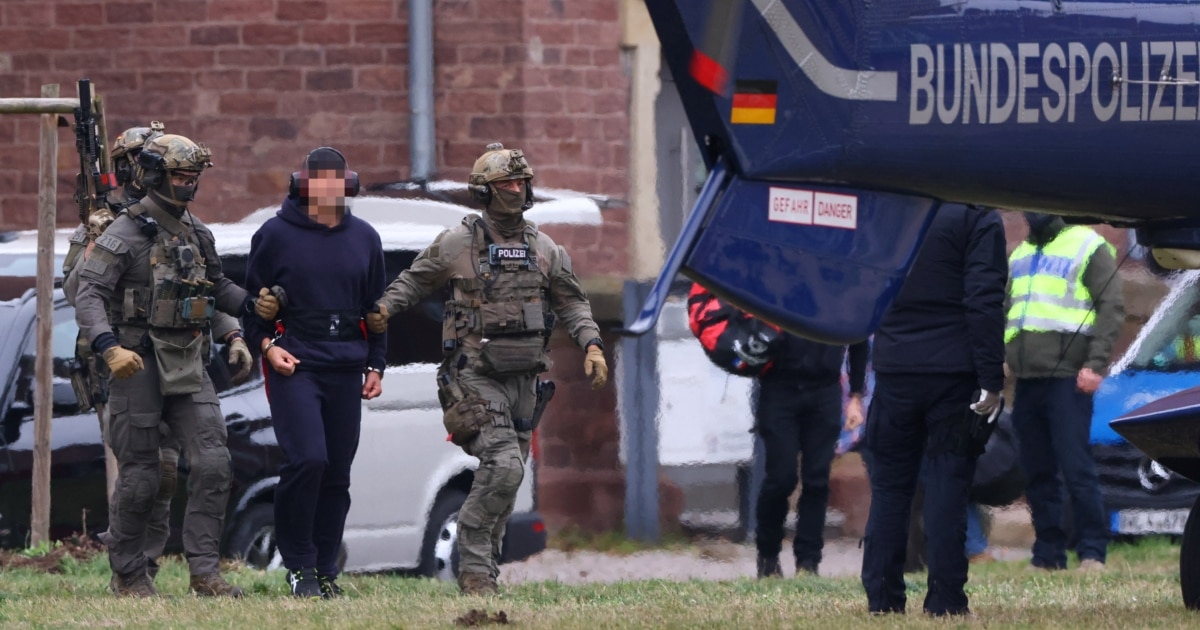
German prosecutors have identified seven Ukrainian suspects, but just one of them is in the dock in the trial beginning on October 14. He is named as Serhii K. in court documents that say he is suspected of a being an accomplice to a war crime.
That classification has caused outrage. But German prosecutors have further raised the stakes by stating the suspects were operating “on behalf of state authorities in Ukraine.”
Kyiv has always strictly denied any involvement in the attack, which damaged crucial energy infrastructure serving Germany — one of its most important military backers in its fight since Russia launched its full-scale invasion in February 2022.
Serhii K., who has been identified elsewhere as Serhiy Kuznetsov, says he is innocent.
‘Two Crazy Military Men’
Nord Stream is majority-owned by Russia’s state-controlled Gazprom and co-financed by major European energy companies. It was constructed to deliver Russian gas directly to Germany, bypassing transit states such as Ukraine and Poland, which had tense relations with Moscow.
The suspected sabotage and subsequent gas leaks happened in September 2022, rendering the pipelines as inoperable.
Western governments originally accused Russia of carrying out the blasts, but German investigators started forming a case that said a group of Ukrainian divers hired a yacht and planted explosives on the seabed.
They say Kuznetsov, a former military officer, was the ringleader.
“At the end of February 2022, he and other military personnel, on behalf of state authorities in Ukraine, developed the plan,” says a summary of the indictment released by prosecutors. “The aim was to permanently halt gas deliveries via the pipelines and prevent Russia from using the revenue from the natural gas trade to finance its war efforts.”
The prosecutors have not stated publicly the full extent of the alleged conspiracy.
The full indictment contains some further details, according to three German media outlets that say they have seen it: public-service TV station ARD and two print-era heavyweights, Sueddeutsche Zeitung and Die Zeit.
They all reported that, while in custody in Italy, Kuznetsov had phoned his wife in Kyiv and investigators were secretly listening in as he said he’d been advised by a lawyer that it was time to admit this had been “an official military operation.” His commander should state that they were not just “two crazy military men.”
Kuznetsov’s Italian lawyer, Nicola Canestrini, has played down the importance of this evidence, saying there was “no smoking gun” in the case.
“It is hard to believe that, after Russia’s war of aggression against Ukraine, a German court should hold a war crimes trial against a Ukrainian serviceman,” he added in comments to RFE/RL.
The three German media outlets named Roman Chervinskiy as Serhii K.’s commander, and his name also appeared in multiple earlier media reports citing intelligence sources. Chervinskiy told RFE/RL’s Ukrainian Service in July that “the Germans actually have no evidence whatsoever that Serhii took part in this operation, if it even took place.”
Another suspect, identified by Germany as Vladimir Z., is currently in custody in Croatia, where he is fighting extradition. He was previously detained in Poland but was freed when a Polish judge ruled that if Ukraine were responsible for the Nord Stream attack, it was a “just” act.
A professional diver identified by his Polish lawyers as Volodymyr Zhuravlyov, he was working in Croatia as an adviser on a Hollywood movie about Nord Stream.
During the trial, the prosecution will have to lay out its evidence for a conspiracy and the full extent of it.
“That is the crucial question: How much came from the top of the Ukrainian political system or how much was prepared by some insiders in the intelligence service?” Stefan Meister, a specialist on Russia and Eastern Europe at the German Council on Foreign Relations, told RFE/RL.
“The key political question is the role of Zelenskyy and the presidential administration. And there we still have no proof that they were really involved,” he added.
Kuznetsov’s German lawyer, Jes Meyer-Lohkamp, said prosecutors “have not provided any direct, conclusive evidence of our client’s involvement” and that the German court will have to determine whether Nord Stream was actually a legitimate military target.
The Hanseatic Higher Regional Court in Hamburg has scheduled two hearings every week until at least February, with no specified end date yet.
German Support For Ukraine
As the case unfolds, it will also feed into bitter disputes in Germany about ongoing support for Ukraine. The main opposition party, Alternative for Germany (AfD), is highly critical of this support and calls for close ties to Russia instead.
Evidence of Ukrainian involvement in the Nord Stream attack “would strengthen the AfD’s argumentation against this support for Ukraine,” said Meister. “They have all these narratives about Ukrainian corruption, a failed state…. It would resonate also in parts of German society.”
The AfD has recently won key regional elections and is piling the pressure on Chancellor Friedrich Merz’s government over Ukraine, immigration, and economic concerns.
Merz’s response has been to double-down on his current policies, including on Ukraine. Most recently, he was in Kyiv on October 4 with a new aid package including joint production of interceptors to shoot down Russian jet-powered drones.
Mikhaylo Honchar, head of the Kyiv-based Strategy XXI Global Studies Center, told RFE/RL this would likely continue regardless of what comes out at the trial.
“If you take into consideration real Russian policy, which is directed against the EU and NATO, and Russia’s anti-German rhetoric, I think the government of Germany will avoid steps which would undermine the bilateral relationship” with Ukraine, he said.
He added that the prosecution case was “absurd,” citing German media reports that the attack may have been a Russian false-flag operation.
But in any case, Honchar said, a guilty verdict would be met with a clear response in Ukraine. “Many people will say: ‘If our guys did it, they are heroes.'”