
Israeli-American writer Miko Peled says opposition to Netanyahu does not amount to rejection of Israel’s wars or occupation‘People support the genocide. People support the attacks on Iran. People support the occupation of Southern Lebanon and parts of Syria,’ founder of Palestine House of Freedom tells AnadoluIsrael is ‘crumbling from within,’ Peled adds, warning of chaos without plan for political transformation
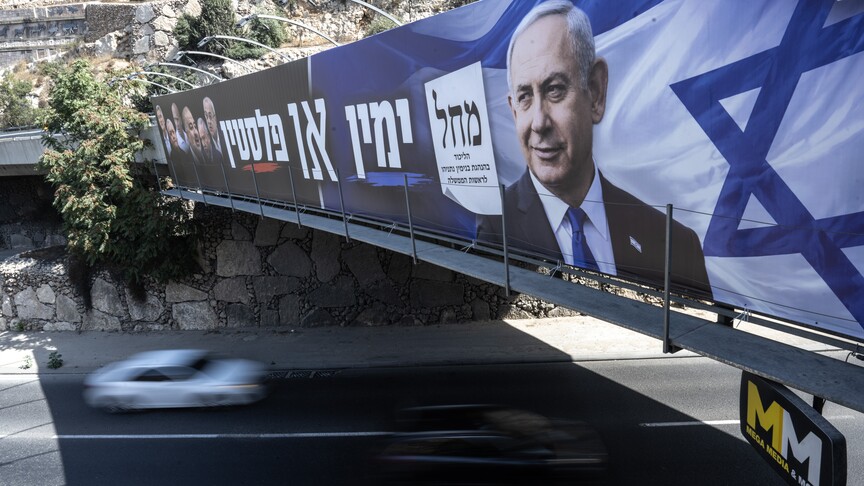
As Benjamin Netanyahu fights to remain Israel’s prime minister in this month’s election, debate over his political future spans wars on multiple fronts, corruption allegations and accusations of authoritarianism.
But for Israeli-American activist and author Miko Peled, only two issues will “make or break” the vote: military service exemptions for ultra-Orthodox Jews and demands for an inquiry into the failure to prevent the Oct. 7, 2023 attacks.
“Those are the two major issues that the campaigns are focusing on and the Israeli public is focused on,” he told Anadolu.
“All the other stuff is nonsense because people support the genocide. People support the attacks on Iran. People support the occupation of Southern Lebanon and parts of Syria.”
Exemptions from military service for ultra-Orthodox, or Haredi, men have long divided the country. Many regard full-time religious study as their primary duty and oppose compulsory enlistment.
Peled estimated that close to 100,000 young ultra-Orthodox men were eligible for military service but refusing to enlist.
Netanyahu’s main opponents have pledged to end broad exemptions, while his ultra-Orthodox coalition partners have sought to preserve them.
Peled warned that efforts to compel enlistment could provoke massive unrest within Israeli society.
“They will never agree to serve. It’s a very strong community. They follow the letter of the law of the Torah and they will not serve,” he said. “And the rest of the Israeli society will also not give up. They’re not just going to let it happen.”
The second dividing line is accountability for the failure to prevent the October 2023 attacks.
Netanyahu’s main challenger, former military chief Gadi Eisenkot, has pledged to establish an independent state commission of inquiry into the failures. Netanyahu has repeatedly resisted calls for such an inquiry.
Netanyahu and a permanent state of war
Peled’s familiarity with Netanyahu stretches back to their childhood neighborhood in Jerusalem. The future prime minister attended school with Peled’s sister, Nurit.
In his memoir, The General’s Son, Peled recalled admiring Netanyahu, widely known as Bibi, as a young boy. That admiration faded when Netanyahu entered politics.
“He seemed insincere and opportunistic, and his views were uncompromisingly hawkish. It was obvious to me that no government under him was going to advance the cause of peace,” Peled wrote.
Netanyahu was prime minister when Peled’s niece, Smadar, was killed in a Jerusalem suicide bombing in 1997. Her death prompted Peled to seek encounters with Palestinians and helped shape his subsequent activism.
He argues that Netanyahu’s objectives have always been clear and that his continued political relevance reflects support for those objectives.
“His ideology was well known. He never hid what he wanted to do. And that’s why he keeps getting elected, because the Israeli public likes what he says, and they like his ideology. They support his ideology.”
Peled accused Netanyahu of leading genocide and a broader campaign of ethnic cleansing against Palestinians, extending beyond Gaza.
“He is a war criminal … he should go to The Hague, and then go to jail for the rest of his life.”
But he argued that the outlook sustaining Israel’s wars extends beyond one leader. Israelis, he said, are educated to believe that perpetual conflict is necessary for survival.
“They know ‘we took the land from Palestinians, but we didn’t have a choice. And they want to kill us because it’s their land. And we have to fight them so that they don’t kill us. And there’s no solution,’” he said.
“Any of the major candidates, all of them say there is no solution.”
Peled said this belief permeated politics, education and public discussion, alongside demands for military strength and self-reliance.
He cautioned against assuming Netanyahu’s political career was ending, describing his coalition as “very comfortable” and predicting that its partners would perform well.
“Anybody who expects that for some reason he will disappear is not reading the map properly,” he said.
A different vision for Palestine
Peled’s political position also departs from that of his father, Matti Peled, an Israeli general who later championed peace and a two-state solution.
The younger Peled considers that solution unworkable, arguing that Israeli control over Palestinian territory has left no viable basis for it.
He said Israel would not stop taking Palestinian land “unless it is forcibly stopped by the international community.”
“Although it’s not legally annexed yet. But it’s in de facto, most of it is gone,” he said of the West Bank. “And you have these ghettos in which Palestinians live. And now they want to kick them out. So, the two-state solution is a myth.”
Peled described Zionism as a racist and genocidal ideology. To have two states, he said, the government would have to agree that Palestinians have rights, something he said “would never happen because the Zionist ideology says the whole land belongs to the Jewish people.”
Through the Palestine House of Freedom in Washington, which he founded, Peled advocates a democratic state across historic Palestine with a right of return for Palestinians.
“That option for peace is a free Palestine on all of historic Palestine with the right of return. That option will allow Israelis and Palestinians to live in peace.”
He said the organization sought to explain that alternative to elected officials and the public.
Asked whether outside powers could stop Israel, he said European countries and the US had the means but had failed to act.
“Of course, the Europeans and the Americans can stop it today. They could have prevented Oct. 7th. They could have prevented the genocide in Gaza … They could have prevented all of it.”
Peled urged countries to treat Israel as a “pariah” in sporting, academic and cultural life. He also expressed concern that countries traditionally supportive of Palestine were considering normalizing relations with Israel.
For him, changing government policy requires sustained public pressure.
“The constituents have to stand up and say no. The constituents around the world, citizens have to stand up and say no to normalization, no to trade, no to diplomatic relations,” he said.
“People have to do this. People have to demand of their governments that they do this. And then they also have to demand of the media to tell the truth.”
Israel ‘crumbling from within’
While the establishment of a Palestinian state seems distant and increasingly difficult, Peled said the state of Israel, particularly after the Gaza war began, “is crumbling from within.”
“Israeli society was ripped apart. Israeli society was never a cohesive society. It was a bunch of different groups tied together with scotch tape. Oct. 7 ripped off that scotch tape,” he said.
“So, when you hear the discourse in Hebrew between politicians, the journalists, people in the street, the vitriol is unbelievable. The hatred is beyond belief.”
He pointed to disruption at ports and airports and the continued displacement of residents from communities near Lebanon and Gaza as evidence of the strain.
He said the education and healthcare systems were “bankrupt,” called the police “corrupt,” and described the judicial system as “politicized.”
“So, what’s left of the state?” he said. “Yes, they have big bombs. They’ve got the hardware to bomb everybody. But that’s all there is. There’s nothing else left. So, that state is crumbling.”
Peled argued that military power could not compensate for those weaknesses and warned that further pressure could precipitate a complete collapse.
“If there is no plan to replace the regime with a real democratic Palestine, the chaos that will ensue will be unfathomable, unimaginable,” he said.
“So our argument as Palestine House of Freedom is that we must have a plan in place so that when it does collapse, it’s not chaos.”
He called for replacing what he described as an apartheid system with a democracy that “represents all the people there.”