
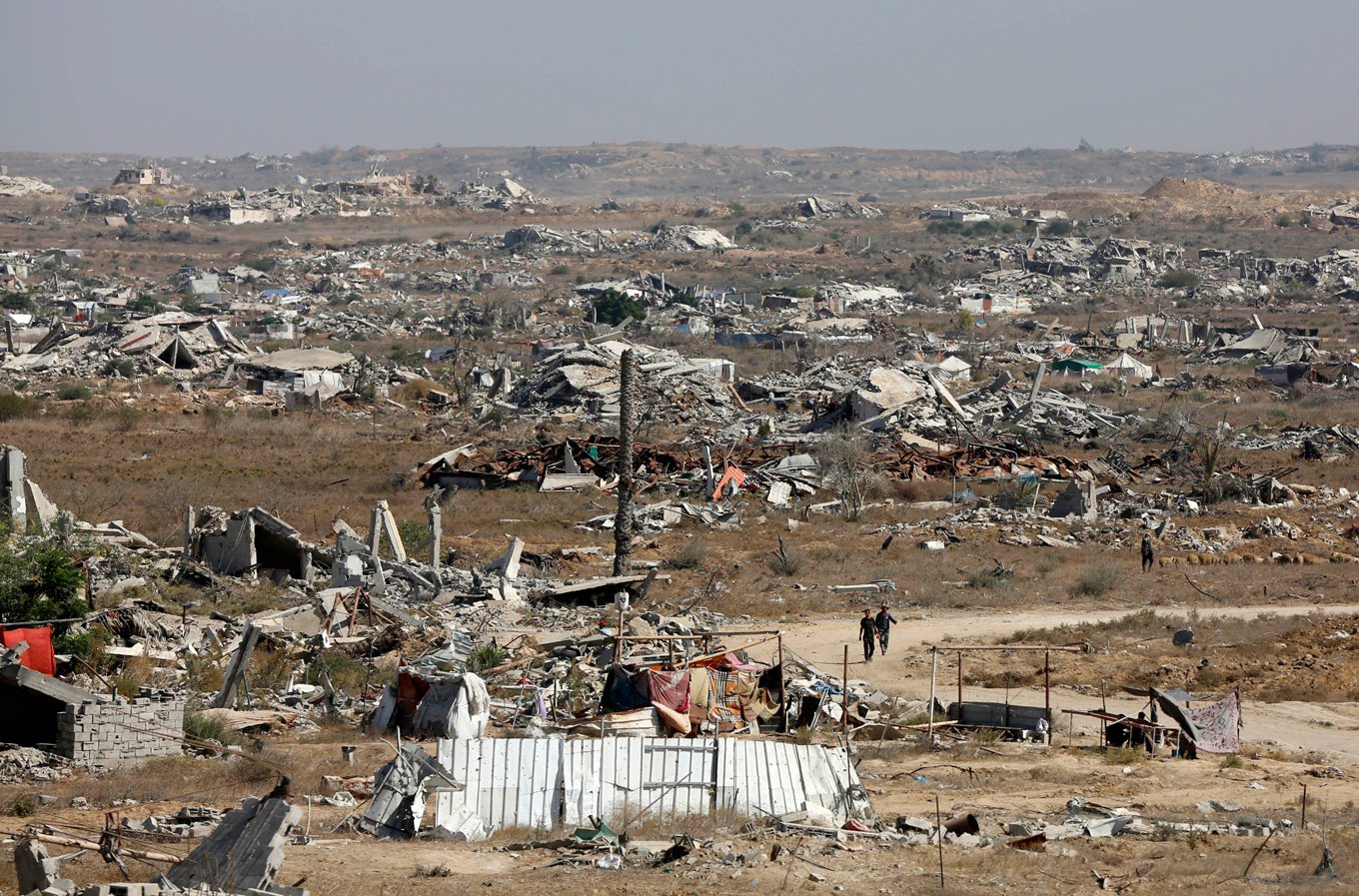
The European Union has continued its scientific cooperation with Israeli firms and institutions implicated in genocide and apartheid throughout Israel’s three-year old assault on Gaza. Such complicity must stop.
Israel has been associated with the €95.5bn Horizon Europe research and innovation programme (2021-2027), and, according to the European Commission’s detailed Horizon dashboard, the EU’s net contribution to Israel amounts to €1.02bn.
While much of the funding supports legitimate research, the programme also channels substantial resources to Israeli universities and companies, some closely connected to Israel’s military and security apparatus.
Pointing to just such EU-Israel collaboration, Francesca Albanese’s UN report “From economy of occupation to economy of genocide” published last year, estimated EU research funding to Israeli entities at over €2.12bn since 2014.
Horizon Europe funds collaborative projects and European Research Council grants.
But it is the European Innovation Council (EIC) and schemes which include the EIC Accelerator, the EIC STEP Scale-up and the Scaleup Europe Fund which are especially relevant to the question of EU complicity in Israel’s ongoing assault on Gaza.
Horizon Europe is formally limited to civilian research, but Israeli companies with links to Israel’s military and security establishment have received funding through these schemes.
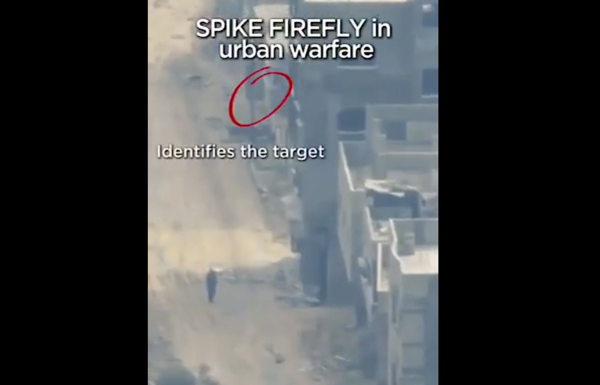
In March 2026, for example, members of the European Parliament tabled a written parliamentary question asking the European Commission specifically about such companies including Sightec, an Israeli drone-navigation firm that received almost €2.5m through the EIC Accelerator and whose chief executive has described its technology as “combat-proven and deployed on over 3,000 drones in critical missions”.
The issue is not confined to overtly military applications. EU-funded civilian technologies can also serve Israel’s settler-colonial project.
Should European public money finance, for example, orange-harvesting robots that help Israel manage what it euphemistically calls a “labour shortage” in settlements built on occupied Palestinian land?
The EIC also goes beyond grants. Through the EIC fund, the EU can take equity in companies it supports; the new Scaleup Europe Fund is explicitly designed to make direct equity investments in strategic technology firms, and is open to companies based in countries associated with Pillar III of Horizon Europe, including Israel.

The EU can therefore not only subsidise Israeli technology firms but also acquire a financial stake in them and potentially profit from their future growth.
And it could get worse.
The EIC’s 2026 work programme expands the type of projects that can be funded by including ‘dual use’ applications that are both civilian and military.
This opens the door for the EU to fund nuclear-related Israeli projects although Israel is not a member of the European Atomic Energy community (Euratom).
But none of this is inevitable.
Next EU budget and credibility at stake
Israel’s association with the current Horizon Europe programme runs only until 2027 and the shape and scale of the EU’s next Horizon programme will be decided during ongoing negotiations on the bloc’s seven-year Multiannual Financial Framework (MFF).
There are also clear signs that Israel is likely to participate in the next Horizon programme (2028-2034).
Only a few weeks ago, Ekaterina Zaharieva, European commissioner for startups, research and innovation, met with the head of the Israel Space Agency, Shimrit Mama.
Reportedly, they discussed potential cooperation in high-tech air defence and space capabilities, AI and robotics, and underlined the importance of satellite imaging, AI modelling and a “multi-layer defence approach.”
European Commission president Ursula von der Leyen and her team must ask themselves if the EU should be building an innovation architecture in which Israeli firms and state institutions, which are already deeply integrated into Israel’s military-industrial ecosystem, could receive European support for technologies explicitly framed as dual-use or defence-related.
Are they comfortable with funding companies that help develop the type of violent technologies described in the award-winning documentary NAZA, which exposes the systems and AI technology used during the military campaign in Gaza?
 Audience members hold signs supporting Yuval Abraham and Rachel Szor’s documentary Naza after it wins the European Film Audience Award at the 74th San Sebastian Film Festival in Spain, 26 September 2026 (Source: EPA/JUAN HERRERO)
Last year, under public pressure, von der Leyen proposed a partial suspension of Israel’s participation in Horizon Europe by specifically excluding Israeli entities from new EIC Accelerator grants and investment support.
The proposal was modest: it would have affected future funding only, not existing agreements, and covered roughly 20 percent of EU financial flows to Israel under the programme.
It required a qualified majority in the Council but did not secure the necessary votes. It is, however, technically “still on the table”, according to commissioner Zaharieva.
Nobel Peace Prize winner Navi Pillay concluded in 2025 that Israel’s actions have “consistently pointed toward a singular, harrowing objective – the destruction of Palestinian life in Gaza”.
The EU has done little so far to stop the genocide in Gaza and ethnic cleansing in the occupied West Bank, and arguably – through trade and weapons’ exports – is actually contributing to it.
Now the EU faces a clear choice. It can continue to fund, co-invest in and deepen research ties with an Israeli innovation sector increasingly oriented towards dual-use and defence technologies.
Or it can stand with the winner of the 2026 Nobel Peace Prize, draw a line and decide that there will be no Israeli participation in the next Horizon programme, no EU equity in Israeli firms, and no public money for technologies that may be used to sustain genocide, occupation, surveillance and war.
The credibility of the EU and the values it proclaims depends on the choice it makes.