
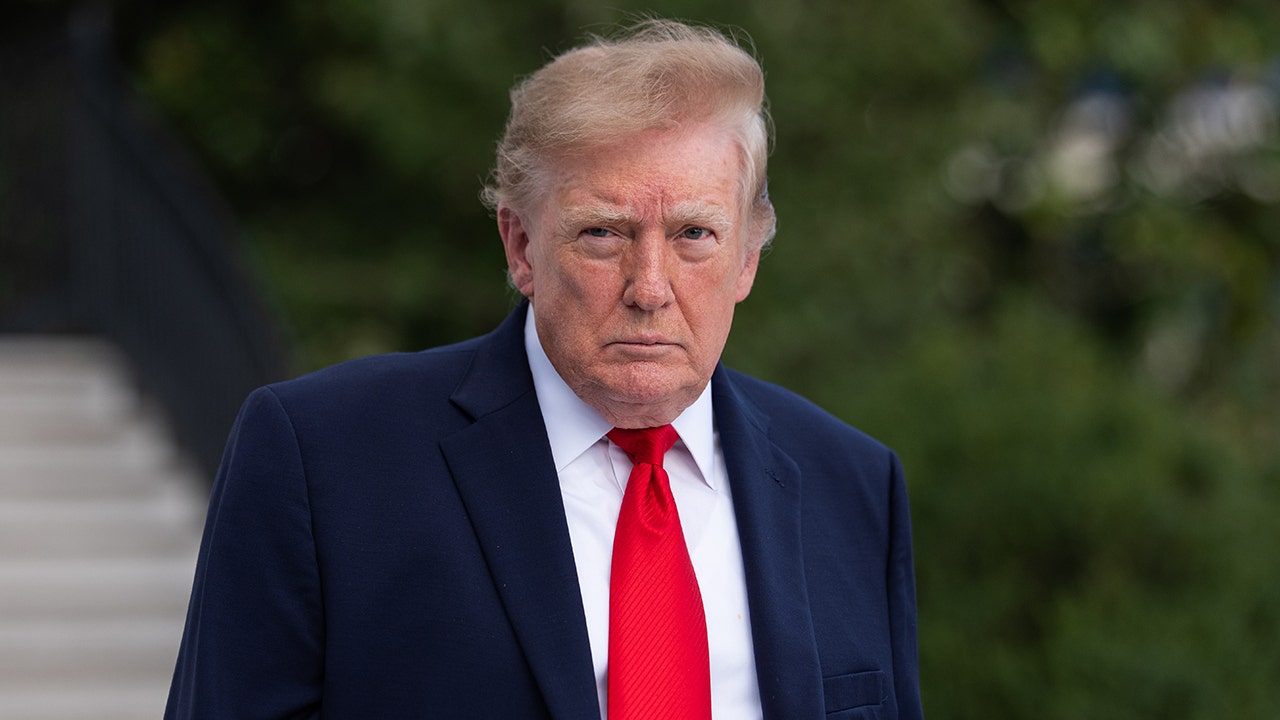
‘Big Money in the Morning’ analyze major banks accused of debanking conservatives. Representative Ryan Zinke joins to discuss President Donald Trump’s Montana campaign rally and rising state gas prices.
The head of the Office of the Comptroller of the Currency (OCC) declared Wednesday that his agency uncovered “irrefutable evidence that the nation’s largest banks have denied, debanked and discriminated against customers and lawful businesses,” including over political views.
Comptroller of the Currency Jonathan Gould made the remark after the OCC said it investigated debanking activities at the nine largest banks it supervises: JPMorgan Chase Bank, Bank of America, Citibank, Wells Fargo Bank, U.S. Bank, Capital One, PNC Bank, TD Bank and BMO Bank. The practice of debanking is the denial, restriction or closure of an individual’s or organization’s access to banking services.
The 47-page OCC report found that in February 2021, under the Biden administration, “a payment processor owned by one bank closed the account of a merchant that sold merchandise promoting President Trump and the Make America Great Again (MAGA) brand.” And two years later, “one bank declined to provide financial services to a public education organization due to its partisan leanings — namely, the organization’s political arm’s endorsement of solely Democratic candidates.”
“Americans should have access to financial services regardless of their beliefs, affiliations, or political views,” Gould said in a statement. “Fair access to financial services is not a mantra — it is a mandate. The Trump Administration is committed to ending the weaponization of finance against hardworking Americans, once and for all.”
GUN-RIGHTS COALITION BLASTS BIG BANKS FOR ‘WHITEWASHING’ DEBANKING ATTACKS, DEMANDS PLEDGE
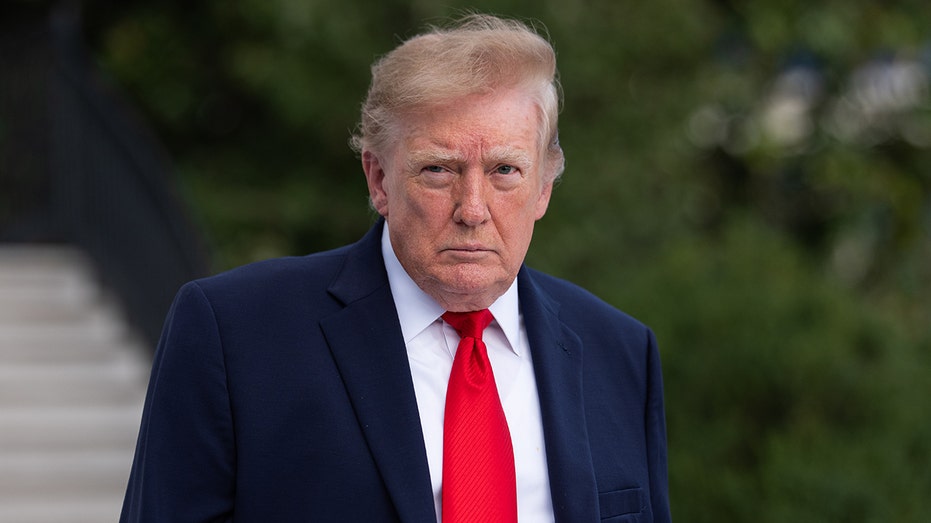
President Donald Trump walks on the South Lawn as he departs the White House on Oct. 12, 2026 in Washington, D.C. (Aaron Schwartz/Getty Images / Getty Images)
The report also said: “Fear of being on the wrong side of public opinion led at least one bank to distance itself from certain customer affiliations that could possibly be viewed as partisan.
“Until 2025, one bank’s business line treated a business engaged in ‘partisan activity’ as presenting presumptively high reputation risk. While the policy appears to have been applied consistently to organizations on both sides of the political spectrum, the bank’s business line ultimately declined to provide financial services to organizations merely for the constitutionally protected views the organizations espoused,” it said. “By contrast, organizations deemed to be ‘bipartisan’ received services.”
Senate Banking Committee Chairman Tim Scott, R-S.C., told Fox News Digital on Wednesday that the report is “damning.”
“Debanking Americans over faith or politics is simply un-American,” he added. “Expect to hear more from the Banking Committee on this important issue when Congress returns.”
The OCC said it carried out its review in compliance with an executive order President Donald Trump signed in August 2025, “to determine whether these banks’ policies or practices may have required, encouraged, or otherwise influenced banks to deny or limit access to financial services to Americans because of their political or religious beliefs or lawful business activities.”
“The OCC’s findings show that, between 2020 and September 2025, all nine banks had such policies,” it said.
The White House, after Trump signed the executive order, said the president “believes that no American should be denied access to financial services because of their political or religious beliefs, and that banking decisions must solely be made on the basis of individualized, objective, and risk-based analyses.”
Trump previously said he himself has been targeted by debanking efforts, which he claims are driven by political bias from bank regulators. Melania Trump also said in her memoir that she too had her account closed after many years of banking with a specific banking institution and that Barron Trump was subsequently denied the creation of an account after the events of Jan. 6, 2021.
Prior to the executive order last summer, sources on Wall Street told Fox News Digital that regulators under the Biden administration put pressure on top banks to examine accounts for political reasons. Banking regulators operate under an alphabet soup of federal agencies, and sources said that when a regulator speaks, whether couched as a rule, guidance or even a simple conversation, banks have little choice but to listen.
TRUMP SAYS HE WILL SUE JPMORGAN CHASE OVER ‘INCORRECT’ POST-JAN 6 DEBANKING
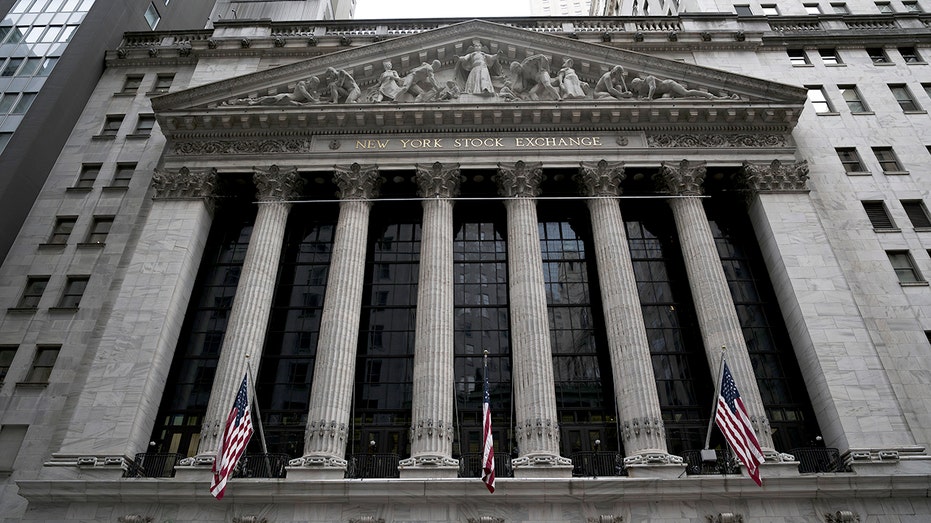
The facade of the New York Stock Exchange is seen on Wall Street in Lower Manhattan. (Nicolò Campo/LightRocket via Getty Images / Getty Images)
“In the report, the OCC found that broad reputation risk policies — which lacked clear standards and objective, risk-based criteria — disadvantaged certain Americans based on their political, religious, or social views or based on their lawful business activities,” the OCC also said. “The OCC also found that banks maintained public and nonpublic policies restricting certain industry sectors’ access to financial services, including those in oil and gas exploration, coal mining or coal-powered plants, firearms or ammunition manufacturing or distribution, construction or operation of detention facilities, the manufacturing, distribution or online retail of tobacco or e-cigarettes, and digital asset activities.”
The report was based on “nearly 100,000 complaints to OCC-regulated institutions,” while the OCC also “received approximately 50,000 documents consisting of approximately 420,000 pages from these banks regarding their policies, procedures, practices, and individual customer decisions.”
“The OCC first announced this review of its nine largest banks by asset size in September 2025 and issued preliminary findings in December 2025. Today’s report is the latest action by the OCC to address debanking and promote fair access,” the OCC continued.
The agency said it is “considering actions to prevent banks from discriminating against customers or prospective customers on the basis of their political or religious beliefs and to address the problematic role of reputation risk in bank decision-making.”
Rep. Dan Meuser, R-Pa., said the report from the OCC “exposes how far Biden-era debanking went to pressure banks to cut off Americans for their politics, faith, and lawful businesses.”
“Thank you to @USComptroller Gould and OCC for their work to expose this overreach, and I look forward to continuing our work together to ensure a future administration cannot repeat Biden’s mistakes,” added Meuser, who is a member of the U.S. House Committee on Financial Services.
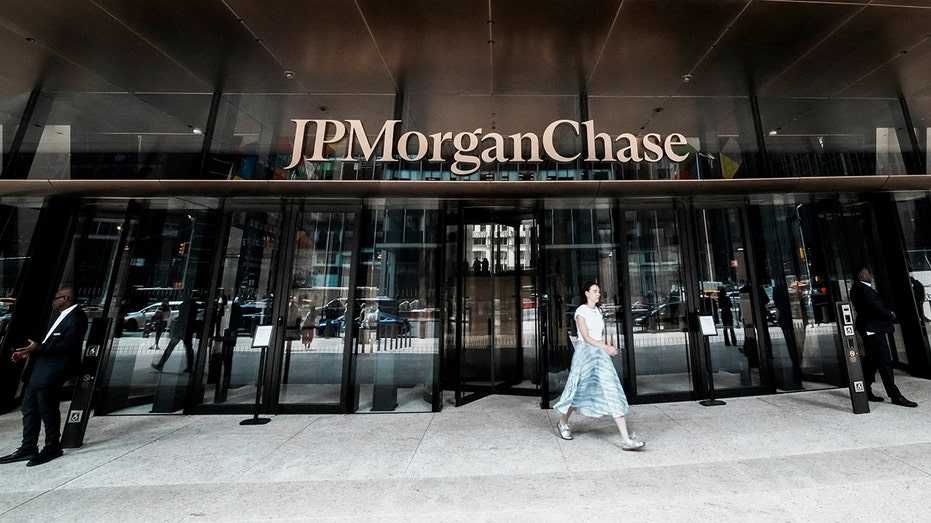
People exit the JPMorgan Chase & Co. headquarters in New York City in April 2026. (Eduardo Munoz/Reuters / Reuters)
Mike Selig, the chairman of the Commodity Futures Trading Commission (CFTC), said “no longer will Americans be punished for embracing financial innovation or denied access to the system for exercising their right to choose how they manage their money.”
In a statement to FOX Business, JPMorgan Chase Bank said its policies “prohibit discrimination against customers based on political or religious views.”
“The report also discusses a limited number of historical interactions among the nearly 90 million customers and small businesses we serve across the country and around the world,” the bank added. “We take this seriously, learned from it, and improved the way we do business.
“We agree with the Administration on a broader point: years of operating in a regulatory environment that often second-guessed decisions contributed to a culture of caution across the banking industry. That system needs fixing,” JPMorgan Chase also said.
Wells Fargo declined to comment. BMO Bank referred FOX Business to a statement from the Bank Policy Institute, which said, “The banking industry supports fair access to banking services and has been working to ensure that government regulations and policies enable banks to serve law-abiding customers.
“We look forward to continued engagement with the administration and Congress as they consider additional proposals that ensure that political or religious beliefs do not unfairly affect customers’ access to banking services,” the BPI statement added.
CLICK HERE TO READ MORE ON FOX BUSINESS
FOX Business has also reached out to Bank of America, Citibank, U.S. Bank, Capital One, PNC Bank and TD Bank for comment.
FOX Business’ Amanda Macias contributed to this report.