
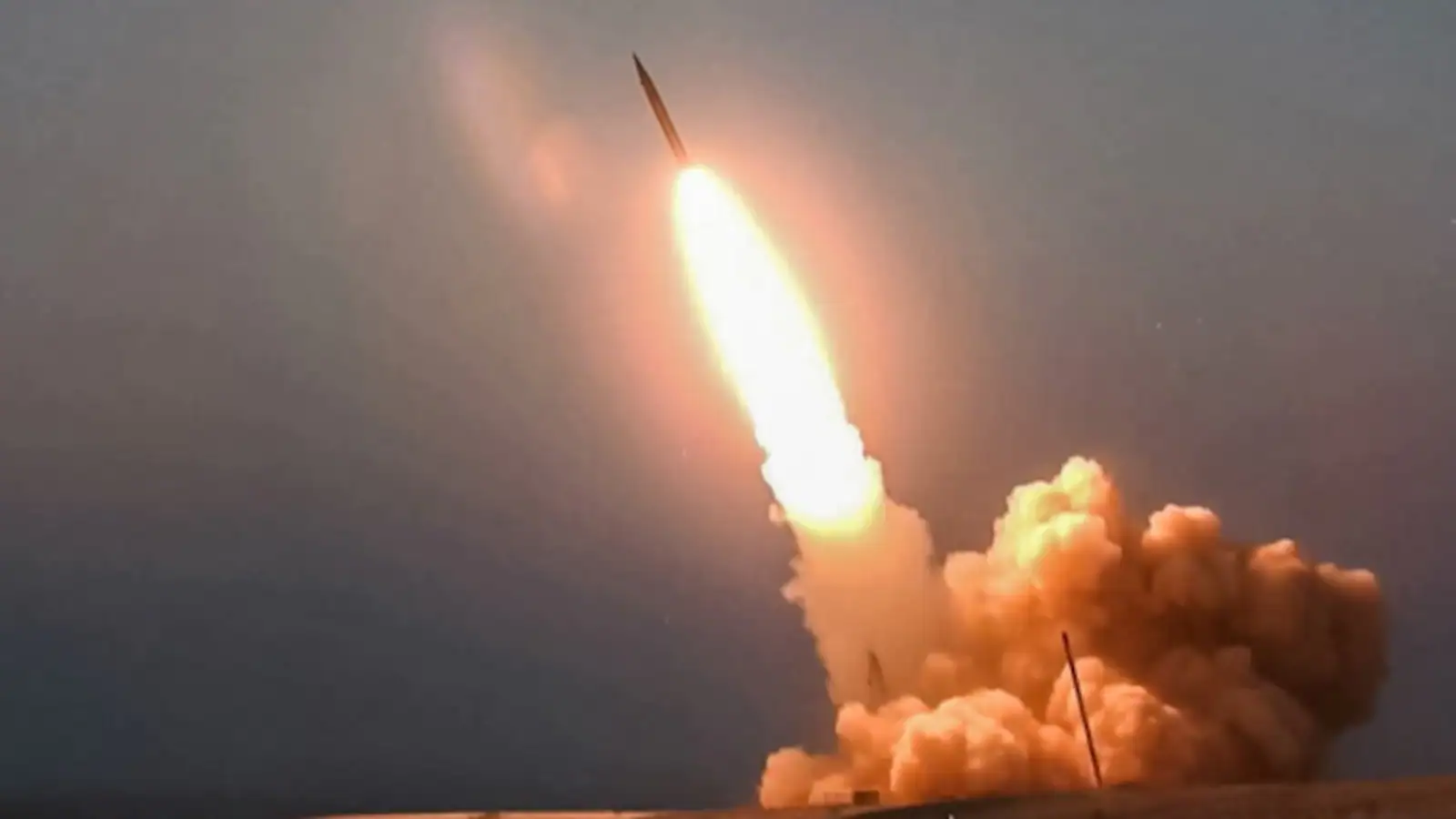
Iran-backed Houthis are working towards building advanced ballistic missiles that could strike targets across Saudi Arabia and Israel, using components shipped from China, according to a report by The Wall Street Journal.
The weapons under development appear to be modelled on Iran’s Kheibar Shekan, a precision-guided ballistic missile capable of manoeuvring to evade air defence systems, according to an investigation by Conflict Armament Research (CAR), a group that tracks weapons and their supply chains in conflict zones.
A missile based on the Iranian design could travel up to 1,200 miles, potentially bringing all of Saudi Arabia and Israel within striking distance.
The development comes as Houthi attacks on Saudi Arabia have intensified in recent weeks, adding to tensions over a Riyadh-led blockade. The attacks, alongside Iran’s continued strikes on commercial shipping in the Strait of Hormuz, have contributed to rising oil prices and caused US President Donald Trump to accuse the Houthis of behaving “very badly” in a post on his Social Truth platform.
How Chinese Components Could Boost Houthi Missiles
The CAR report is based on information provided by Yemeni authorities in July after they intercepted two shipments the previous year. Missile-related equipment was concealed among other goods, the report said.
The seized material included custom-made metal components for the missile’s motor and airframe, as well as fins used to stabilise it during flight. Investigators also identified parts associated with a solid-propellant rocket motor from the Kheibar Shekan missile series.
Authorities seized testing equipment, tools and raw materials as well, including ablative material designed to protect parts of a missile from the extreme heat generated during flight.
Shipping documents shown to CAR identified a Chinese precision-metal manufacturer that advertises itself as a specialist in custom aerospace components. The report did not name the company.
Some of the imported components could have civilian applications. Others, however, were specifically designed for missile use, raising questions about how the equipment was sourced and supplied.
Why The Kheibar Shekan Is A More Dangerous Weapon
First unveiled in Tehran in 2022, the Kheibar Shekan is a relatively inexpensive, mobile precision-guided weapon. Its ability to change course and complicate interception makes it more difficult for air defence systems to stop than conventional ballistic missiles.
Henry Thompson, a former expert on the UN’s Yemen sanctions panel, said evidence suggests the Houthis have been importing components for solid-fuel ballistic missiles from China for at least two years.
With medium-range ballistic missiles, “the Houthis can reach deep into Saudi Arabia with a bigger payload than cruise missiles and drones,” he said. “They are going to be a more potent threat.”
China’s Growing Role In Houthi Supply Chains
The latest findings point to the expanding network of overseas suppliers supporting the Houthis’ weapons programme.
Chinese companies have become the largest source of seized goods destined for the group, according to UN reports and data collected by arms experts. The data also indicate that most suppliers of drone components sanctioned by the US for their links to the Houthis are based in China.
The Houthis, who are under a UN arms embargo and designated as a terrorist organisation by the US, have strengthened their commercial links with China and other suppliers in recent years.
The US last year accused a Chinese company of helping the group carry out attacks on US vessels in the Red Sea.
Beijing has said it respects the UN ban on arms sales to the Yemeni faction. The distinction between civilian and military applications remains significant, however, as some goods imported by the Houthis can serve both purposes while others are purpose-built for weapons systems.
Earlier Evidence Of Missile Parts Imports
The latest seizures are not the first indication that the Houthis have been acquiring specialised missile components from overseas.
In late 2024, CAR experts documented imports of similar custom-machined parts associated with the shorter-range Sadr missile. The supplier of those components remains unknown.
The new findings suggest the group’s procurement efforts may now extend to equipment associated with a more advanced missile system.