
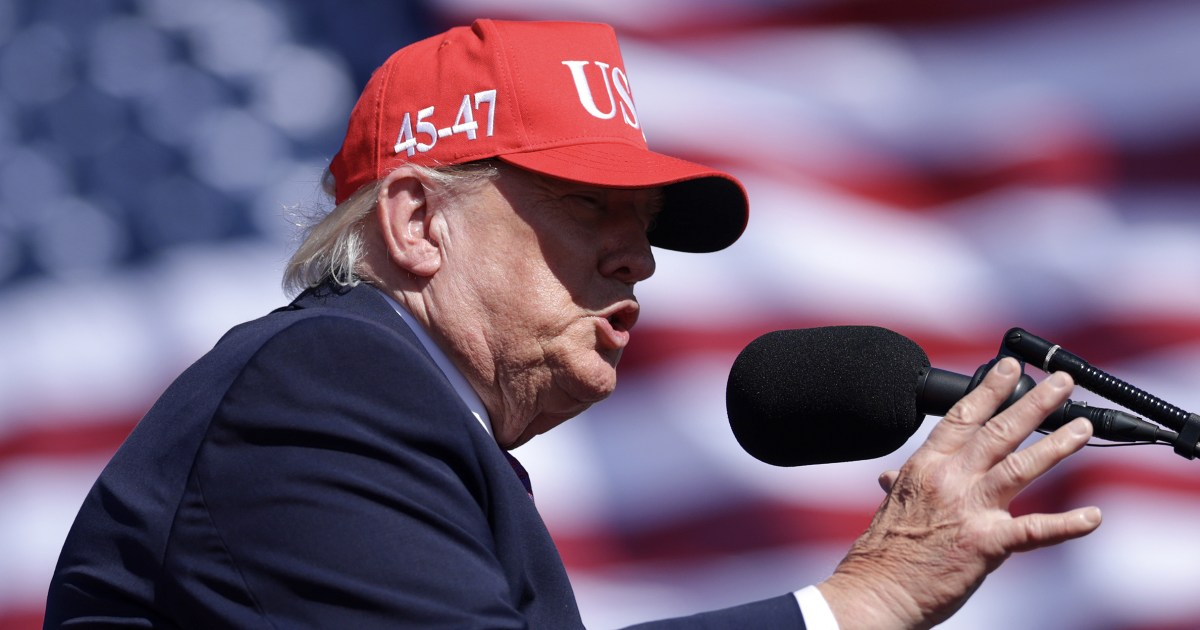
President Donald Trump said at a campaign rally Wednesday that there should be fatal consequences for any government worker who leaks sensitive information to the media.
“Leakers should be, in my opinion, leakers should be shot,” Trump said. “You know, when they leak what time you’re going to attack a country.”
Trump described what he said was a planned raid on Iran that he had to call off after someone “leaked the time we were leaving, the time we were arriving.” He appeared to be referring to the U.S. military strike on Iran nuclear facilities in June 2025, which still went ahead.
00:29
Trump says leakers ‘should be shot’
00:0000:00
“Somebody leaked, some sleazebag. They ought to go to jail or be shot. For the rest of their life, they should be in jail, but they leaked that we were leaving at 12:07 from Missouri, and it was in The New York Times, CNN.”
“Now, the leakers should be dealt with very, very strongly. They’re real. To me, they’re the scum of the Earth,” he said.
Trump, who has called the news media the “true Enemy of the People,” then pointed to the journalists covering his rally in Bullhead City, Arizona, and compared them to leakers.
“Those same people up there, they’re almost as bad as a leaker, because they leak,” Trump said. “Oh, they leak false information. That makes them a leaker, right?”
Since Trump returned to office, his administration has sought to crack down on information leaked to the media, including proposing to direct federal agencies to have “new and existing employees” sign nondisclosure agreements.
Federal investigators subjected about 50 members of the U.S. military’s Joint Staff to polygraph tests, pressing them about whether they had shared classified information with journalists, the Times reported last month, citing officials briefed on the move.
In January, Trump authorized a search of the home of Washington Post reporter Hannah Natanson as part of an investigation into a government contractor who was accused of illegally retaining classified materials. A federal magistrate judge ruled a month later that the administration could not examine the data that FBI agents had seized there. The administration appealed the ruling, but it was upheld by a district court judge. There have been no further appeals.
In June, the administration tried to compel testimony from four journalists, three from the Post and one from The Wall Street Journal, before a grand jury, an official familiar with the matter told NBC News at the time. The administration dropped the subpoenas after newspapers pushed back.