
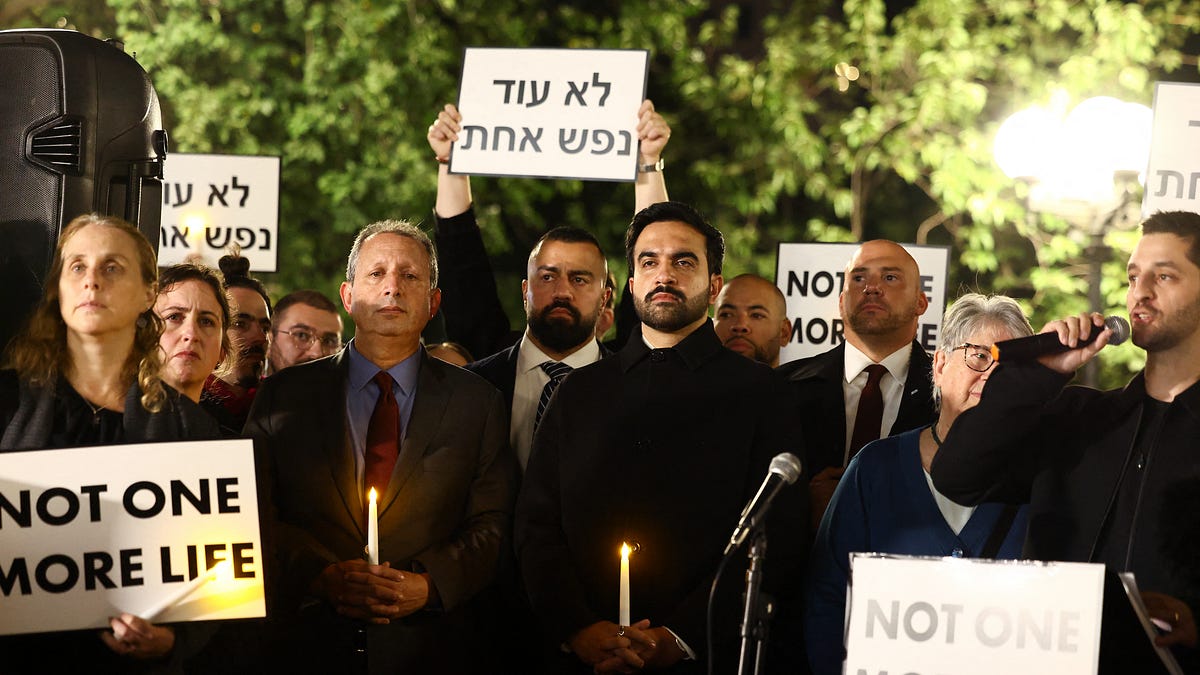
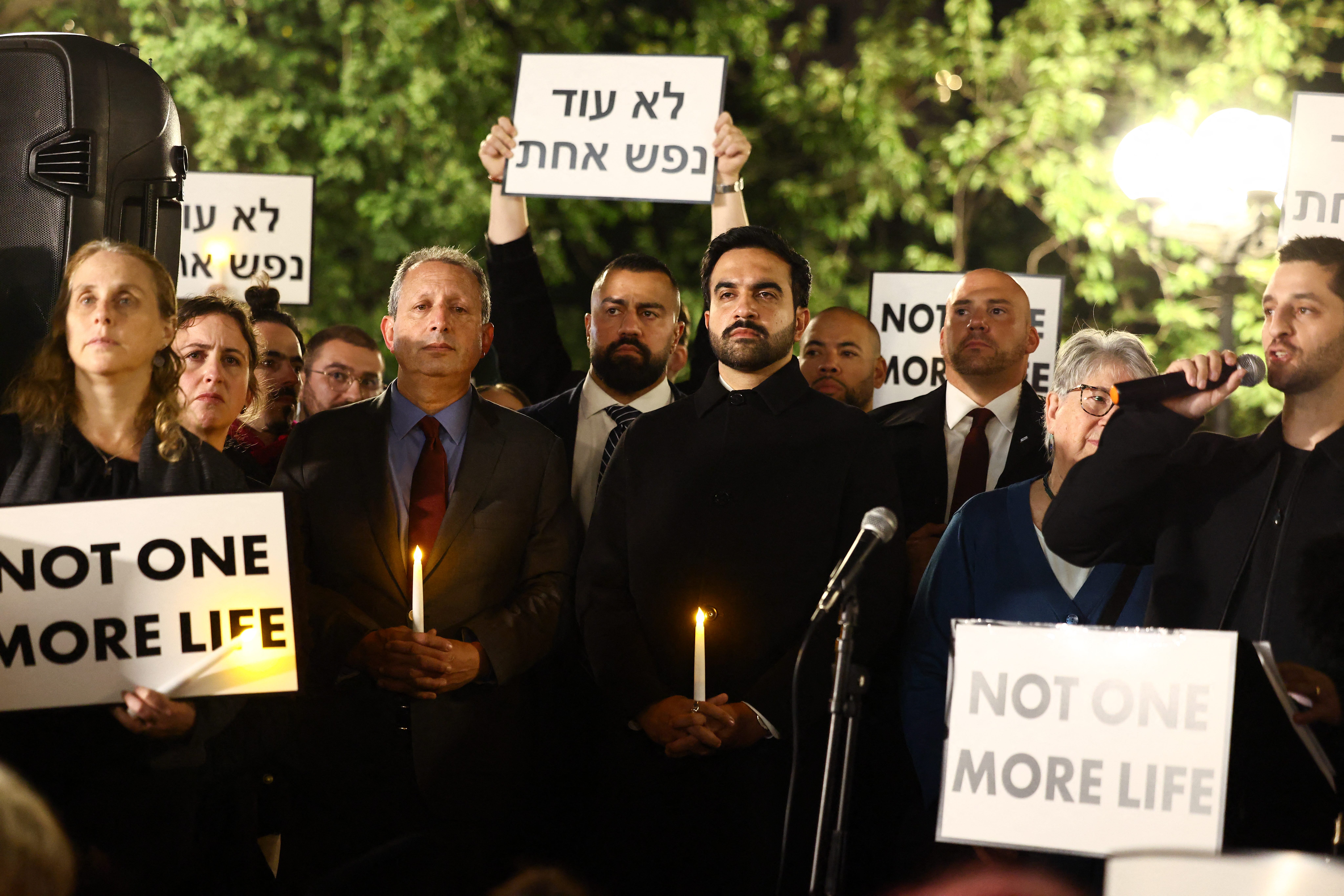
 New York City Mayor Zohran Mamdani attends an anti-war vigil in Manhattan on October 7, 2026, where he faced protests from pro-Palestinian activists. (Photo by Charly Triballeau/AFP via Getty Images)
After you’ve read today’s post, I hope you’ll check out the latest episode of “The Argument” podcast, where Jerusalem and I debate which historical figures deserve to be canceled — and which deserve a comeback. Paid subscribers can watch or listen ad free and read the transcript and show notes here. Free subscribers can watch the episode on YouTube here or listen wherever you get your podcasts.
Subscribe: Apple Podcasts | Spotify | YouTube | Overcast | Pocket Casts
Zohran Mamdani, as mayor of New York City, is not really a key actor in the Israeli-Palestinian conflict.
Conversely, handling the Israeli-Palestinian conflict is not very high up on the list of things within his area of responsibility. But he is central to the symbolic politics of Israel within the United States of America because he’s both a vocal and uncompromising anti-Zionist and mayor of the city that has long been the center of Jewish-American political, economic, and cultural power.
So I’m not particularly surprised that Mamdani found himself heckled by anti-Israel protestors who shouted “We charge you with genocide” when he attended an October 7 vigil. This happened in part because the global Palestinian activist movement is full of people with extreme views. But the specific thing they’re asking for here — a new police commissioner and a disbanding of the N.Y.P.D. unit that does crowd control at protests — is not per se extreme. It just seems tangential to the Israeli-Palestinian conflict.
These activists are picking a nasty fight with a guy who seems to be mostly on their side about something that seems low stakes because of a larger structural theory of organizing and political power, one that is widespread in left activist circles but I think is consistently misunderstood and under-explained in journalistic circles, even by those with deep left-wing sympathies. Mehdi Hasan, for example, whose views on the substance of the conflict are much closer to the protestors’ than they are to mine, is baffled by this.

Mehdi Hasan@mehdirhasan
If you’re protesting and blaming *checks notes* Zohran Mamdani for the Gaza genocide you may, you just may, need to check yourself into a mental health facility.

Chris Sommerfeldt @C_Sommerfeldt
Pro-Palestinian protesters gather outside City Hall to call out Mayor Zohran Mamdani for what they see as his betrayal of the movement.
“Mayor Mamdani, you can’t hide we charge you with genocide” was a chant that just rang out.
3:11 AM · Oct 8, 2026 · 962K Views
1.03K Replies · 2.82K Reposts · 36.5K Likes
Mamdani, after all, is very plainly not personally responsible for Israeli military action in Gaza, so why would you pretend that he is? He’s also not even remotely the pivotal actor in American foreign policy. Why would you protest the mayor of New York City when he agrees with you rather than the foreign policy officials who don’t? One possible explanation is that the protestors are dumb and don’t understand that their theory of blame attribution doesn’t make sense.
Mehdi Hasan@mehdirhasan
The dumbest people in the world

Peter Sterne @petersterne
Mamdani is stone-faced as the protesters call him a traitor and sellout.
4:22 PM · Oct 8, 2026 · 622K Views
1.2K Replies · 832 Reposts · 15.9K Likes
I agree with Hasan that this approach of targeting Mamdani is not a good way to do politics. But dismissing it as “dumb” is a mistake.
The activists are deploying a playbook that left-wing activists use across different issue areas in a way that connects pretty deeply to their overall view about how politics works. They’re aware that there is no short-term pathway to transform American policy toward Israel, but they don’t want to just tell everyone to go home for two years and worry about it then. So they’re picking some short-term political fights over the way the N.Y.P.D. handles protests and the identity of the police commissioner, demanding that Mamdani fire Jessica Tisch and replace her with some unknown alternative.
The fact that Mamdani is so well-regarded by so many progressives that many outside of activist circles are inclined to see this move as irrational is, I think, a teachable moment and worth a conversation about whether the broader arc of left-wing activist strategy makes sense.
The underlying ideas in play here have nothing to do with the particulars of Palestine, New York City, or Mamdani and instead relate to a broader theory of political organizing.