
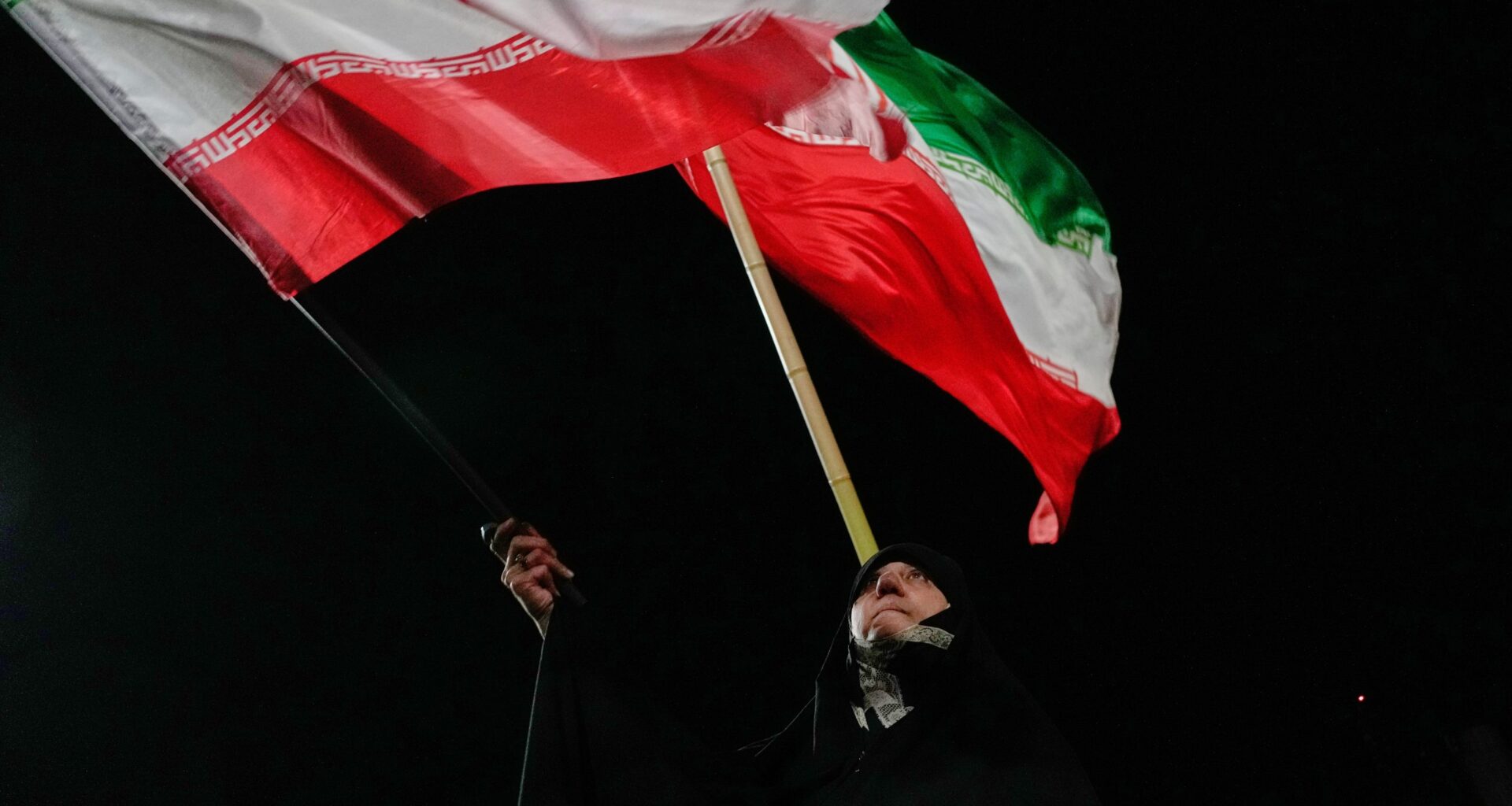
(AP Photo/Vahid Salemi)
Bottom Line up Front
Common interests in weakening U.S. geostrategic dominance are driving Russia and China to provide crucial assistance to Iran’s wartime defense effort.
Both Moscow and Beijing are calibrating their help for Iran to avoid damaging their multifaceted relations with Washington and with the Arab Gulf states.
President Trump’s agreement with Russia to put more diesel fuel on global markets reflects the extent to which the Iran and Ukraine wars are intersecting.
Russian supplies of advanced missile technology to Iran will increase the potential for Iran, as well as its allies — such as the Houthi movement in Yemen — to strike U.S. warships and other key targets.
From the Iran war’s inception, great power competition among the U.S., Russia, and the People’s Republic of China (PRC) has loomed large as an inevitable — and potentially decisive — ingredient. Both Russia and China possess extensive reservoirs of military technology which, when provided to Iran in even modest amounts, have complicated U.S. military operations and increased U.S. and allied losses. Both great powers view Iran as a partner in undermining what they see as U.S. global hegemony, and both benefit from Iran’s ability to frustrate U.S. efforts to conclude the Iran war on acceptable terms. Iran, in turn, is potentially able to retransfer advanced Russian and Chinese technology to its partner, the Houthi-led Ansarallah movement in Yemen, thereby increasing the Houthis’ capability to devastate Saudi infrastructure.
Russian President Vladimir Putin and Chinese President Xi Jinping derive geostrategic benefits from helping Iran’s defense effort. Putin assesses that he can trade his assistance to Iran for an easing of U.S. sanctions and a reduction of U.S. military support for Ukraine. Russian support for Iran repays Tehran for its sales to Russia of Shahed armed drones at crucial points in the Ukraine war. Russia now manufactures that and other Iran-designed drones domestically, helping it reduce the drone technology gap between Moscow and Kyiv. China’s aid to Iran has given Beijing bargaining leverage to achieve limitations on Washington’s supply of arms to Taiwan.
Both great powers claim their support for Iran is based on legitimate bilateral agreements. Last year, Moscow and Tehran signed a “comprehensive strategic partnership treaty” that expanded earlier accords covering trade, military cooperation, science and culture, and education. The pact built on their extensive but ultimately unsuccessful cooperation during 2011-2024 to help President Bashar al-Assad retain power in Syria. In 2021, China and Iran signed a 25-year “Cooperation Program,” focused on economic and energy relations, and less so on security issues.
Yet, both great powers have adjusted their approach toward Iran in light of the potential to interfere with other goals that require U.S. cooperation, or at least passivity. Putin, in particular, accepts that assisting Iran’s war effort runs the risk of derailing his effort to obtain relief from U.S. sanctions or support for its settlement terms in the Ukraine war. The U.S.-Russia agreement last week under which the U.S. will ease sanctions to permit Russia’s release of additional supplies of diesel fuel — an effort by Washington to ease spiking prices for the fuel — underscores the degree to which the Ukraine and Iran wars are intersecting. On Monday, U.S. President Donald Trump publicly recognized the dilemma Russia and China face, telling journalists that Moscow and Beijing had “too much to lose” if they enabled Tehran. Trump added, apparently seeking to minimize the great power dimension of the Iran war: “If they are [providing materiel support to Iran], it’s at a very low level, but I ?don’t believe they are at all. They have too much to lose, and we ?would know about it, and know about it very fast.” Russia and China also seek to avoid jeopardizing their extensive economic and, to a lesser degree, security cooperation with the Arab Gulf states, all of which are U.S. allies.
Iran is claiming strategic gains from the Russian and Chinese assistance. Iranian officials have long downplayed the significance of their military ties with Russia or denied their existence. But in recent weeks, as the prospects for a diplomatic solution to the war have receded, outlets linked to the Islamic Revolutionary Guard Corps (IRGC) have openly acknowledged the Russian help. Iranian leaders are advertising the help as evidence that Iran is not isolated and has powerful allies, contrary to U.S. official assertions. Iranian officials have also pointed to political support from China, which has condemned the U.S. decision to launch the war. Iran has used the U.S. blockade of Iranian ports to fuel tensions between Beijing and Washington, arguing the quarantine is restricting China’s oil supplies and raising the prices it pays for the commodity. China was buying almost all of Iran’s crude exports prior to the war.
Publicly, leaders in Russia and China have downplayed not only their military but also their political support for Iran. Both great powers have, in recent weeks, advertised themselves as credible potential mediators to end the Iran war, claiming they can use their significant leverage with Iran to secure concessions on key U.S. demands. At a September summit of the BRICS bloc of Global South powers in New Delhi, President Xi urged the assembled leaders to act as peacemakers in the Middle East conflict, and said China was willing to work with them towards that goal. He reiterated that offer during his summit meetings with President Trump in Washington later in the month. However, no concrete Chinese mediation effort has been announced to date. Not content to cede diplomatic ground to Beijing, Putin, meeting with Iranian President Masoud Pezeshkian on the sidelines of the Commonwealth of Independent States summit in Turkmenistan last week, offered to do “everything” Russia could to help resolve the conflict diplomatically. According to Russian media, Putin added that Iran was making “real efforts” to end the conflict, arguing that the outbreak of the war was not the “fault” of Iran.
Amid broad agreement on the geostrategic considerations of Russia and China, experts are debating the practical effects of Russian and Chinese assistance to Tehran. Some argue the support is adding enough weight to Tehran’s defense effort that Iran will be able to achieve its strategic goals: to force a U.S. withdrawal from the conflict and deter future attacks on Iran. Others assess the aid as marginal, easily countered by U.S. advantages in military technology, and unlikely to deter the U.S. from exercising any of the escalation options reportedly under consideration by U.S. leaders.
It is clear that, at least in some instances, the Russian and Chinese aid to Iran has added to U.S. losses and potentially complicated the U.S. exercise of future escalatory options. Russia has been cited for providing a wide range of military support to Iran, most notably specific and timely targeting intelligence. Russian assistance has furthered Iran’s ability to strike high-value targets, such as the radar and surveillance installations at U.S.-manned bases in the Arab Gulf states. The help was, according to Nicole Grajewski of Sciences Po, “…instrumental to at least the early stages of [Iran’s] campaign, because it did blind or impair some U.S. capabilities at that time.” CNN traced orbital data to find that Russian spy satellites flew specific trajectories to gather information on the U.S.-manned Prince Sultan Air Base in Saudi Arabia. The satellite intelligence reportedly helped Iran destroy a $500 million AWACS radar platform on the tarmac. Such precision would be “nearly impossible,” CNN quoted experts saying, without the “vital role” of Russian geospatial intelligence.
Last week, Bloomberg News quoted one Western official saying Russia is providing the Islamic Republic with missiles to replenish its stockpile, providing Iran the ability to respond in force if President Trump implements his threat to escalate attacks after the U.S. midterm elections. The Russian Defense Ministry did not respond to a request for comment, according to Bloomberg. According to a Financial Times report last month, since 2023, Russia has shared technology to help Iran develop a supersonic cruise missile capable of “striking U.S. aircraft carriers and other warships.” A successful strike on a U.S. naval vessel is certain to trigger major U.S. escalation, particularly if the attack causes mass U.S. casualties.
China’s military aid to Iran has been perhaps less systematic than that of Russia, but lethal nonetheless. The Wall Street Journal reported that Iran had obtained high-resolution satellite images from Chinese entities before carrying out a July ballistic missile attack on a U.S. base in Jordan that killed three U.S. military personnel. Other reports indicate that, earlier in the war, China resupplied Iran with the chemicals it needs to produce solid fuel for ballistic missile propulsion, although that flow has likely been halted by the U.S. naval blockade. In July, Reuters reported that a Chinese company was set to supply Iran with hundreds of portable anti-air missile systems to help Iran rebuild its air defenses, although U.S. officials reportedly discovered the planned delivery and dissuaded China from completing it. Even past help from China is helping Iran strategically. Sidharth Kaushal of the Royal United Services Institute (RUSI) told journalists last week that Iran’s stockpile of anti-ship cruise missiles (ASCMs) remains large; in part, Iran has in-housed much of the production of older Chinese versions of the weapon supplied many years ago.