
Facebook
Twitter/X
LinkedIn
Pinterest
Reddit
Email
Print
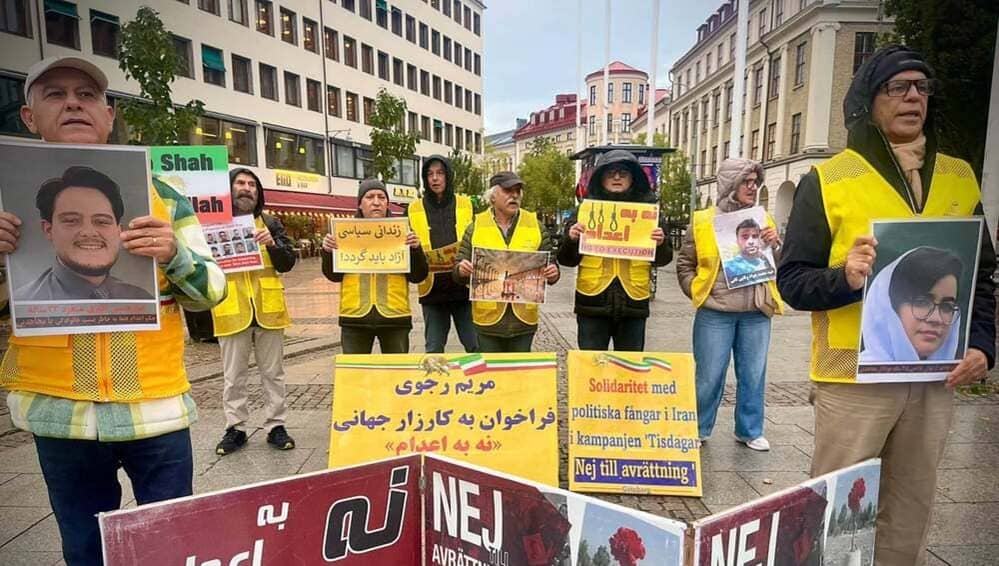 On October 13, 2026, NCRI supporters in Gothenburg, Sweden, held a rally in solidarity with the 142nd consecutive week of the “No to Execution Tuesdays” campaign
THIS PAGE WILL BE UPDATED WITH THE LATEST NEWS
UPDATE: 7:30 AM CEST
Iran: Is Mojtaba Khamenei’s Stature Eroding?
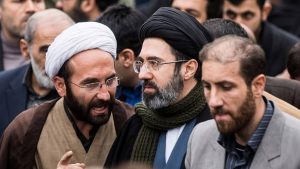
Seven months after Mojtaba Khamenei succeeded his father as the Iranian regime’s supreme leader, a growing contradiction is becoming difficult to conceal. Officials insist he remains in control and retains final authority over major decisions. Yet the political stature traditionally associated with the office is eroding.
Recent remarks by veteran regime insider Mohammad-Reza Bahonar sharpened that question. Bahonar, a former deputy speaker of parliament and current member of the Expediency Council, said Iran’s younger generation no longer wants a political or intellectual authority telling it how to think, adding that “the country does not need a sheikh and savior.” He was not explicitly calling for an end to the supreme leadership. But in a system built around velayat-e faqih—the rule of an all-powerful clerical authority—the language is striking.
A recent analysis by the People’s Mojahedin Organization of Iran (PMOI), also known as the Mujahedin-e Khalq (MEK), argues that Bahonar’s remarks reflect a broader erosion of the culture of unquestioning obedience on which the ruling system depends, particularly among younger Iranians.
When Mothers Manage Hunger: Shrinking Food Budgets for Women and Children in Iran
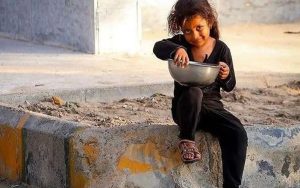
For many countries, World Food Day and the International Day for the Eradication of Poverty serve as reminders of governments’ commitments to ensuring the minimum necessities of life. In contemporary Iran, these occasions do not inspire hope for a better future; rather, they expose the grim reality of 48 years under a ruthless dictatorship—one that has stripped Iranians of their right to self-governance and squandered their wealth to prolong its tyranny.
In Iran, poverty and malnutrition are no longer problems confined to a limited segment of society, such as people living in deprived neighborhoods, the unemployed, workers, or rural communities. As a result of the regime’s destructive policies, teachers and nurses are now living in extreme poverty, while even doctors and engineers struggle to make ends meet with constant anxiety over basic daily expenses.
The soaring costs of food, housing, healthcare, and education have affected a large proportion of the working class, retirees, rural residents, women heads of household, and people holding multiple jobs, pushing much of the middle class into poverty.
Iran’s General Practitioners Earn Just One-Third of the Poverty Line
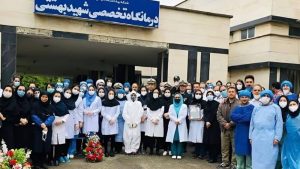
In Iran, where doctors have traditionally belonged to the middle and upper-middle classes, a growing number of general practitioners can no longer make a living from medicine. Some are turning to taxi driving and elderly care to cover their expenses, exposing the mounting financial pressures on the country’s healthcare workforce.
On October 11, the state-run Shargh newspaper published a report titled “From Practicing Medicine to Driving Taxis,” describing how low incomes and rising costs of running medical offices have forced many general practitioners to seek alternative employment.
The figures cited in the report illustrate the scale of the problem. A general practitioner earns approximately 25 million to 30 million tomans a month, while the estimated poverty line for a family stands at around 90 million tomans. Even at the upper end of that salary range, a doctor earns only one-third of the poverty threshold.
At approximately $112 a month, the reported income of a general practitioner in Iran is also strikingly low compared with the figures cited for several neighboring and regional countries.
Friedrich Naumann Foundation’s Iran Award Raises Questions of Democratic Legitimacy
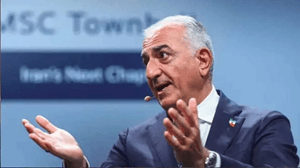
On November 7, 2026, the Friedrich Naumann Foundation is scheduled to present its 2026 Freedom Prize to the people of Iran at Frankfurt’s historic St. Paul’s Church. Yet the foundation has entrusted Reza Pahlavi with receiving the award on their behalf, describing him in its official announcement as the “leader of the opposition.”
This decision raises a fundamental question: who authorized a foreign political foundation to designate an individual as the representative of the Iranian people?
The issue extends beyond a ceremonial award. By selecting a particular political figure to receive a prize intended for an entire nation, the foundation risks lending institutional legitimacy to a political option without any democratic mandate from the people it purports to honor.
St. Paul’s Church holds a special place in German history as the site of the 1848 National Assembly, a landmark in the struggle for constitutional government and political representation. Choosing this venue for a freedom award makes the question of democratic legitimacy especially relevant.
Iran: 12 Ahvazi Arab Citizens Face Execution in Ghaleh Chanan Case
On March 9, 2026, security and intelligence forces of the Islamic Republic launched a large-scale raid in the Ghaleh Chanan district of Ahvaz amid severe telecommunication and internet blackouts.
According to the official Ministry of Intelligence narrative:
5 individuals were killed.
10 individuals were arrested.
However, human rights organizations and families report a higher number of detainees, alongside grave opacity surrounding the identities of those killed and the fate of missing individuals.
Ghaleh Chanan Security Case (2026): The case represents one of the most critical security proceedings against Ahvazi Arab citizens in 2026, following a major security operation on March 9, 2026 [18 Esfand 1404] in the Ghaleh Chanan region of Ahvaz. According to official Ministry of Intelligence statements, the operation resulted in five deaths and multiple arrests.
Capital Charges Against At Least 12 Citizens: Based on human rights reports and local sources, at least 12 Ahvazi Arab citizens face charges including “Moharebeh” (Enmity against God), “Baghi” (Armed Rebellion), charges carrying the death penalty under Iranian law.
Systemic Violations of Due Process: Prolonged detention in security facilities, denial of chosen legal counsel, restricted family access, physical and psychological torture, and forced confessions.
Elevated Risk of Capital Punishment: While final sentences have not been announced at the time of writing, the formal introduction and escalation of capital charges severely heighten the imminent risk of death sentences.
Iran Confirms Deliberate Internet Slowdowns as Officials Cite Security Concerns
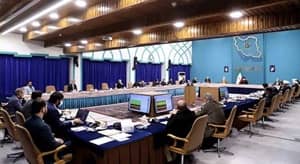
TEHRAN — Iran’s government has confirmed that internet speeds are deliberately reduced at certain times, describing the measure as part of security actions during periods of crisis. The admission comes amid reports of widespread dissatisfaction with internet speed and prices, extensive use of tools to bypass filtering, and disagreements within parts of the governing structure over how the network should be managed.
Fatemeh Mohajerani, the government spokeswoman, said that in view of the country’s security conditions, responsible agencies may reduce internet speeds in order to protect national assets and interests. She said: “It is obvious that the responsible bodies in this field are sometimes forced to reduce internet speeds. We do not deny this in any way; in fact, we openly state that this measure is taken to safeguard the country’s assets and interests.”
The remarks take internet disruptions beyond the level of a purely technical problem and indicate that at least some network restrictions are the result of decisions linked to the security situation.
Gothenburg Rally Supports 142nd Week of “No to Execution Tuesdays” in 66 Prisons Across Iran
Gothenburg, Sweden — October 13, 2026: Supporters of the People’s Mojahedin Organization of Iran (PMOI/MEK) held a rally in solidarity with the 142nd consecutive week of the “No to Execution Tuesdays” campaign, a movement protesting the Iranian regime’s escalating executions and systematic repression.
Participants also highlighted the regime’s intensifying crackdown, the rising number of executions, and broader repressive measures. They chanted slogans such as “Down with the executioner regime” and called for the immediate release of all political prisoners.
Freedom-loving Iranians in Gothenburg expressed support for Mrs. Maryam Rajavi, President-elect of the National Council of Resistance of Iran (NCRI), and her call to expand the “No to Executions” campaign globally.
At the Gothenburg gathering held in solidarity with the “No to Execution Tuesdays” campaign, protesters warned that political prisoners in Iran face an increasingly grave risk of execution amid an escalating wave of repression. They expressed deep concern over the growing number of death sentences against political detainees and protesters, arguing that the Iranian authorities are using executions to silence dissent and spread fear across society. Calling for urgent international action, the demonstrators urged the global community to help prevent further executions and protect the lives of prisoners facing death sentences.
Berlin Sit-In Condemns Executions as UN Rapporteur Joins Anti-Death Penalty Campaign
On October 13, on the 228th day of their protest sit-in outside the mullahs’ regime embassy in Berlin, supporters of the People’s Mojahedin Organization of Iran (PMOI/MEK) condemned the Iranian regime’s executions and demanded the closure of its embassy.
They also expressed solidarity with the 142nd week of the “No to Execution Tuesdays” campaign and praised Gina Romero, the UN Special Rapporteur on the rights to freedom of peaceful assembly and of association, for her humanitarian initiative in joining the campaign against executions in Iran.
Paris Exhibition Highlights Iran’s Human Rights Crisis and Calls for Action Against Executions
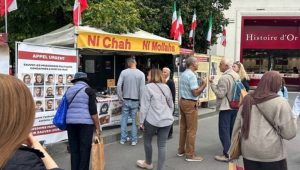
Paris – October 14, 2026 — Supporters of the People’s Mojahedin Organization of Iran (PMOI/MEK) held a book table and photo exhibition in Paris to draw attention to Iran’s worsening human rights crisis and the Iranian regime’s systematic executions of political prisoners and protesters arrested during nationwide uprisings.
Participants urged the French public and the international community to recognize the suffering of the Iranian people and their rejection of dictatorship in both its monarchical and theocratic forms.
Photographs, personal testimonies, and other materials highlighted the courage and sacrifices of those who took part in Iran’s nationwide uprisings. The exhibition also drew attention to the regime’s ongoing human rights violations, including the execution of political prisoners and the continued imprisonment of protesters.
Organizers called on the international community to stand with the Iranian people, take concrete action against executions and rights abuses, and support a free, democratic, and secular future in Iran. They reaffirmed their commitment to political rights, civil liberties, and accountability, stressing the need for a democratic republic in Iran rather than any form of authoritarian rule.