
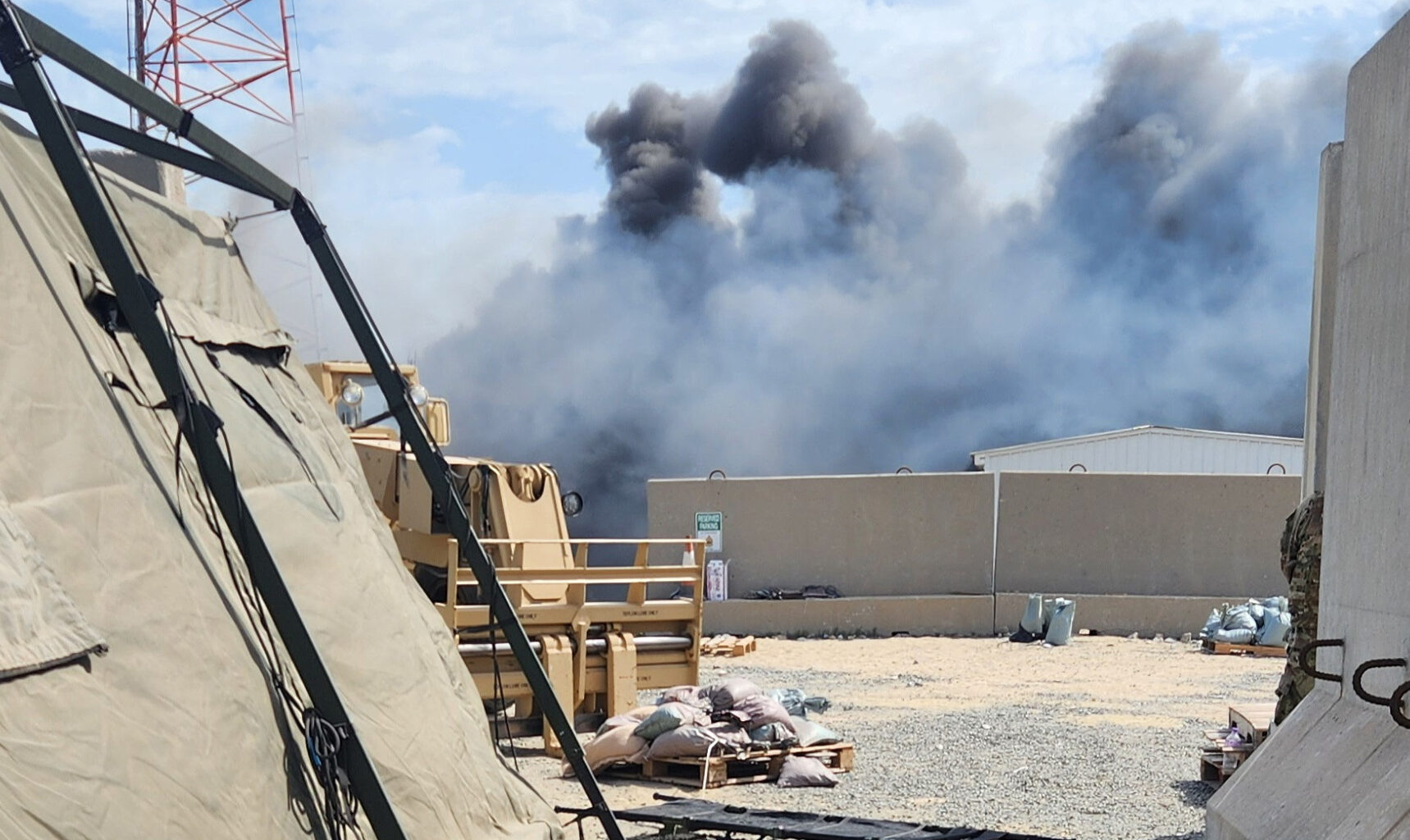
Over the summer, a group of AP journalists wanted to tell distinctive and informative stories about the Iran war and its impact on the U.S. military. They set out to find American soldiers who were injured in the war or had recently returned home from the battlefield. The journalists, Jack Brook in New Orleans, Julie Watson in San Diego and Russ Bynum in Savannah, Ga., found the soldiers and engaged in hours of discussion before 13 of them agreed to share what they had experienced in Port Shuaiba, where an Iranian drone strike on March 1 killed six American soldiers.
Through careful and thorough reporting, the AP team put together the soldiers’ accounts and verified them through records and documents, such as medical reports, combing through the information to detail a complete and compelling narrative of what happened before the attack, how decisions were made, what happened the day of the drone attack and how medical care was provided afterward.
The sensitive nature of the story also required extensive reporting at the Pentagon, where AP reporter Konstantin Toropin worked his sources to provide essential details. As a former service member himself, Toropin offered invaluable insight into military standards and protocols and remained in constant contact with Brook and others to make sure the work captured the nuance of what was such a chaotic situation.
But that was only part of the endeavor. The reporters worked with visual journalists Nick Ingram, Thomas Peipert and freelancer Charlie Niebergall to interview two of the soldiers in Iowa and Colorado on camera for video and photos. They also sought permission and worked with AP photo editors to use exclusive photos that were taken in the immediate aftermath of the attack at the port and during the soldiers’ evacuation and medical treatment.
Throughout the reporting, writing and editing process, the journalists exchanged thousands of messages and spoke over the phone for weeks to ensure the piece was thorough and accurate while working quickly to publish the exclusive reporting. They also worked closely with colleagues in Washington and on the Digital team to put together an engaging presentation of all three stories and two videos that were published on the same day.
Afterward, the soldiers reached out to express appreciation that AP journalists approached the story with care and sensitivity. The piece also got the attention of lawmakers on the Hill, with the top Democrat on the Senate Veterans Affairs Committee posting the story.
Judges were impressed with the attention to detail in the account, exclusive elements and significance of the story in bringing to light views of soldiers who felt their commanders did not take reports of the Iranian threat seriously enough.
For exceptional coverage of the Port Shuaiba drone attack, Brook, Toropin, Watson and Bynum are this week’s Best of AP — First Winner.