
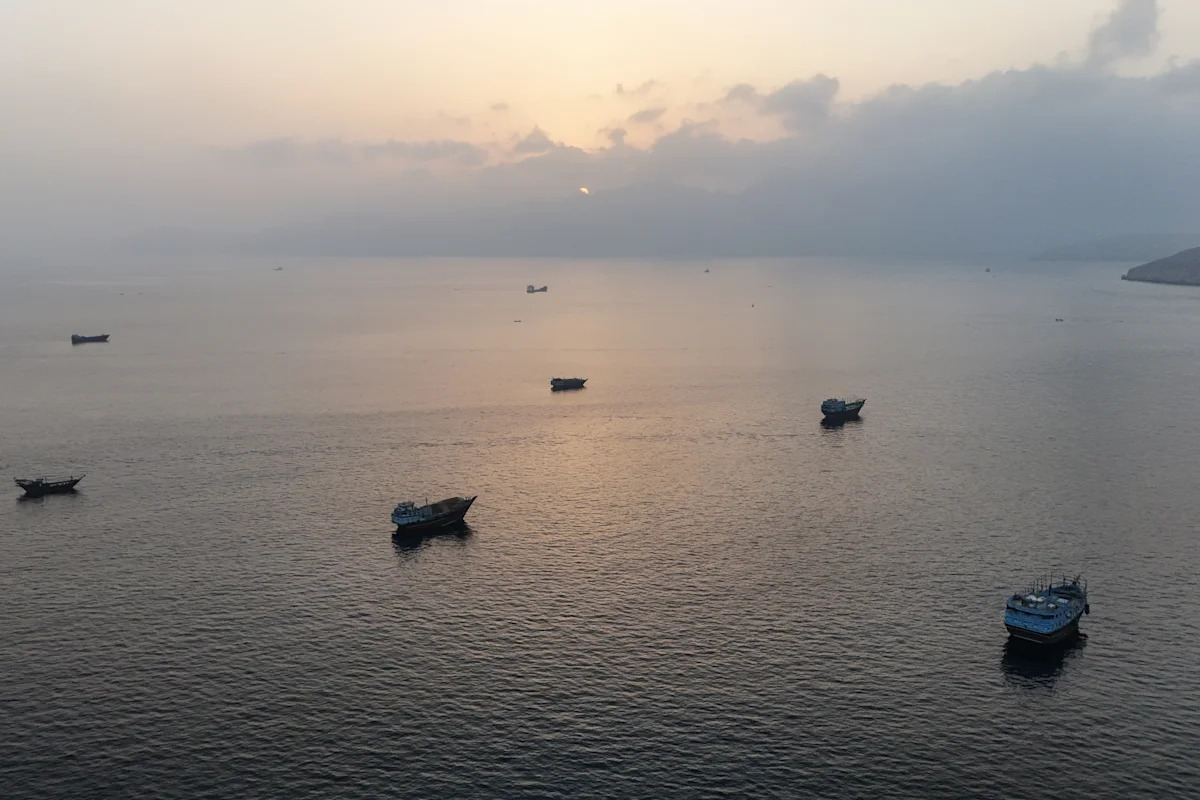
 This aerial photograph shows boats anchored off Oman’s northern Musandam Peninsula near the Strait of Hormuz. Strikes by the US and Iran have raised questions about efforts to keep the crucial waterway open while Washington and Tehran negotiate a final settlement to a war that began on February 28 with US and Israeli strikes on Iran. AFP via Getty Images
Iran has been able to export some fuel despite the U.S.’s blockade over the past months, according to a new report.
Tehran has exported liquefied petroleum gas (LPG) and jet fuel through ship-to-ship transfers off Oman, people familiar with the matter told Reuters.
And even though it’s a fraction of pre-war levels, the report notes that some volume has managed to get through the blockade. At least eight gas tankers carrying LPG made it through the Gulf of Oman since mid-July, and one carrying jet fuel arrived in Myanmar in September.
However, the volume means that the country is not getting nearly enough revenue as it did before Washington imposed the blockade.
In this context, Iranian President Masoud Pezeshkian said the Islamic Regime is facing the most severe crisis since the 1979 revolution.
“Never in the 48 years since the Islamic Revolution have we been under such pressure and faced such difficulties,” Pezeshkian said when talking in a forum in Azerbaijan, of which he took part virtually.
The president went on to say that Attacks against the country infrastructure hit energy facilities and factories, calling for greater coordination to address issues taking place in the country’s different provinces.
The U.S. is applying pressure through sanctions as well. The Department of the Treasury last week imposed more sanctions, saying it was “targeting the remnants of Iran’s shadow fleet: the aging network of tankers the regime relies on to move billions of dollars’ worth of petroleum and petroleum products to foreign markets.”
“Treasury is starving the tyrannical regime in Tehran of the money it uses to wage war in the region, and we will continue exposing those who enable the regime’s oil sales,” Treasury Secretary Scott Bessent said in a statement along with the announcement.
“The vessels involved, registered across more than a dozen jurisdictions and operated by an intricate web of international front companies, underscore the global scale of Iran’s illicit shipping architecture and the sophistication with which the regime attempts to mask its sanctions evasion,” the document added.
The Trump administration has made several announcements of the kind over the past weeks as part of “Operation Economic Outcast,” which seeks to isolate Iran economically. Earlier this month it targeted the country’s automotive and rail industries while targeting foreign companies accused of helping Tehran sustain its industrial base and evade U.S. restrictions.