
Hood, who retired earlier this year after 27 years in the Foreign Service, served as acting assistant secretary of state for Near Eastern affairs, deputy chief of mission in Iraq and Kuwait, and US ambassador to Tunisia. He spoke in a studio interview.
He called the seizure of the US embassy in Tehran in 1979 and the 444-day hostage crisis that followed “the very definition of evil,” adding that the protection of envoys is an ancient principle recognized in Islamic tradition as well.
What followed, he said, was a pattern. In 1983, a suicide bombing at the US Marine barracks in Beirut killed 241 American service members who had been deployed as peacekeepers; US courts have found Iran responsible for the attack, carried out by militants who went on to form Hezbollah. In 1996, the Khobar Towers housing complex in Saudi Arabia was bombed; US investigators blamed Saudi Hezbollah (Hezbollah Al-Hejaz), acting with Iranian support. In 2011, US prosecutors charged an Iranian-American man with plotting, on behalf of the Revolutionary Guards’ Quds Force, to assassinate the Saudi ambassador in Washington. Argentina’s courts have held Iran responsible for the 1994 bombing of a Jewish center in Buenos Aires, and plots have been traced to Iran in Europe and Asia.
None of it, Hood said, has won the Islamic Republic a single endorsement.
“You haven’t seen any other country come out and say, ‘What the Iranian regime is doing is great,’” he said. “There’s no sovereign government anywhere in the world that has made such a declaration.”
‘Handing the economy over’
Successive US administrations from Carter to Obama tried various forms of engagement, Hood said, but repeatedly underestimated Tehran’s refusal to accept normal relations. Even when presidents saw the risks, they often stopped short of decisive action. Jimmy Carter understood the danger before admitting the exiled Shah to the United States for cancer treatment in October 1979, weeks before the embassy was seized. After the Beirut bombing, Ronald Reagan withdrew the Marines and limited the American response largely to sanctions, a choice Hood said emboldened Tehran.
Analysts warned as early as the Obama years, Hood said, that sanctions were “squeezing out the normal middle-class businessmen and women and handing the economy over to a shadowy black-market economy” run by the Revolutionary Guards. That has come true, he said: the Guards grew stronger and the middle class weaker, and that middle class has periodically taken to the streets.
The Islamic Republic drew its own lesson from the fall of the Shah, whose government collapsed after months of protest, Hood said. It keeps using lethal force until protests stop, as it did in 2009, 2019 and January 2026.
Congress favors sanctions because they appear to cost no American lives, Hood said, “but Iranian lives certainly are at stake, especially for the middle class and the poor.”
Money is also fungible. Relief that came with the 2015 nuclear deal, he said, went to regional militias rather than public welfare, with particularly deadly results in Syria. Hood declined to use the name Hezbollah, which means “Party of God” in Arabic, calling the group “Iran’s militia in Lebanon.” “God does not have a political party here on Earth, and certainly not a militia,” he said.
Coalitions, not bilateral deals
A more effective approach, Hood said, would press on the nuclear program and the militia network at the same time, with allies rather than through bilateral arrangements.
Under Obama, near-unanimous support in Congress for sanctions helped bring even Russia and China along on the nuclear file. Without that kind of coalition, he said, constraints stay limited. The bilateral agreements the current administration has made with Saudi Arabia, Syria and others help partners defend themselves, but isolating Tehran needs broader coordination.
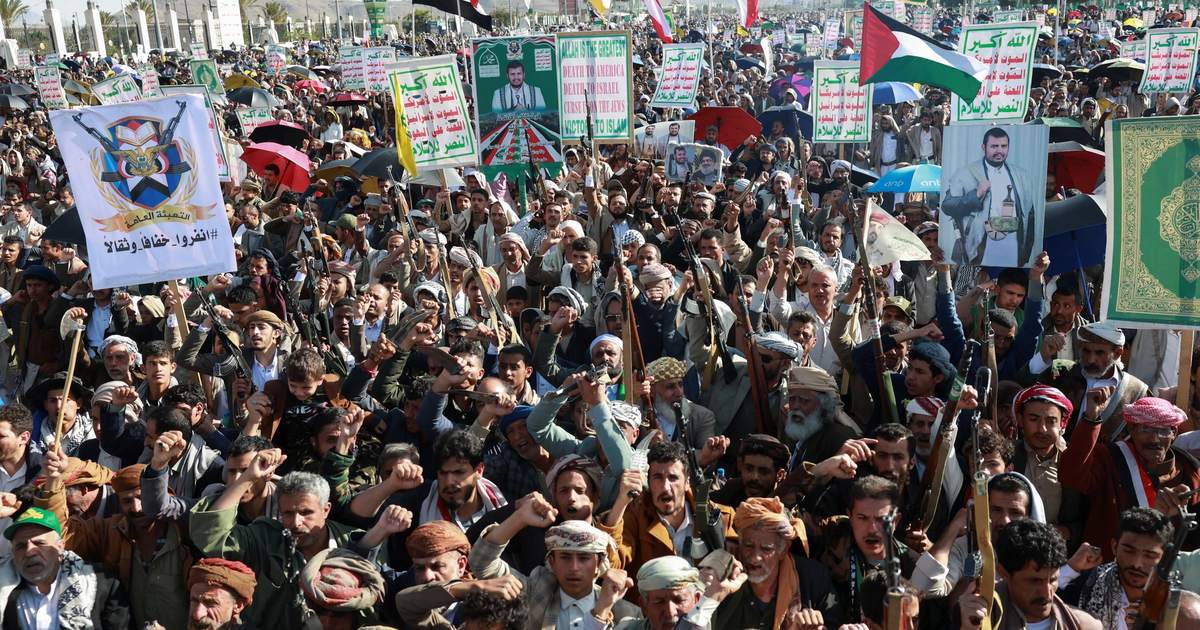
He tied the Houthis’ recent escalation against Saudi Arabia to Tehran’s difficulty moving fuel and running its shadow fleet under US pressure, and said the Yemeni group would pose no comparable threat without Iranian support. With less leverage in the Strait of Hormuz, he said, Tehran and its allies have turned to other targets, among them Saudi Arabia and potentially the Bab el-Mandeb strait or the Suez Canal.
October, ahead of the US midterm elections, is a period of heightened risk, he said, given the Islamic Republic’s record of trying to influence American votes.
‘Answered for in Iran’
The decisive change since the 12-day war in June 2025, Hood said, is that “anything that Iran or its militias do around the world will be answered for in Iran.” Earlier presidents avoided direct confrontation and preferred to fight Tehran’s proxies.
“That’s the big difference now,” he said. “Iranians themselves are having to pay for Iran’s foreign policy for the first time.”
When active military operations end, Hood said, he expects a reckoning between the Islamic Republic and its own people. Without a lasting coalition to constrain it, he said, the confrontation that began in 1979 will go on in new phases, with more attacks on American interests and partners.