
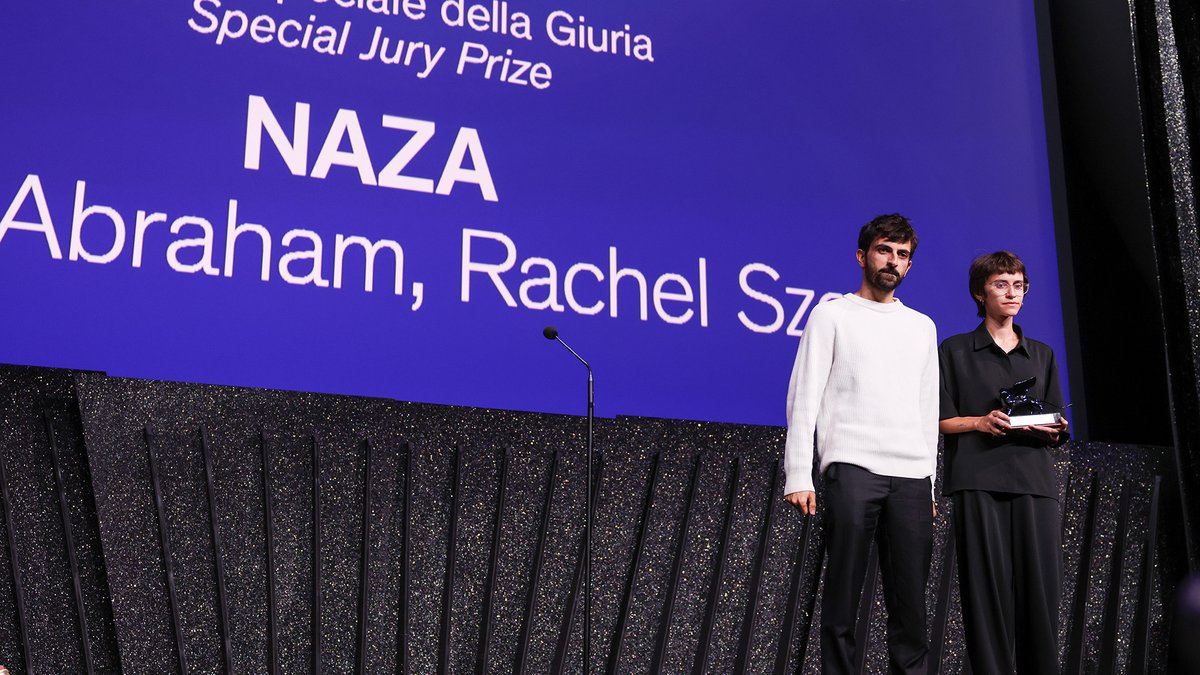
“NAZA” is an Israeli military acronym that roughly translates to “collateral damage.” This term, which Israeli Defense Forces (IDF) intelligence officers use to denote the number of civilians expected to die in an air strike, is also the title of a new documentary by Israeli filmmakers Rachel Szor and Yuval Abraham.
The film, built around interviews with two dozen Israeli soldiers and intelligence officers, explores the IDF’s use of artificial intelligence in targeting systems, resulting in what the film’s international distributor describes as “Israel’s calculated mass killing of Palestinian civilians in Gaza.” It builds on earlier investigations by other media outlets like +972 Magazine and Local Call, as well as The Guardian, which produced the film.
The IDF, unsurprisingly, denies the allegations made in the film, insisting it does not target civilians. The Gaza Health Ministry reports more than 75,000 Palestinian casualties since the Hamas-led attack on October 7, 2023. Of this total, more than 80 percent were civilians, including at least 21,000 children. Also included in the death toll are an estimated 270 journalists and media workers.
Following NAZA’s premier at the Venice International Film Festival on September 10, the film’s directors have been subjected to harassment from the administration of Israeli Prime Minister Benjamin Netanyahu. Israel’s culture minister, Miki Zohar, has both called for Szor and Abraham to have their Israeli citizenship revoked and accused them of treason. Netanyahu has denounced the film as antisemitic and threatened defamation charges against Szor and Abraham.
The filmmakers have come under criticism from all sides. On the left, some Palestinians and their advocates have called the film a “grift” off the spectacle of genocide. And rightwing protestors, following incitement from some in the government, have called for violence against the filmmakers and targeted Szor’s family home. Many see the Netanyahu administration’s menacing response to NAZA as part of a broader attempt to control the narrative of the genocide in Gaza, even before the events on October 7, 2023.
In response to these threats, human rights and press freedom organizations, as well as many members of the film community, have rallied in solidarity with Szor and Abraham.
“Anytime you see leaders of a country using the machinery of the state to settle their perceived score with members of the media or documentary filmmakers, alarm bells really rise on my end,” Jennifer Nelson, a legal director with Reporters Committee for Freedom of the Press, tells The Progressive. “It is a really significant problem. Leaders know that their words travel, so calling reporters ‘enemies of the people’ or ‘traitors’ will inevitably put those people in real danger.”
Echoing the film’s themes of collateral damage, Sara Qudah, the Middle East and North Africa regional director for the Committee to Protect Journalists, warned that the Netanyahu administration’s actions amount to intimidation of more than just Abraham and Szor.
“When senior officials publicly threaten journalists with legal action or other forms of retaliation, the message is heard not only by the journalists being targeted, but by every journalist watching,” she says via email. “It can make reporters think twice before investigating powerful institutions or publishing information that those institutions would prefer to remain undisclosed.”
Clayton Weimers, North American director for Reporters Without Borders, sees the blowback against Szor and Abraham as part of a broader escalation of attacks on a free and independent press worldwide, including in the United States. “We have an administration that has been waging an all-out war on freedom of the press,” he tells The Progressive. “Anywhere you look, you can see signs of it, whether it is the President kicking news outlets out of the White House and off of Air Force One, whether it’s his spurious lawsuits against other news organizations or his weaponization of the FCC to go after the broadcasters he doesn’t like.”
“This is the playbook of every populist leader,” adds Anat Saragusti, press freedom director at the Union of Journalists in Israel. “The same thing happened in Hungary, Poland, India, Brazil. Many places have suffered from the same kind of attitude.” That said, Saragusti does not believe the Israeli government will succeed in revoking the citizenship of Szor and Abraham.
“This is bullshit,” Saragusti says in an interview. “[Israel] cannot revoke their citizenship unless they change the law, which is not on the table now by any means. But they can threaten, and, in that way, they feed the mob, they feed the hatred against [the filmmakers], and they feed defining them as people who are engaged in treason and things like that. It has more of an intimidating character than something that can be executed practically.”
In light of upcoming elections both in Israel and the United States, Nelson of the Reporters Committee for Freedom of the Press stresses that without a free and independent press, there is no such thing as democracy.
“Any time you see reactions like this, where you see the government weaponizing and pulling levers of power in order to stifle journalism, it’s a threat to everyday people all around the world,” she says. “It makes it less likely that informed journalism will reach the public, and that is a significant problem to any functioning democracy.”
Szor and Abraham are no strangers to controversy, having previously co-directed No Other Land with Palestinian directors Basel Adra and Hamdan Ballal. The Oscar-winning 2024 documentary depicts settler violence in occupied Palestine and the IDF’s complicity with destruction and erasure in the West Bank region of Masafer Yatta.
In the midst of rightwing and authoritarian threats, Szor and Abraham have also been criticized by Palestinians and advocates of Palestinian liberation. “This is colonial grift,” Dr. Ghassan Abu Sitta has remarked, a British-Palestinian reconstructive surgeon who has worked in Gaza hospitals during the genocide. “You make money from the slaughter and you make money from the spectacle of [contrition]. In both cases you eliminate the victim.”
Unable to find a U.S. distributor for No Other Land, The Guardian and independent studio mk2 Films opted instead to self-distribute NAZA. Following an exclusive engagement at the IFC Center in New York, the film is being rolled out to cities across the country. The Guardian has also announced plans to stream the film for free on its website beginning in late November.