

(Getty Images)
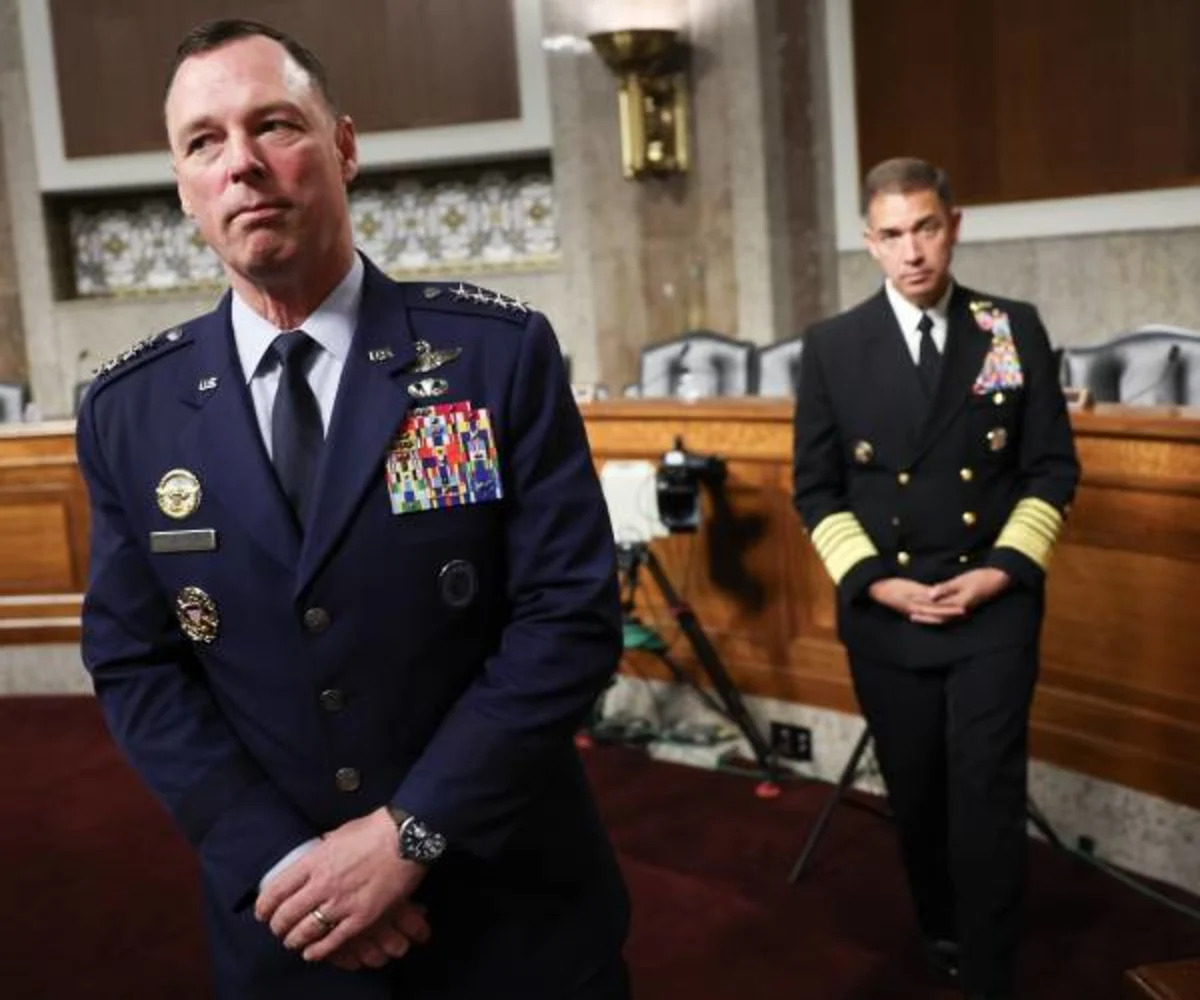
The top U.S. commander in the Middle East said Friday that Iran-backed militias are reportedly holding back fighters’ pay to funnel cash to Iran’s struggling Islamic Revolutionary Guard Corps, as a U.S. naval blockade chokes Tehran’s oil revenue.
Adm. Brad Cooper, who leads U.S. Central Command, made the claim in a video message Axios cited.
He said the IRGC, Iran’s military force, has bankrolled groups including Hezbollah, Hamas, and Shiite militias in Iraq for years.
Those groups, he said, are now “withholding payments for their soldiers in order to funnel money back to the IRGC.” Cooper attributed the account to reports and said the IRGC itself is not paying its troops.
The squeeze reaches deep into Iran’s government. Cooper said Tehran is withholding salaries, pensions, and benefits from public-sector workers, including internal security forces. Apart from humanitarian aid, he said, Iran can neither export nor import by sea.
“So far, we’ve prevented Iran from exporting at least $25 billion worth of crude oil,” he said, adding that CENTCOM helped freeze nearly $350 million in Iranian cryptocurrency.
Cooper tied a sharp rise in Iranian attacks on ships to IRGC desperation. But he said the Strait of Hormuz, the shipping lane at the mouth of the Persian Gulf, remains open, with about 400 ships carrying 100 million barrels of crude transiting in the past week.
The waterway, he said, is “controlled by the United States and our regional partners, not Iran.”
Iran effectively closed the strait after the United States and Israel attacked Iran on Feb. 28, The Times of Israel reported. Cooper said Iranian strikes on commercial shipping have since killed more than 20 civilian mariners.
CENTCOM has nearly stopped hitting Iranian anti-ship missile and drone launchers near the strait after the White House ordered a pause to avoid escalation before the midterm elections, Axios reported.
A U.S. official said the pause has made Iran more confident in launching attacks. Meanwhile, the military is preparing for a possible resumption of major combat.
No deal has been reached. As of Friday, the White House and Qatari mediators were awaiting Iran’s response to a U.S. counterproposal to end the war.
Regional mediators reportedly urged Iranian Foreign Minister Abbas Araghchi not to wait until after the midterms, warning that President Donald Trump could turn more aggressive.
Iranian President Masoud Pezeshkian said Friday that Tehran has always been ready for dialogue but that “we will not bow to coercion,” calling U.S. sanctions unjustifiable and inhumane.
© 2026 Newsmax. All rights reserved.