
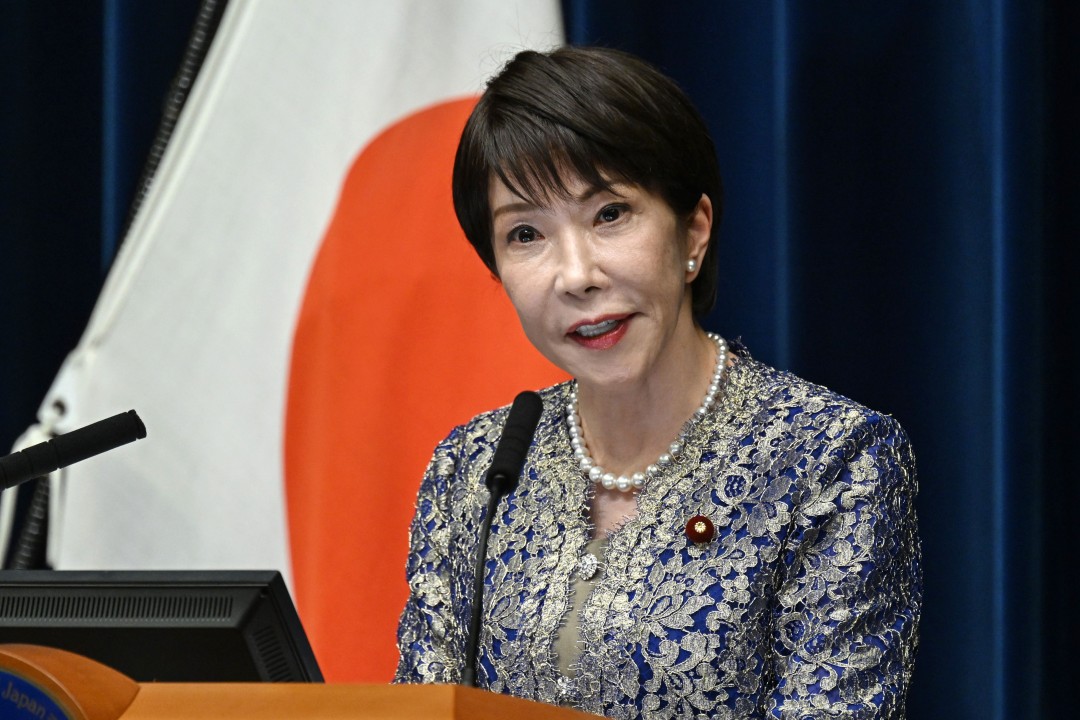
Japanese Prime Minister Sanae Takaichi’s comments about the additional work she has to take on as a woman compared to her male predecessors have sparked a debate about gender roles in the nation and have put her performance in the spotlight. On Wednesday, Takaichi said she works longer hours than her male predecessors because she needs to fulfill requirements for women, such as household chores and applying makeup, per the AP. “In the morning, I take a bath, fix breakfast, and do the dishes, then apply makeup,” Takaichi told a parliamentary session on Wednesday. “Doing these things, I feel I’m spending three or four more hours than male prime ministers.”
It took a while for her aides to learn that she needs extra time to fix her makeup and be more presentable before going on camera, Takaichi said. Her emphasis on makeup, bathing, and household chores quickly backfired, however, as she was seen as promoting old-fashioned gender roles and excessive working hours that have long been considered problems in Japan. In a country where gender roles remain rigid and long hours at work are the norm for men, working women are also burdened with house chores and childcare. Women spend nearly five hours doing household chores daily, compared to about 40 minutes spent by an average male, the latest government figures show.
Comments on social media noted that many working women in Japan who raise children or take care of elderly parents face even heavier demands than Takaichi, saying that her comment is a matter of time management and her outdated view on gender equality. Takaichi’s work mantra and her revelation of zero to three hours of sleep, on top of a heavy workload, triggered criticism she was setting the wrong example for work-life balance and gender equality. The PM’s time management was recently broached by Fumitake Fujita, an official of Takaichi’s junior coalition partner, Japan Innovation Party, when he suggested reducing hourslong parliamentary sessions.
A report by think tank NXJI Research proposed introducing cooks and other housekeeping staff at the prime minister’s official residence so the leader can concentrate on official duties and get sufficient sleep. Takaichi said managing her schedule has been difficult, and she routinely brings home a lot of documents. “I do enjoy reading them late at night,” Takaichi said. “Honestly, I feel it is not easy to squeeze out time to sit down and think about the future direction of Japan or have a grand vision.”