
Ballot boxes are closed, and The Tyee has eyes on the ground at ABC Vancouver, the Vancouver Greens, COPE, and OneCity.
Announcements, Events & more from Tyee and select partners
Preventing Youth Homelessness, One Youth at a Time

At Directions Youth Services, support begins with asking what we can learn together.
The race for mayor is expected to be a tight one.
“I’m actually city staff, so this election has been important to me for very obvious reasons,” Tom Gallows, a first-time Vancouver Green Party volunteer, told The Tyee.
“Our livelihood has been threatened by the current council. So it was really important for me to get involved this year and do whatever I can to make some change.”
A Leger poll commissioned by the Vancouver Sun two weeks prior to final voting day found 23 per cent of respondents supported Pete Fry for mayor, compared to 19 per cent who supported Ken Sim. The poll also showed a bruising disapproval rating of 62 per cent for Sim, compared to 32 per cent of respondents who approved of his performance as mayor.
A poll conducted by Canada Pulse Insights for CityNews found an even closer split, with 28 per cent of respondents supporting Fry and 27 per cent picking Sim. That poll also found that respondents were hankering for a change, with 67 per cent saying they wanted a new mayor and 38 per cent supporting Sim’s re-election.
While Fry was seen as the Sim’s strongest mayoral challenger heading into election day, a crowded field of mayoral hopefuls might split the vote more broadly.
No fewer than seven parties — including Fry with the Greens — are running in opposition to Sim and his ABC party. Centrist parties Vancouver Liberals (with Kareem Allam as mayoral candidate), Vote Vancouver (with Rebecca Bligh for mayor), and a new left-wing party called Bright Future (running Muhammad Ahmad for mayor) have been making their case to voters.
While left-wing party COPE and centre-left party OneCity suspended their mayoral campaigns in early September to try to avoid splitting the vote with Fry, they are both still running slates of candidates for council, school board and park board. Both parties entered the election having one incumbent city councillor who was running for re-election: for COPE, councillor Sean Orr and for OneCity, councillor Lucy Maloney.
OneCity shared data with several media outlets a few days before election day showing trends in advance voting day turnout. Vancouver saw record numbers of voters turning out to vote in four advance voting days, and OneCity was able to access the data for individual polling stations in neighbourhoods across the city.
The data provided by OneCity showed that a total of 103,810 voters had cast a ballot by Oct. 13, compared to the 65,127 who voted in advance in 2022.
ABC, easy as one two three?
At the ABC Party, volunteer Bootz Estella told The Tyee said she had knocked on what she estimated was several thousand doors, many of them in Vancouver’s Joyce-Collingwood nieghbourhood.
“I believe they are for the people, and they have proven themselves,” Estella said of ABC. “They were true to what they promised.”
Estella said she’d heard some negative opinions about ABC and Mayor Ken Sim while doorknocking, but she also heard approval of how ABC had delivered on more spending on police and the fire department.
“Hopefully they will be working more on health care and then really clean up the Downtown Eastside.”
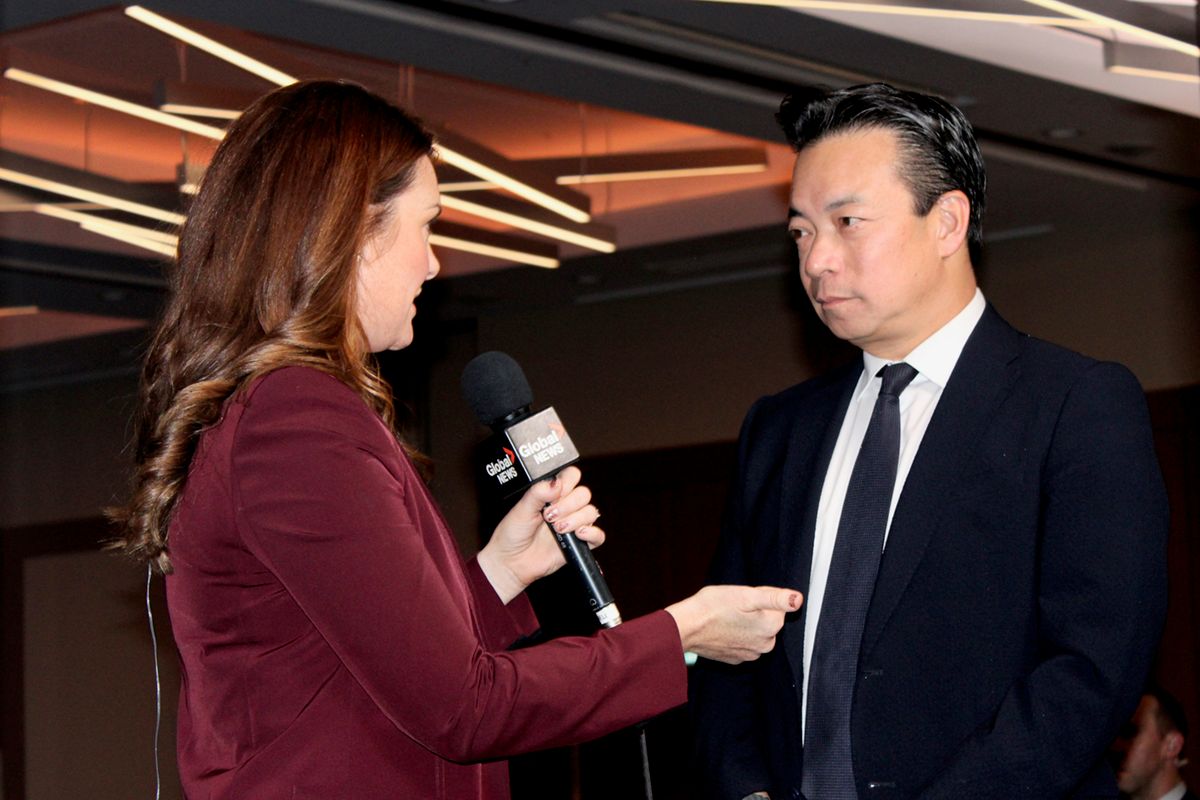
Vancouver mayor Ken Sim speaks with Global News reporter Alissa Thibault on election night, Oct. 17, 2026.
Photo for The Tyee by Jen St. Denis.
Major issues for city council this election included the ABC-dominated council’s record on housing, policing and public safety, property taxes, and its about-face on the Villages Plan, park board dismantling, supportive housing, detailed budgets and following the advice of scientists and health-care providers regarding mental health and substance use supports.
ABC in particular ran on a public safety campaign, focusing on their own record funding of police, while putting a pause on new supportive housing developments — with a few exceptions — and lobbying against the opening of overdose prevention sites planned by the local health authority.
During the campaign, ABC took credit for crime rates falling, but said more work needs to be done to quell “social disorder” on city streets caused by mental health and addiction. ABC councillors opposed Vancouver Coastal Health’s plan to open a new overdose prevention site in Yaletown, and the provincial government announced the plan would no longer go ahead in August.
The party that once dominated not only city hall, but also park board and school board before five elected members left or were kicked out of the party, is now championing involuntary care for people with mental health and substance use issues.
ABC councillors and Sim voted in favour of adding two plebiscite questions to the election, at a cost of $500,000. They claim a “yes” majority would provide the city a mandate to crack down harder on public illicit drug use, and push the province to open involuntary care at the St. Pauls’ hospital site in the city’s densely populated West End residential neighbourhood.
Most of the parties running in opposition to Sim were in favour of lifting the ban on new supportive housing, and all were opposed to the plebiscite.
Where the grass is Greener
Despite his initial reluctance to run for mayor, two-term Vancouver Green councillor Pete Fry told The Tyee earlier this year he believed he was best suited to beat incumbent mayor Ken Sim.
“I owe it to the city to make the move and go for mayor, and so far, as the polling suggests, I am positioned reasonably well to pull it off,” Fry told The Tyee at the time.
The Vancouver Greens ran Annette Reilly, Camil Dumont, Bridget Burns, and Stephanie Smith for city council; Tom Digby, Spencer van Vloten, and Breanne Smart for park board; and Alisha Masongsong and Julie Strilesky for school board.
Janet Fraser, a Green school board trustee this term with four elections under her belt, said having Fry in the mayoral candidate seat has changed the feeling of the election.
“There’s a different heft to the campaign,” Fraser, who did not seek re-election this year, said. The energy and emotion has been positive, she said.
Fry and the Greens invested heavily in their social media presence this campaign, signalling that they have been appealing to a younger voting demographic.
The Greens ran on creating a new affordable housing czar, re-establishing the renters office and strengthening protections for tenants, while using city land to develop affordable non-profit and co-op housing.
For the park board, the Greens pledged to renew the Hastings, Kensington and Renfrew community centres, including a new 50m pool located at either Hastings or Kensington.
For the school board, campaign pledges included focusing on improving facilities’ physical accessibility, advocating for more education ministry funding, and reviewing all school district partnerships with the Vancouver Police Department.
Critics pointed to Fry’s council voting record, which included a high number of abstentions, considered a “yes” vote under the Vancouver Charter. Those abstentions contributed to Fry’s 87 per cent alignment with ABC councillors on 23 council votes since April 2025.
“I think the criticism is misdirected,” said Gallows.
“He understands what moves the gears at city hall. So on the surface it may seem like he’s voting with ABC, but it’s obviously not the case. He’s clearly against a lot of the ABC policies, and I stand with his policies.”
Will COPE ‘Evict Ken Sim’?
The Coalition of Progressive Electors, or COPE, came into the election with a goal: ensuring Ken Sim is not re-elected as mayor.
The party made pins, shirts and signs with the slogan “Evict Ken Sim” in the weeks leading up to voting day.
One of the party’s most recognizable voices is incumbent councillor Sean Orr, who helped bring the party back into the spotlight following a disappointing showing in 2022, when the party only managed to elect Suzie Mah to the school board.
Orr was elected to council in a by-election in April 2025.
Since then, he has clashed with Sim and ABC Vancouver. He sued Sim for defamation after the mayor falsely accused Orr of distributing drugs on Christmas Day.
Sim has since apologized to Orr. But that didn’t stop COPE from carrying an anti-ABC platform into the campaign. The party’s campaign slogan seemed to get under the incumbent’s skin — one of ABC’s election ads featured Sim staring sadly at an “Evict Ken Sim” button while a voiceover talked about how his family faced evictions when he was a child.
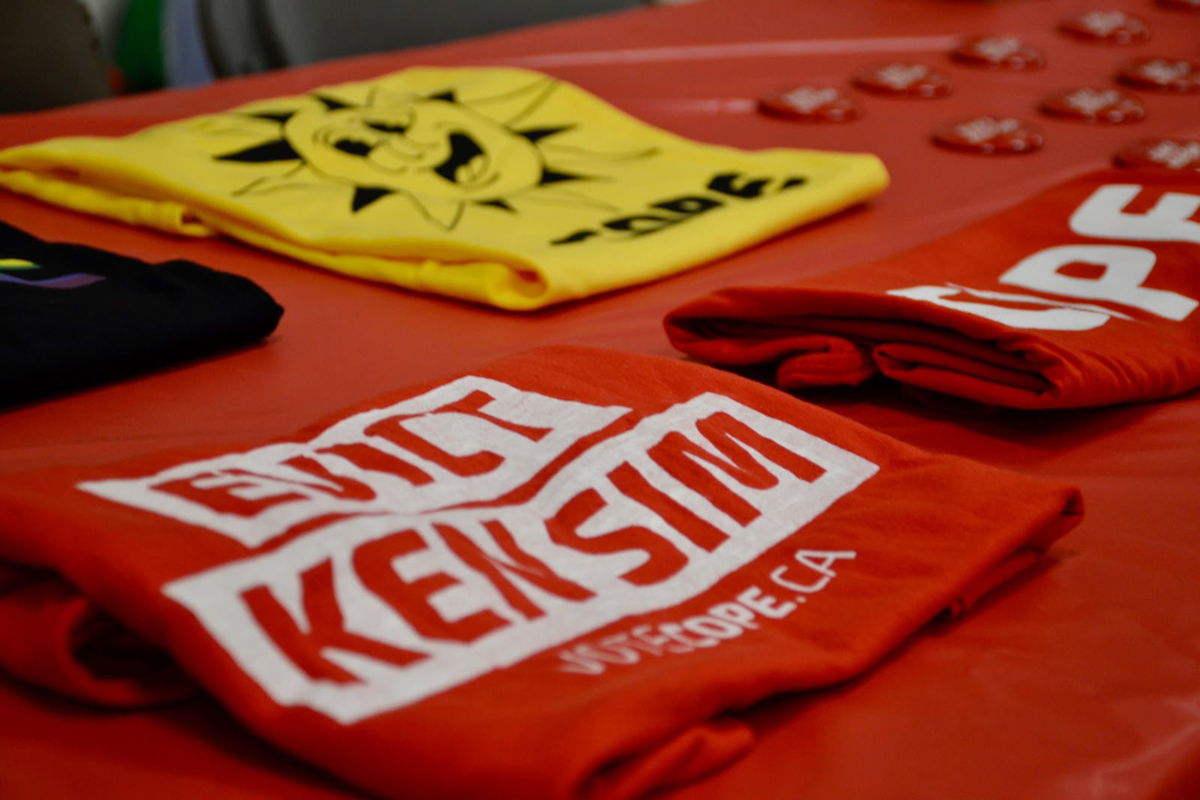
COPE made pins, shirts and signs with the slogan ‘Evict Ken Sim’ in the weeks leading up to voting day.
Photo for The Tyee by Josh Kozelj.
A second ABC ad attacked Orr for previously posting offensive social media posts, and linked Orr to Green Party mayoral candidate Pete Fry.
Their platform also focused on reversing some of the decisions made during Sim’s tenure.
Dubbed ‘The People’s Audit,’ the measures included increasing the empty homes tax to nine per cent, reviewing AI data use policies and finding out “why major decisions against public interest were made at the city,” among other promises.
COPE is running four candidates each for council, school board and park board this campaign.
All quiet at the One City party
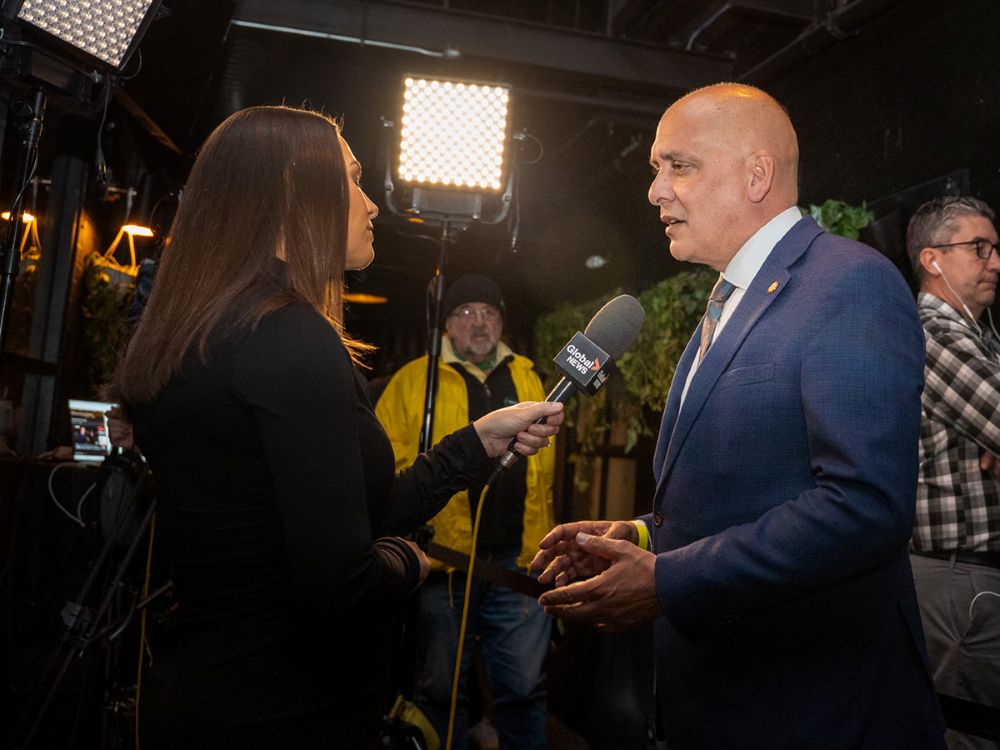
At eight o’clock at the OneCity election party hosted at The Pleasant, a handful of volunteers and supporters were floating through the near-empty room, waiting for candidates to arrive.
The centre-left OneCity achieved its first electoral breakthrough in 2018 when Christine Boyle won a council seat. When Boyle later left council to run successfully for a provincial seat with the NDP, Lucy Maloney successfully won a council seat with OneCity in a 2025 byelection.
Maloney ran for re-election along with Iona Bonamis, Frances Bula, Jarrett Hagglund, and Caitlin Stockwell. The party also had five candidates running for school board, and three for park board.
Hagglund, who spent the last day on the campaign trail door knocking, told The Tyee he felt “cautiously optimistic.”
“We’ve been knocking on doors all day, and it’s a lot of opening the door, ‘I voted for you, I voted for OneCity,’” Hagglund said. “The energy has been really great.”
OneCity ran on a platform that promised safer streets, acquiring affordable rental buildings, as well as an economic plan that promised to invest in Vancouver businesses, including legalizing corner stores.
Dominic Denefio, who ran for park board with OneCity, said that the biggest challenge he foresees facing if elected is navigating funding for park facilities.
“We haven’t seen the funding for our facilities or expansion or growth,” he said. “And the people notice.” ![[Tyee]](https://www.newsbeep.com/wp-content/uploads/2026/10/1792300213_302_yellowblob.png)