

Listen to this article
Estimated 4 minutes
The audio version of this article is generated by AI-based technology. Mispronunciations can occur. We are working with our partners to continually review and improve the results.
British Columbia is a large and complex province with big cities and small towns of all political persuasions, and you can never summarize 161 municipal elections in a single story.
Having said that, it was a night of change.
“Together we are going to build a great city that our families will live in, have jobs and go to sports, enjoy each other, work together to make one of the best global cities in the world,” said Surrey’s Doug McCallum, one of the many challengers who defeated an incumbent on election night.
The mayors of B.C.’s first and second largest cities, Ken Sim and Brenda Locke, went down to defeat in Vancouver and Surrey. The mayors of the B.C. Interior’s second to fifth largest cities — Kamloops, Prince George, Penticton and Vernon — all went down to defeat. Mayors in Delta and West Vancouver and New Westminster. Mayors in … you get the idea.
It was a change from past elections in B.C. where historically an incumbent mayor has about an 80 per cent chance of being re-elected.
Call it the winds of change if you like. But what was just as noteworthy as the massive changeover was the lack of a political pattern in those changeovers.
‘Unite the community’
You could argue that Pete Fry’s comfortable victory over Ken Sim in Vancouver represented a shift to the left, or Daniel Fontaine’s victory in New Westminster represented a shift to the right.
But more often than not, the common denominator in which challengers won was whether they had previous experience, and talked about bringing a diverse team together.
“Any mayor, no matter who wins, job No. 1 is to unite the community, and as mayor, any one of us is going to represent the entire community,” said Rob Howard, the mayor-elect of Richmond and former councillor, who campaigned on continuing the general culture seen under longtime mayor Malcolm Brodie, who endorsed him.
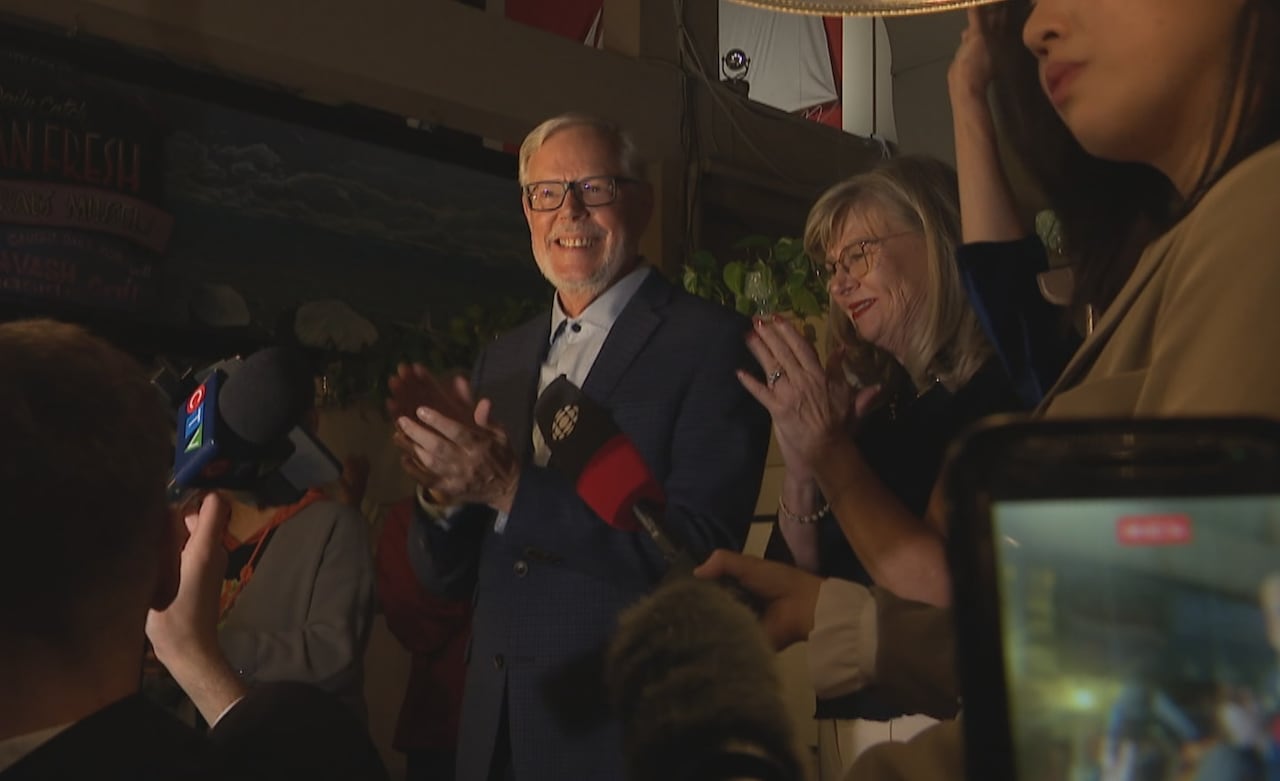
Rob Howard speaks to supporters after being elected mayor of Richmond on Saturday, Oct. 17, 2026. (Pinki Wong/CBC)
There were similar stories in Prince George and Kamloops, where moderate councillors defeated incumbents not on the strength of bold platform promises, but with a team working together.
“We have new blood and we have the incumbents, and typically the incumbents will help train and get the new people up to speed,” said Kamloops’ new mayor Mike O’Reilly, who defeated arguably the most controversial mayor in the province, Reid Hamer-Jackson.
“We’ve got to build our team quickly and we’ve got to get going fast,” said Prince George’s new mayor Garth Frizzell, who defeated Simon Yu.
Flash and controversy seemed out: populist promises didn’t seem to move the needle in many places, and candidates with no experience promising to shake things up rarely did well.
Mayors who were often in the middle of code-of-conduct complaints, lawsuits, or investigations went down to defeat (see: Langley Township’s Eric Woodward, West Vancouver’s Mark Sager or Vancouver’s Sim).
Instead, experience seemed to matter: old mayors got their jobs back in Langford (Stew Young), Surrey (McCallum), and Penticton (Dan Ashton).
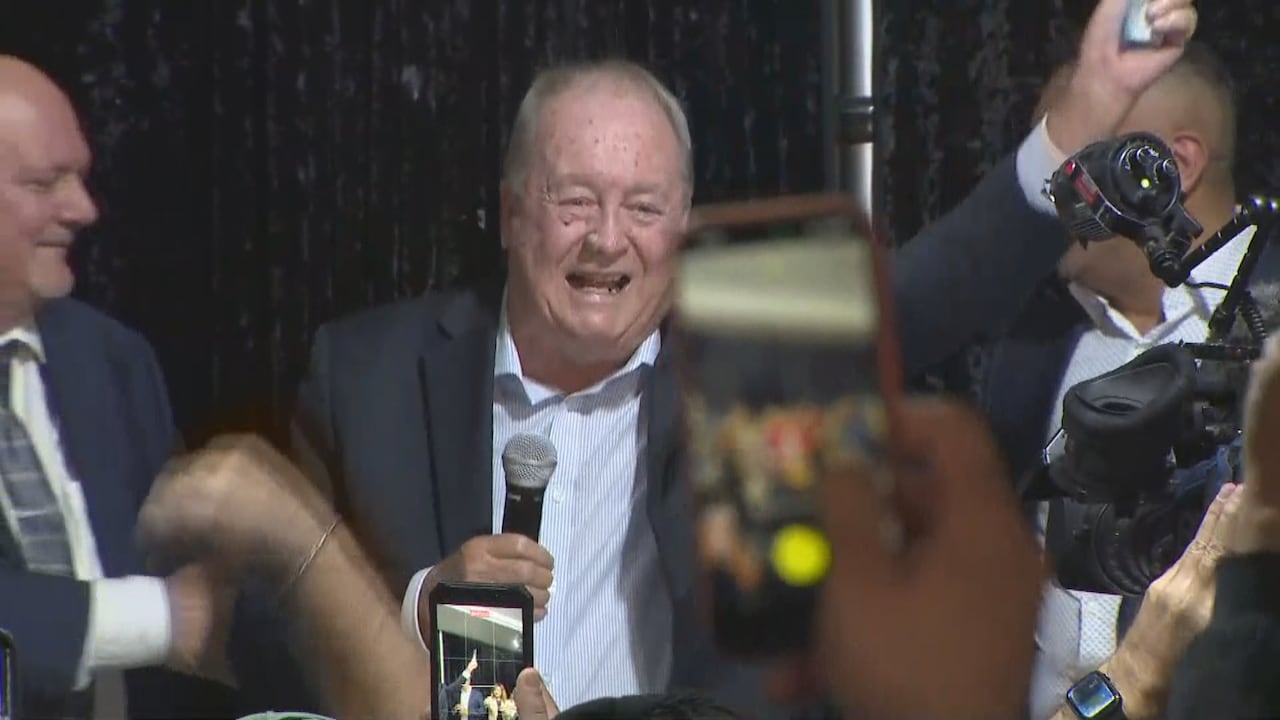
Doug McCallum celebrates being elected Surrey mayor on Saturday, Oct. 17, 2026. (CBC News)
Mayors in big cities who survived — Victoria’s Marianne Alto, Kelowna’s Tom Dyas, Burnaby’s Mike Hurley, North Vancouver District’s Mike Little and others — made their reputations on facilitating respectful council discussion and working with all levels of government.
“I will make the commitment to make sure that all those voices are heard, and they inform the decisions that are coming ahead to council,” said Alto.
“And I think that’s the role of the mayor.”
It seems that attitude helped her get re-elected — in an election cycle where many of her fellow mayors did not.