
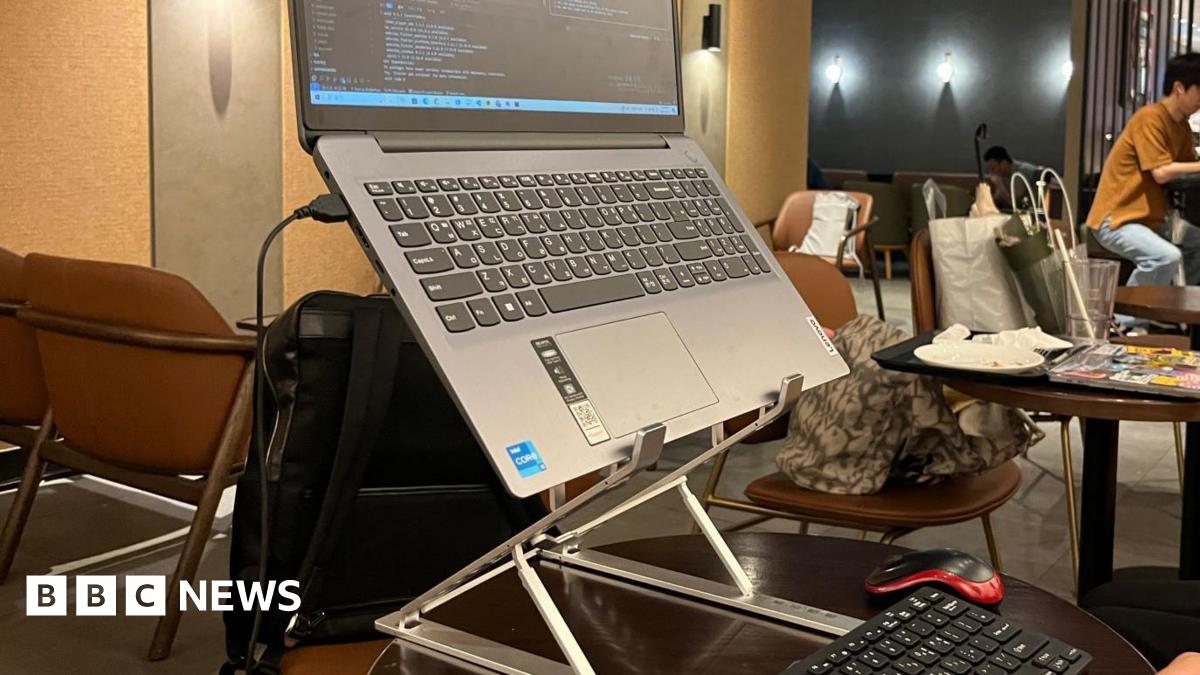
So what’s behind the trend and why do so many in South Korea feel the need to work or study in cafes rather than in libraries, shared workspaces or at home?
For some, the cafe is more than just an ambient space; it’s a place to feel grounded.
Yu-jin Mo, 29, tells the BBC about her experience growing up in foster care. “Home wasn’t a safe place. I lived with my father in a small container, and sometimes he’d lock the door from the outside and leave me alone inside.”
Even now, as an adult, she finds it hard to be alone. “As soon as I wake up, I go to a cafe. I tried libraries and study cafes, but they felt suffocating,” she says.
Later Ms Mo even ran her own cafe for a year, hoping to offer a space where people like her could feel comfortable staying and studying.
Professor Choi Ra-young of Ansan University, who has studied lifelong education for over two decades, sees Cagongjok as a cultural phenomenon shaped by South Korea’s hyper-competitive society.
“This is a youth culture created by the society we’ve built,” she tells the BBC. “Most Cagongjok are likely job seekers or students. They’re under pressure – whether it’s from academics, job insecurity or housing conditions with no windows and no space to study.
“In a way, these young people are victims of a system that doesn’t provide enough public space for them to work or learn,” she adds. “They might be seen as a nuisance, but they’re also a product of social structure.”
Professor Choi said it was time to create more inclusive spaces. “We need guidelines and environments that allow for cafe studying – without disturbing others – if we want to accommodate this culture realistically.”