
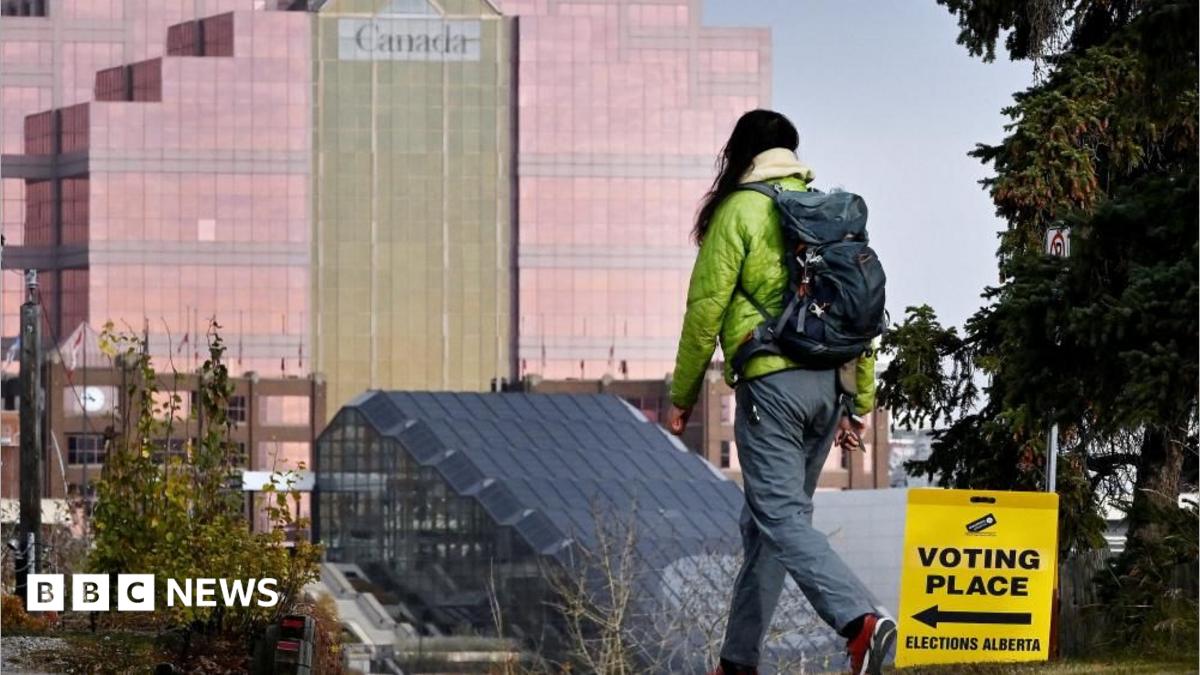
A decades-long grievance gets its day at the ballot boxpublished at 16:06 BST
16:06 BST
 Nadine Yousif
Reporting from Edmonton, Alberta
Ask any Albertan — regardless of which side they are on — about today’s referendum, and they will tell you it has been a long time coming.
For decades, some in this traditionally Conservative, oil-rich province have felt that Alberta is little more than a resource colony for politicians in Ottawa, and that their votes count for little in Canada.
But talk of separation remained largely on the fringes.
That began to change after Justin Trudeau, a Liberal, won re-election for a third time in 2019.
Town halls advocating separation began popping up in small Alberta towns.
The gatherings were sparsely attended. One I covered in early January 2020 drew roughly 40 people, though they were determined to show up despite bone-chilling temperatures.
The movement started to gain momentum as some Albertans grew frustrated with Trudeau’s response to the Covid-19 pandemic and vaccine mandates, viewing them as yet another example of government overreach.
Separatist voices began to dominate Alberta politics, and the movement gained a foothold in Premier Danielle Smith’s governing United Conservative Party.
In the last year, Smith has made it easier for Albertans to trigger citizen-initiated referendums, and allowed a question on separation to go ahead despite opposition from many Albertans and First Nations, and despite being pro-unity herself.
After decades of debate over separation, Albertans will soon learn for the first time just how many of them actually support it.