
Facebook
Twitter/X
LinkedIn
Pinterest
Reddit
Email
Print
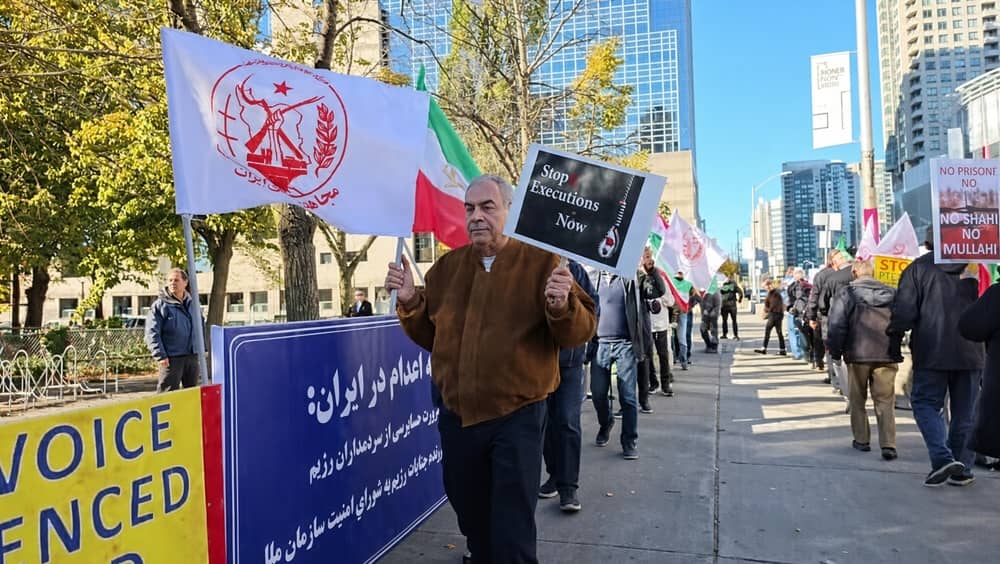
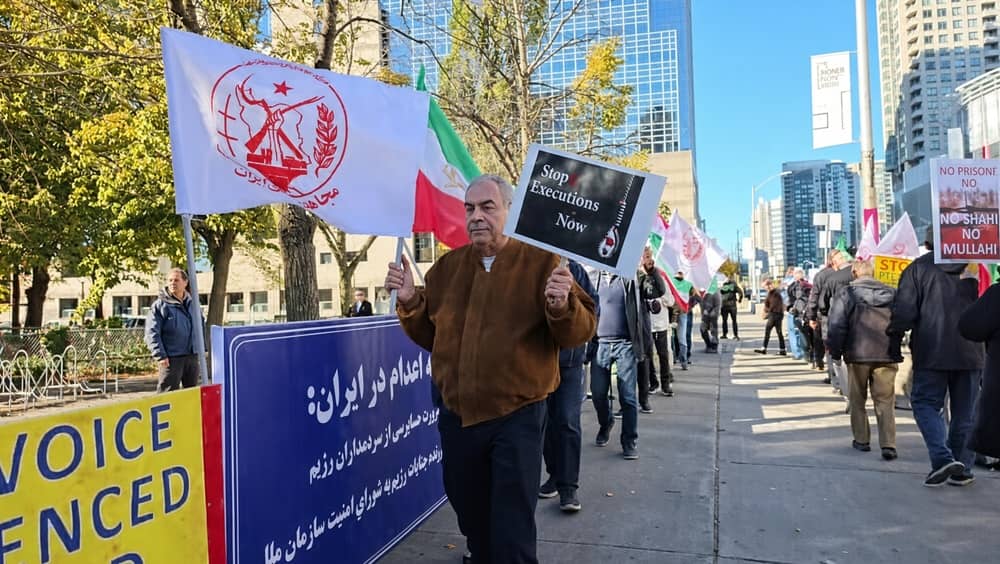 On October 17, 2026, NCRI supporters held a rally in Toronto, Canada, to condemn executions in Iran
THIS PAGE WILL BE UPDATED WITH THE LATEST NEWS
UPDATE: 7:00 AM CEST
Iran’s Teacher Shortage Exposes a Deeper Crisis in Public Education
As Iran opened its schools for the 2026–2027 academic year, approximately 16.5 million students were expected to attend, but the country’s education system faced a glaring problem: it lacked tens of thousands of teachers. The regime’s education minister Alireza Kazemi acknowledged a deficit of about 90,000 teachers, leaving schools to cope with shortages in classrooms across the country. An October 15 report in the state-run Ettelaat newspaper attributed the persistent shortage to inadequate planning—an indictment of the regime’s education policy after nearly five decades in power.
Citing a researcher at Iran’s Institute for Education Studies, Ettelaat acknowledged that the shortage has persisted for at least a decade. Yet successive administrations have failed to recruit and retain enough qualified personnel.
Even the extent of the deficit is disputed. While Kazemi puts it at 90,000, the Islamshahr Teachers’ Association has estimated the shortage at between 100,000 and 130,000 for the current academic year.
For students, these figures translate into overcrowded classrooms, disrupted instruction, and unequal access to qualified educators. The continued shortage raises an unavoidable question: how can a government that has known about the problem for ten years still lack a sustainable solution?
From a Strategic Paradigm Shift to a Vanguard Movement

The period between October 18 and October 22 marks a pivotal milestone in the history of the Iranian Resistance movement, representing a strategic, cultural, and political transformation in the struggle against religious fundamentalism. On October 18, 1989, Maryam Rajavi assumed the leadership of the People’s Mojahedin Organization of Iran (PMOI/MEK) as its Secretary-General.
Four years later, on August 28, 1993, the National Council of Resistance of Iran (NCRI) elected her as the President-elect for the transitional period of transferring sovereignty to the Iranian people, a decision officially made public on October 22, 1993.
This sequence of events initiated an unprecedented historical trajectory that shattered the traditional barriers of gender discrimination and positioned women at the forefront of the revolutionary movement against the misogynistic clerical regime in Tehran.
Maryam Rajavi’s assumption of leadership within the PMOI in October 1989 was a direct challenge to the fundamentalist ideology of the ruling mullahs. Built upon decades of sacrifice by tens of thousands of women who had endured torture and execution under both the Shah’s dictatorship and the clerical regime, this decision marked an affirmative strategy to unleash the potential of women as the primary force for democratic change.
Poverty in Iran: How Economic Mismanagement and Political Power Are Eroding Living Standards
Poverty in Iran has become more than a question of household income. It reflects a deeper crisis in the relationship between political power, national resources, and the living conditions of ordinary citizens.
Figures cited in recent reporting point to a sharp deterioration in living standards. According to figures attributed to the head of Iran’s State Welfare Organization, the poverty rate rose from approximately 20 percent before 2018 to 40 percent in 2024. The same reporting estimates that around 34 million people are living in extreme poverty. These figures do not capture every dimension of deprivation, but they indicate the scale of the pressure on Iranian households.
External sanctions, restrictions on trade, and military tensions have imposed substantial costs on Iran’s economy. Reduced access to investment, difficulties in conducting financial transactions, and higher import costs have constrained businesses and employment. War and uncertainty have added further obstacles to investment and economic stability.
Yet these pressures alone cannot explain the persistence and depth of the crisis.
The fundamental question remains: Why has a country with extensive oil and gas resources failed to provide lasting economic security for so much of its population?
Former Iranian Academic Testifies to SAVAK Torture, Rejects Choice Between Shah and Mullahs
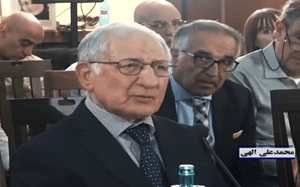
Mohammad Ali Elahi, a former assistant professor of mathematics at Mashhad University and survivor of torture under Iran’s former monarchy, delivered a powerful testimony at the Berlin conference “The Crisis in Iran and the Democratic Solution.” He described the abuses committed by the Shah’s secret police, SAVAK, and argued that the repression of democratic activists helped pave the way for the 1979 revolution to be seized by Ruhollah Khomeini.
Elahi also condemned the decision to award the 2026 Freedom Prize on behalf of the Iranian people to Reza Pahlavi, the son of the deposed Shah, saying the move disregards the suffering of the former dictatorship’s victims.
Elahi recalled that armed SAVAK agents abducted him from his workplace in 1972 because he distributed leaflets, books, and publications of the People’s Mojahedin Organization of Iran (PMOI/MEK).
Blindfolded and taken to a SAVAK prison, he endured 25 days of torture, including repeated beatings with a whip. The beatings caused severe infections in his feet, resulting in the loss of all his left toenails. He was also burned with cigarettes, leaving scars on his right thigh that remain visible.
Iran’s Real Per Capita Income Fell More Than 46% Since 2011 as Turkey’s Rose About 70%
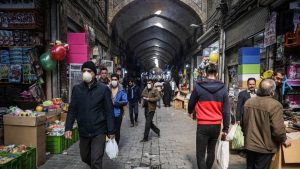
Latest figures released in Iran show that liquidity growth and year-on-year inflation declined slightly in September, but prices remained more than 83% higher than a year earlier, while real per capita income has also fallen sharply compared with 2011.
Iran’s economy continues to face extremely high inflation, declining purchasing power and limited resources despite a slowdown in liquidity growth in recent months, a situation that has simultaneously pushed President Masoud Pezeshkian’s government toward a combination of monetary policies, fuel price changes and expanded livelihood support.
Abdolnaser Hemmati, governor of the Central Bank of Iran, has said that year-on-year liquidity growth fell from 56.4% in June 2026 to 54.4% in August and 51.6% at the end of September. Year-on-year inflation in September was also reported at 83.8%, compared with 84.4% in August.
These figures indicate a slowdown in the growth rates of the two indicators, not a decline in price levels. According to the same data, the volume of liquidity was still more than 51% higher than a year earlier, while the general price level remained more than 83% above its level in September last year.
Vancouver Rally Condemns Executions in Iran and Calls for Release of Political Prisoners
Vancouver, Canada — October 17, 2026 — Supporters of the People’s Mojahedin Organization of Iran (PMOI/MEK) held a rally and photo exhibition in Vancouver to condemn executions in Iran, commemorate victims of the nationwide uprising, and highlight the cases of political prisoners and protesters at risk of execution.
Demonstrators condemned the Iranian authorities’ continued use of the death penalty, describing executions as serious violations of fundamental human rights. They displayed photographs of executed prisoners and victims of the nationwide uprising to commemorate those who had lost their lives and draw attention to the plight of detainees facing political persecution.
Toronto Rally Condemns Executions in Iran, Calls for Freedom for Political Prisoners
Toronto, Canada – October 17, 2026: Supporters of the People’s Mojahedin Organization of Iran (PMOI/MEK) held a rally in Toronto to condemn executions in Iran, honor victims of the nationwide uprising, and draw attention to political prisoners and protesters facing the death penalty.
Demonstrators strongly condemned the Iranian regime’s continued use of executions. They described these acts as flagrant violations of human rights.
Participants held photographs of executed prisoners and victims of the uprising. Through this tribute, they honored those who lost their lives and highlighted the plight of political prisoners.
Stockholm Rally Calls for an End to Executions and Release of Political Prisoners in Iran
Stockholm, Sweden — 17 October 2026: Supporters of the People’s Mojahedin Organization of Iran (PMOI/MEK) held a rally outside the Swedish Parliament to highlight human rights violations in Iran and call for urgent international action to halt executions and prevent the implementation of death sentences against political prisoners.
The protesters rejected all forms of dictatorship, whether monarchical or theocratic, emphasizing their opposition to both the former Shah’s rule and the current clerical regime. They called for the establishment of a democratic republic in Iran and expressed support for the National Council of Resistance of Iran (NCRI), which they described as a democratic alternative.
New Milton, UK: Exhibition and Petition Campaign Call for an End to Executions in Iran
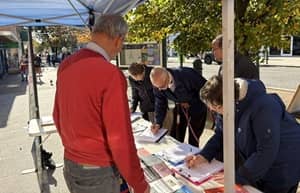
New Milton, Hampshire, UK — 17 October 2026: Members of the Academics in Exile Association in the UK, who support the Iranian Resistance (NCRI), held a book table and photo exhibition to raise public awareness of the Iranian regime’s escalating wave of executions, systematic repression, and serious human rights violations. Their message was clear: Iran’s executions must stop.
The public response was powerful. People expressed solidarity with the Iranian people’s struggle for freedom, democracy, justice, and a secular republic. Many also signed petitions calling on the UN and the international community to take concrete action to oppose executions and support the Iranian people’s democratic aspirations.
Through photographs, publications, and personal testimonies, the organizers sought to highlight the human cost of repression in Iran and the suffering endured by ordinary people. They also emphasized their continued determination to reject all forms of dictatorship, whether monarchical or theocratic.